

Sprouting 101: Easy Breezy Home Seed Sprouting
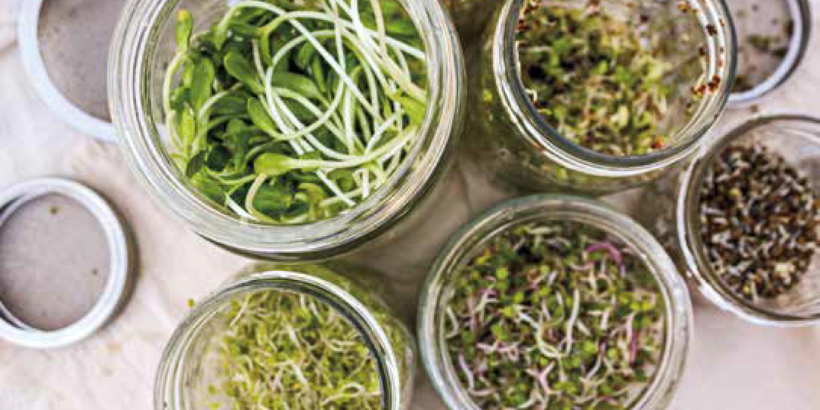
Sprouts are a quick, simple, and ridiculously healthy way to keep your locavore appetite satisfied, no matter what season it is. They are easy to cultivate, mature very quickly, can be used in a variety of delicious dishes, and really pack a nutritional punch.
The following excerpt is from The Healthy Bones Plant-Based Nutrition Plan and Cookbook by Laura Kelly, Helen Kelly and Jummee Park. It has been adapted for the web.
Sprouts are king.
Sprouting seeds enhances nutrient availability, making them easier to digest and richer in vitamins and minerals. Sprouting signals the plant to release its nutrients to be available for the new seedling. The nutrients become bioavailable and thus are readily absorbed. Sprouts also contain enzymes to promote digestion and contribute to better nutrient absorption. We highly recommend that you try sprouting some seeds, such as organic peas, mung beans, soybeans, adzuki beans, or any other seeds you can find. Use these lovely crunchy sprouts to top appetizers, sandwiches, salads, or just about anything.
Sprouts, as part of a balanced diet, support overall wellness and provide a source of fresh, living nutrients according to macrobiotic principles. I have sweet memories of watching my mother diligently cut fresh sprouts from a giant pot of greens every day. These sprouts would find their way into our salads and soups, becoming part of my flesh and bones. Looking back, the entire process of sprouting, all within the confines of our bustling urban household, contributed to our family’s strength, health, and resilience.
Easy Breezy Home Sprouting
There’s an incredible sense of preciousness and gratitude when you harvest your own food, transform it into a dish, and serve it to your own body and loved ones. Not only do you experience the joy of witnessing the sprouts’ growth, but they also add a touch of beauty and decoration to your kitchen. Growing your own sprouts is cost-effective and a rewarding experience compared to buying them from the store. They grow like a weed and can add a delightful touch to your lunchtime salads, fill wraps and sandwiches, and garnish a wide variety of dishes. Radish sprouts in a glass jar with a sprouting lid can stay fresh in the refrigerator for 5 days.
Best Choices for Homegrown Sprouts
It’s important to source high-quality organic seeds for sprouting. You can find these seeds online through organic seed companies or at local farmers markets. There are a wide variety of crops to choose from, making it an exciting time to explore the health benefits of sprouts. Look for:
- alfalfa
- arugula

- black lentil
- broccoli
- cabbage
- cilantro
- dill
- fenugreek
- kale
- lettuce
- mung bean
- mustard
- pak choi
- pumpkin
- radish
- spinach
- sunflower
- Swiss chard
- turnip

Home Sprouting 101
Makes five 1-quart (1 L) jars
Follow these instructions for growing delicious fresh sprouts. You can use any type of seed listed above. Five types that sprout easily and grow fast are alfalfa, radish, mung bean, black lentil, and pumpkin.
- Gather five 1-quart (1 L) canning jars and five airy sprouting lids. Choose five different types of seeds to sprout. Add 5 tablespoons of each seed to its own jar. Add 1 cup (240 ml) water to each jar, close the lid tightly, and label the jar with the date and seed type. Place the jars in a cool, shaded area in your kitchen for 24 hours.
- After the seeds have soaked for 24 hours, drain the water from each jar. Rinse the seeds thoroughly with water and then drain the excess water again. To facilitate drainage, place the jars upside down at a slight angle. You can use a dish rack to support the jars while they are positioned upside down.
- Repeat this rinsing and draining process once or twice daily for 3 to 5 days.
- After 3 to 5 days, you’ll notice sprouts emerging from the seeds. At this point, drain any remaining water and move the jars to the refrigerator. Keeps for 5 days.
Recommended Reads
Read The Book

The Healthy Bones Plant-Based Nutrition Plan and Cookbook
How to Prepare and Combine Plant Foods to Maintain Optimal Bone Density and Prevent Osteoporosis
$39.95
You may like...
-
$29.95
-
$27.95
-
$29.95


Recent Articles

These snacks might be too darn cute to take a bite of! Brighten up snack time this winter using fruits and veggies we all know and love.
Read More
Looking for a twist on a classic cookie? We’ve got you covered! Use the sweetness and caramelization of koji to add a whole new palette of flavors to a well-loved, traditional cookie: the snickerdoodle.
Read More
Wintergreen is the stunning evergreen groundcover that’s a game-changer for your garden! It’s cherished for its aromatic leaves, vibrant fall color & bright berries.
Read More
Wedding Cookies that melt in your mouth! Soft, chewy & utterly divine! Our Wedding Cookies are a breeze to bake and perfect for any sweet treat platter. Will you be the star of the sugar-studded cookie plate?
Read More
Grow winter carrots for a sweeter & more flavorful harvest! Ditch the bland, store-bought carrots this winter! Grow your own winter carrots for a sweeter and more flavorful twist 🥕🥕
Read More