

Kvass: A Nourishing, Fermented Beverage
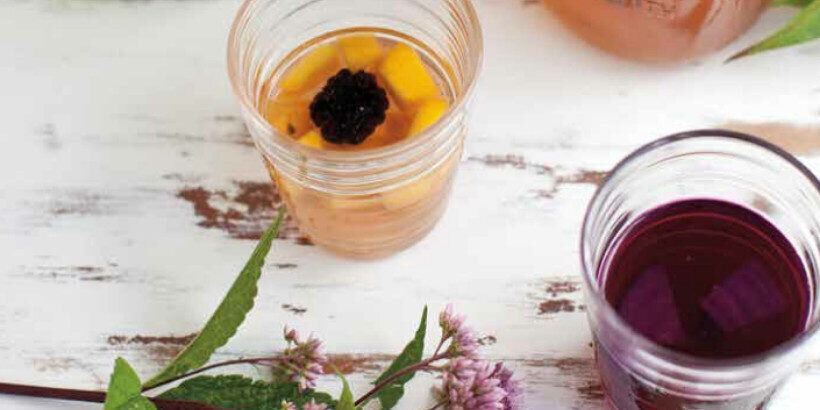
Looking to add another recipe to your fermenting repertoire? Try your hand at kvass!
This nourishing beverage calls for just a few simple ingredients and only takes a couple of days to ferment. Use beets or get creative with various fruit combinations like Blueberry Lemon Mint or Ginger Apple Lime. Perfect for beginners or pros alike!
The following recipes are from The Heal Your Gut Cookbook by Hilary Boynton and Mary Brackett. They have been adapted for the web.
How to Make Beet Kvass
According to Sally Fallon Morell, co-founder of the Weston A. Price Foundation and author of Nourishing Traditions, beet kvass is valuable for its medicinal qualities and as a digestive aid. Beets are loaded with nutrients. One 4-ounce glass, morning and night, is an excellent blood tonic, cleanses the liver, and is a good treatment for kidney stones and other ailments.
Makes 1 quart
- 3 medium or 2 large organic beets, peeled and coarsely chopped
- 1 tablespoon sea salt
- 1⁄4 cup whey or fermented pickle juice
- 2 cloves garlic, smashed or minced (optional)
- Filtered water
Place the beets in a clean 2-quart widemouthed glass mason jar; add the salt, whey, and garlic, and fill to the shoulder with filtered water. Cap and leave on the counter for 2 days.
Once you have drunk almost the entire first batch, you can add more filtered water, cap, and leave on the counter for an additional 2 days. After this you must throw out the beets and start fresh. Save 1⁄4 cup liquid from your previous batch to use as an inoculant instead of the whey.
The easiest way I find is to pour what you wish to drink, replace it with filtered water, and return the jar to the fridge. Do this each time you drink some kvass. When the beets are “spent,” throw them out and start a new batch.
Creating Fruit Kvass
 Makes 1 quart
- 1 cup organic fruit (fresh or frozen)
- 1-inch fresh ginger, peeled (optional, but I usually add to my ferments as it is so good for digestion)
- Filtered water
- Pinch of sea salt
- 1⁄2 cup whey
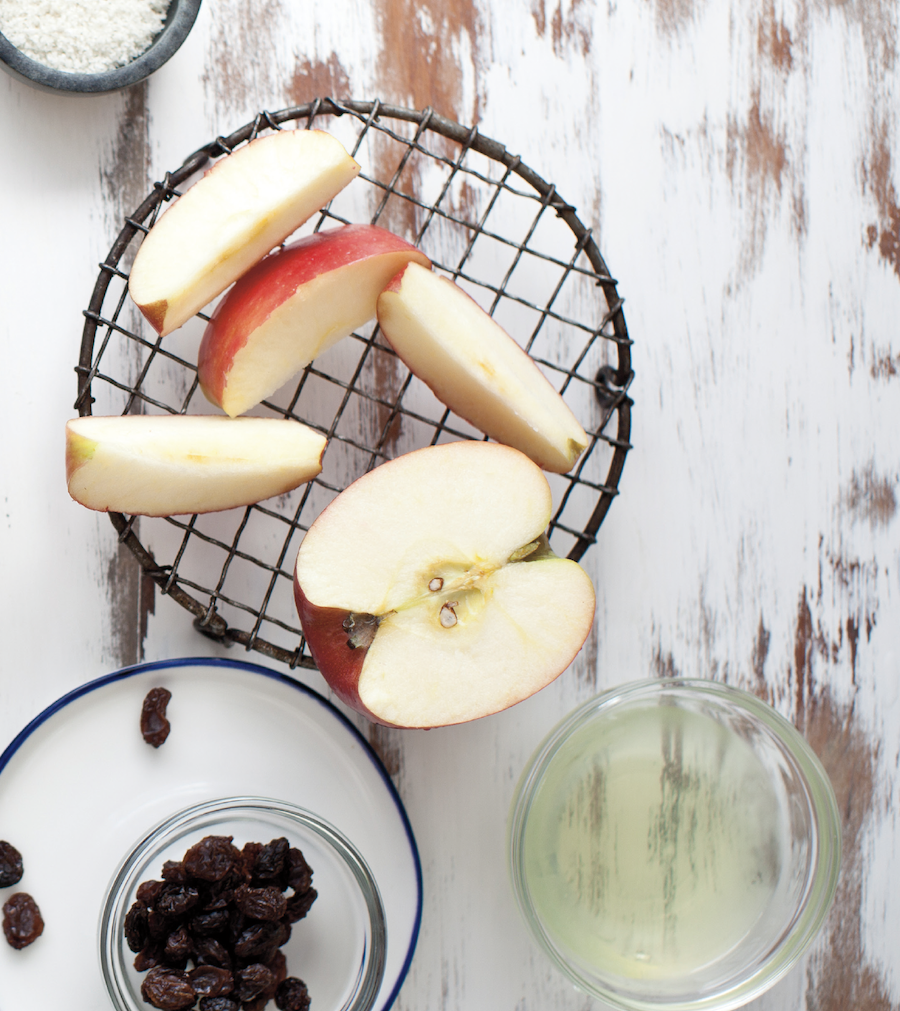
Place the fruit and ginger in a quart-sized mason jar, filling it about a quarter of the way up. Add filtered water up to the jar’s shoulder, along with a pinch of sea salt and whey. Cap the jar tightly and leave it on the counter, at room temperature, for 2 to 3 days or until the lid is taut. Turn it upside down a few times a day. This is an anaerobic process, so be sure to keep the lid closed.
Depending on the temperature, your kvass may take a bit longer to ferment. You will see little bubbles starting to form; that means it’s fermenting and the pressure is building in your jar. Be sure to check the lid to see if you can press it down or not. If you can’t, that usually means the kvass is fermented and ready to drink.
You can strain out the fruit, if you wish, or enjoy it in your drink. This is a great way for our daughter to get a bit more fruit into her diet—following the fermentation process, the fruit’s sugar content is largely or completely gone. The kvass will last in the fridge for about 1 week.
You can also use the same process as the beet kvass, above. Simply replace the amount of kvass you drink with water, every time, until the fruit becomes colorless and flavorless.
Making Water Kefir
My kids love this beverage, and I am happy to give it to them, knowing that I am populating their little guts with yet more probiotics. Water kefir grains are available online; you can also ask for them at your local health food store. If you want sparkling kefir water, you have to invest in a Grolsch bottle to allow for more carbonation.
Makes 1 quart
- 1⁄4 cup organic sugar (coconut sugar is great if you have it)
- 1 quart filtered water, divided
- Water kefir grains
Place the sugar in the bottom of a quart-sized mason jar and add 1⁄2 cup of hot filtered water. Give it a gentle stir to dissolve the sugar. Once the sugar is dissolved, add the remaining (cool) filtered water, leaving 2 to 4 inches at the top. Making sure that the water is cool, add the kefir grains, and gently stir again with a wooden spoon.
Cover the mason jar with some cloth and a rubber band, and let it sit on the counter for 24 to 48 hours. Once you have fermented the water, strain and drink as is; you can also do a second ferment by straining, adding to the jar 1⁄4 cup fresh berries (or any of the ingredient combinations below), and leaving it to sit, covered for another day on the counter. This will add nice flavor and color to the water kefir. Cap, refrigerate, and start another batch.
Other kvass and water kefir combinations:
- Cherry, raspberry, cardamom
- Apple, ginger, raspberry
- Blueberry, lemon, mint
- Apple, raisins, cinnamon
- Lemon, dried apricots or prunes, ginger
- Mango, vanilla, chai spices
- Ginger, apple, lime
- Peach, chamomile, lemon
- Blackberry, peaches, vanilla bean
- Fresh lemon or lime
- 1 teaspoon Homemade Vanilla Extract
- Mint, lime, ginger
Recommended Reads
Read The Book

The Heal Your Gut Cookbook
Nutrient-Dense Recipes for Intestinal Health Using the GAPS Diet
$29.95
You may like...
-
 $34.95
 -
$34.95
-
$29.95


Recent Articles

These small fruits are a delicious source of nutrients that you can find almost anywhere. Get started on acorn harvesting with help from these simple tips!
Read More
Want an on-the-go snack without having to go to the grocery store? Whip up this homemade applesauce for a fresh fall snack whenever you get the craving!
Read More
The possibilities are pretty much endless with wild ingredients — use almost any fresh fruit or juice and a sweetener to create your own custom jam or syrup!
Read More
Fermenting mead is an ancient practice. With step-by-step instructions, learn how to brew fruit-based and flower meads, from foraging to fermenting.
Read More
Small But Mighty! Crab Apples are easy to find, simple to store, and incredibly flavorful. Keep reading to learn more about the unsung heroes of the apple family.
Read More