

Asparagus: An Aspiring Spear
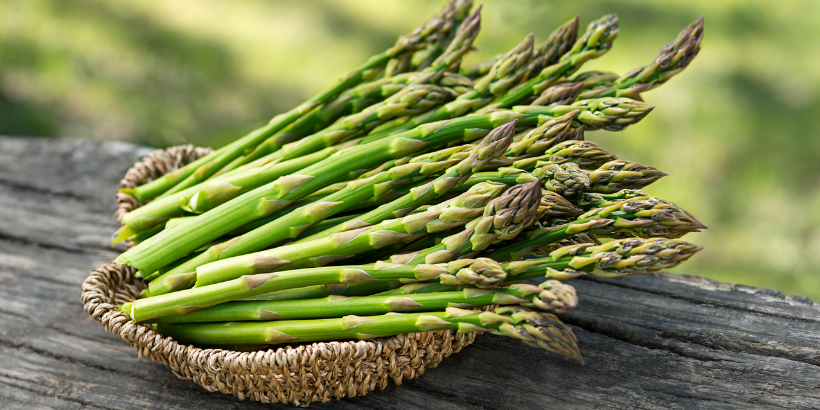
Asparagus is a delicious vegetable with a layered history. How did this aspiring spear make its way from growing in the wild to appearing on our plates?
The following is an excerpt from the The Seed Detective by Adam Alexander. It has been adapted for the web.
“Nature gives us the key to every secret that concerns our happiness, and in respect of asparagus cultivation she is liberal in her teaching,” Sutton & Son – The Culture of Vegetables and Fruit from Seeds and Roots (1884)
An Aspiring Spear
The dawn chorus heralds the arrival of the first spears, an eagerly awaited culinary delight for asparagus lovers like me.
‘All good things come to those who wait’, a quote by the Victorian poet Lady Mary Montgomerie Currie (1843–1905), is certainly true for those of us who love to rush to the kitchen with an armful of freshly cut asparagus in late spring and gorge ourselves on this magnificent vegetable.
Asparagus Season
By the middle of April my first morning stop in the vegetable plot is at the asparagus bed. Can I see the early signs of pleasures to come – pale pinkish- green little noses pushing their way out of the soil?
Must I make do with just a few spears until the crop is growing full tilt in May? Can I bear to share a surplus or shall I make more soup to freeze and enjoy that asparagus taste out of season, just like my distant ancestors, the Romans?
I have never found asparagus an easy plant to establish in my vegetable plot, although to read gardening books on the subject it should be.
History of Asparagus

It was grown in Asia Minor and Syria more than 2,000 years ago and was much loved by the Greeks and Romans.
The Greeks described asparagus as the fruit of a ram’s horn thrust into the ground.
Centuries later this myth was employed as an insult – thumbs and fingers outstretched on either side of the temples signifying the horn-wearing cuckold.
The Roman elder Cato wrote instructions as to its cultivation in 200 bce and Pliny the Elder, 200 years later, described three spears together weighing the equivalent of 325g (111⁄2 oz).
So, just as today, even in Roman times size mattered.1
Where Does “Asparagus” Come From?
Asparagus gets its name from the Greeks, who took the Persian word for ‘shoot’ or ‘sprout’, asparag, to give us aspharagos, which was then Latinised to sparagus. The medieval English word is a bastardisation of this, giving us sperage and later sparrow grass.
Although it was the Mediterranean civilisations who principally embraced asparagus, it is also considered to be native to northern Europe and numerous other edible species of this genus can be found across the world.
Sutton & Sons, one of Britain’s most important plant breeders, had this to say about asparagus in 1884:
‘It is so abundant on the sandy steppes of Southern Russia and Poland as to kill out the grasses, but it takes their place in respect of utility, the horse and the cattle eat it as daily food and enjoy life and prosper…’2
Early Asparagus Uses
Asparagus was growing wild in Britain 2,000 years ago when the locals would have used it as a medicinal herb and invading Romans would happily forage for it as a delicacy.
It is thought by some historians that the Romans introduced asparagus to Britain as a cultivated crop, but when they left in 400 ce it would appear they took their love of eating it with them.
There is no evidence that Britons ever foraged for asparagus as a vegetable, either before or after the Roman occupation.
Notes
1. Alfred W. Kidner, Asparagus (London, U.K.: Faber, 1959): 19.
2. Sutton & Sons, The Culture of Vegetables and Flowers: From Seeds and Roots
(Reading, U.K.: Sutton & Sons, 1884): 7.
Recommended Reads
Read The Book

The Seed Detective
Uncovering the Secret Histories of Remarkable Vegetables
$22
You may like...
-
 $32.95
 -
$29.95
-
$34.95


Recent Articles
How do you know if you’re picking the right seeds? Here are some easy tips on choosing the best seed crop for your garden.
Read More
When the word mushroom comes to mind, “magic” isn’t far behind. What started this almost immediate association? Explore the history of mushrooms and why so many people tend to be “myophobic”.
Read More
When you plan how you want your garden to look, you’re setting yourself up for success. Here are some tips on how to plan the best garden this growing season!
Read More
Tips for Seed Saving · Ready to unlock the power of seed saving? You either have dry seeds or wet seeds. Proper drying & storing is essential so they can germinate months (or even years) down the road. Begin your seed-saving journey today!
Read More
Life just got a whole lot better with your own family cow . She will give you fresh milk, cream, butter, and cheese, build human health and happiness. Is this the simple life you’ve been dreaming of?
Read More