

Tips & Tricks for Harvesting and Drying Herbs
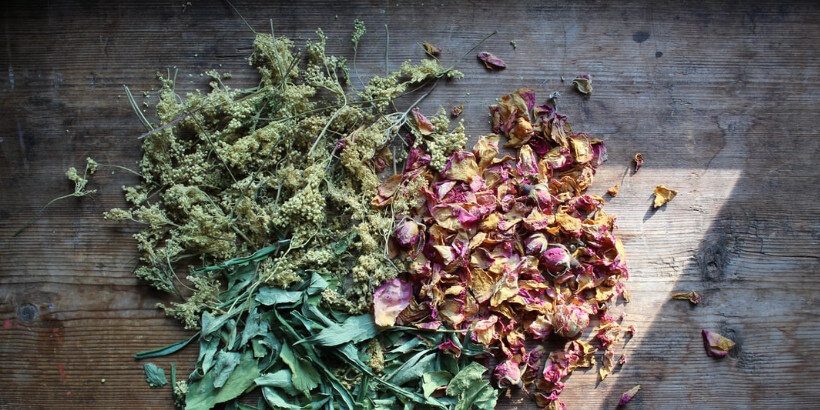
Effective harvesting and drying of herbs is crucial for crafting your own medicinal remedies. Each step significantly impacts the potency and effectiveness. To unlock the herbs full potential, you must harvest and preserve with intention.
Whether you’re a seasoned herbalist or just starting out, learn how to unlock the true potential of nature’s gifts!
The following is an excerpt from Energetic Herbalism by Kat Maier. It has been adapted for the web.
Harvesting Herbs
When deciding the best season for harvesting a particular herb, simply think about where the energy resides in the plant. In the winter, roots are dormant, which actually means they are storing energy for new growth. In the spring as leaves unfurl, energy rises skyward to increase surface area of foliage for optimal photosynthesis. Flower formation requires a tremendous amount of energy; flowers express sexuality and reproduction and are the creators of the seeds that will ensure proliferation of the species.
When To Harvest
Although timing of harvesting varies somewhat by region, here are some general guidelines:
- If you want to harvest leaf medicine, it is best to gather before the plant flowers.
- When harvesting lowers, gather blossoms just before or at full flower.
- Gather seeds after they have turned from green to maturity, but donot wait too long because the oils and medicine in them can dissipate.
- For roots, harvest after the second frost. The first frost alerts all above-ground parts of the plant to drop into the root for winter storage. After the second frost most of the plant energy has moved into the root. If you live in a region where temperatures do not drop below freezing, harvest the root when the plant is in its most dormant state.
For all aboveground plant parts, it is best to wait to harvest until after 10 a.m., or after the dew has evaporated and before the intense heat of the day wilts the plant. Harvesting after a series of sunny days is ideal because it makes drying the harvested plant parts that much easier.
How to Dry Herbs After Harvesting

Plants that contain a lot of water, such as comfrey, are the most challenging to dry. If you see black spots on leaves or tell-tale fuzzy growth, those are signs of mold. Simply break off those parts of the leaves, as the rest is still good for use.
Where to Dry Herbs
A warm attic is ideal for drying herbs. Be mindful, though, that too much heat will crisp the material, which speeds up deterioration of constituents. Using a food dehydrator to dry herbs works well, as does using an oven (the very low heat provided by the pilot light serves well for drying herbs).
Moving Herbs Into Storage
There’s nothing sadder than losing a harvest because you moved herbs into storage too soon. You want the leaves to crumble when you rub them between your fingers, but you don’t want them too crisp.
A tried-and-true test of whether herbs are ready to be stored is to put a small amount of the dried herb in a mason jar and screw the lid on tight. If there is still moisture in the herb, condensate will form on the wall of the jar in a day or two. If this happens, continue drying and test again.
Those fortunate enough to have a greenhouse can try this very rapid method of drying described by seasoned herb farmers Andrea and Matthias Reisen from Healing Spirits Herb Farm in New York State: “The high shelves we use for the herbs that have less water in them, Nettle, Red Raspberry, Alfalfa then the lower shelves that have more shade from the upper shelves, for Comfrey, Mints, Lemon Balm, also Roses and Calendula so they don’t lose any of their color.
We turn the herbs during the day so the underside also gets dry faster. Drying this way, we can usually move herbs through in twenty-four to thirty-six hours. Roots take longer of course. Because we are in Western New York we do not use a shade cloth, like you would in an area that gets hotter sun.“
Recommended Reads
Read The Book

Energetic Herbalism
A Guide to Sacred Plant Traditions Integrating Elements of Vitalism, Ayurveda, and Chinese Medicine
$24.95
You may like...
-
 $44.95
 -
$34.95
-
$39.95


Recent Articles

All hail the mighty garlic clove! Become a master at garlic growing with these simple tips for growing no-till garlic from seed to harvest.
Read More
Try your hand at preserving veggies by freezing them! Freezing vegetables is a quick, simple way to preserve them for winter meals.
Read More
As your favorite variety of home grown tomatoes start ripening on the vine this summer, be sure to save those seeds for next year’s planting.
Read More
Curious about carrots? Before you get started on cultivating, check out these insights on growing & harvesting carrots from gardening expert Will Bonsall.
Read More
Squash newbies, this one’s for you! Learn how to harvest, cure, and store squash with these tried-and-true techniques from gardening expert Carol Deppe.
Read More