

Preserving Veggies: Tips for Freezing Vegetables
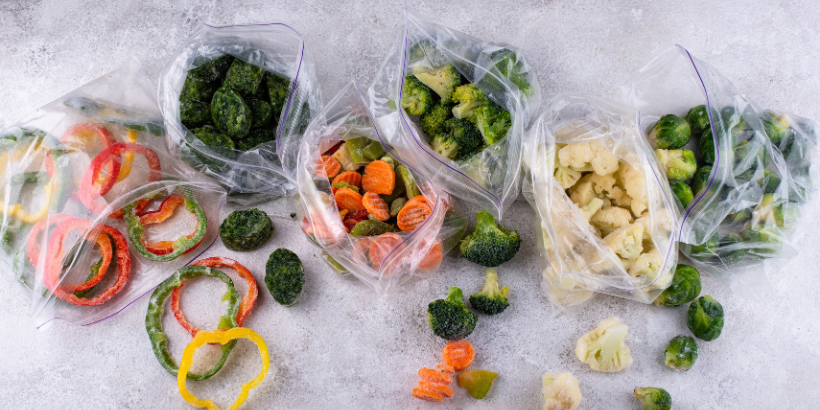
Try your hand at preserving veggies by freezing them! Freezing vegetables is a quick, simple way to preserve them to enjoy all year long.
The following is an excerpt from Many Hands Make a Farm by Jack Kittredge and Julie Rawson. It has been adapted for the web.
A Guide to Freezing Vegetables
Freezing vegetables, especially in small batches, is quite simple and quick. It takes only about ten minutes to freeze a bunch of kale or chard, and that will be the basis of a great winter meal. If you attempt no other method of food preservation, try this. Soon you will want to buy a chest freezer in which to store your bounty.
The Process of Blanching & Freezing Veggies

Here are the most important tips to remember for freezing vegetables:
- For best results, prepare your work area and tools well so you can work quickly and efficiently.
- Cut vegetables into bite-size pieces.
- Wait until the water is boiling to immerse the prepared vegetables.
- Start timing when the pot comes back to a boil. Most vegetables need to cook from one to three minutes in this part of the process. The important thing to watch for is a change to a brighter color.
- Dump the blanched vegetables into a colander in the sink and rinse immediately with cold water. This is easier than fussing with cooling the vegetables in an ice-water bath.
- Squeeze any extra water out of the vegetables when they arecool, and store them in freezer containers that will pack efficiently in your freezer.
This procedure works well for a wide range of vegetables. One variable is how long to leave the vegetables in the boiling water. You can do your own research, though I advise keeping your process simple so that you are more likely to accomplish it.
Tips for Freezing Vegetables
Here are some specific tips based on my experience.

Broccoli, Brussels sprouts, cauliflower. Due to their chunky texture, these brassicas take around three minutes to properly blanch.
Celery. No blanching needed but will keep longer in the freezer if blanched.
Edamame or green soybeans. Boil the bean pods until you can pop the beans out of the shell. Cool them down in water so that you can handle them comfortably and then pop them out.
Garlic scapes. A month before harvesting stiff-neck garlic is the time to harvest scapes. Break off both the stem and the curly bulb head. We chop them and food process them with olive oil and freeze in pint containers for use in soups and stews.
Greens. Spinach, Asian greens, chard, kale, collards, and cabbage only take a minute or two. We usually strip the kale and collards from their stems before cutting them up, and we cut out and discard the core from cabbages.
Leeks. Blanch for thirty to forty-five seconds.
Parsley, peppers. No blanching needed These vegetables contain a lot of. water naturally. They freeze well unblanched and keep their quality for several months.
Starchy vegetables. For pea pods, remove and discard the stem ends before cutting. For sugar snaps, strip and discard the entire string. Blanch for two minutes. Shell peas and green beans need three minutes. Corn (cut off the cob) needs six to eight minutes.
Summer squash and zucchini. Slice and boil in a small amount of water for two minutes. Puree with the water and then freeze in plastic containers.
Winter squash. If, when stored on a shelf or in the root cellar, winter squash start to rot, salvage it by cutting out the bad spots, removing the rind, cutting it into small pieces, and then boiling it in minimal water. Process and pack as you would summer squash.
Recommended Reads
Read The Book

Many Hands Make a Farm
47 Years of Questioning Authority, Feeding a Community, and Building an Organic Movement
$24.95
You may like...
-
 $45.00
 -
$25.00
-
$44.95


Recent Articles
Having an indoor sprout garden is easier than you might think and yields a bountiful harvest. Here’s how to get started — right from your windowsill!
Read More
This bright, yet delicate flavor profile is both sweet and sour – a unique taste that you’ll keep coming back to. This recipe is intended for long, slow fermentation starting at persimmon harvest time in the autumn and continuing into winter.
Read More
Growing no-till arugula is a simple way to grow your own food. These greens can be used on pizzas, salads, and as a garnish on almost any dish.
Read More
This triple apple snack cake uses applesauce, cider, and apples for a one-two-three apple punch. Don’t take our word for it though, give it a go yourself!
Read More
The leaves are falling, which means it’s time start figuring out what to do with them. This year, try turning your fallen leaves into mulch for your garden!
Read More