

What’s In A Name? The Story of Squash
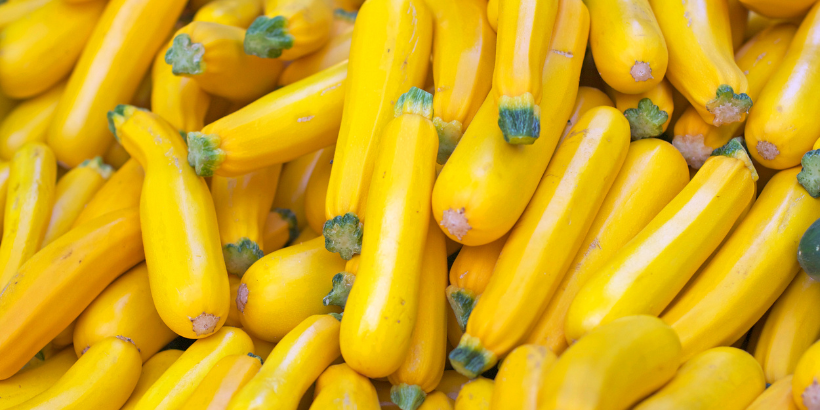
“As soon as the squash begins to run its arms across the ground it is ready for the kitchen.” — Antonio Francesco Doni (1513–1574) – La Zucca (c.1541)
Squash…this one simple term somehow encapsulates a variety of delicious vegetables that play a vital role in some of our favorite dishes. It has come a long way, with a rich history and an admirable journey toward becoming the successful meal staple it is today.
The following is an excerpt from The Seed Detective by Adam Alexander. It has been adapted for the web.
Squash: What’s In A Name?
The story of the domestication and development of all types of squash started 10,000 years ago in the New World. How- ever, the naming of this vegetable has a long and convoluted history, the result of human error. The name squash derives from the Native American Algonquin askoot asquash, which translates as ‘eaten raw’. Raw courgette makes a great salad.
Today squash is used to describe four species and quite arbitrarily interchanged with another name, pumpkin, which derives from the Greek pepon and the Latin pepo. Pepon was first used by the Greek physician Galen (129–c.216 ce) to describe ripe cucumber.
I get especially irritated when I see translations of recipes that date back to Roman times, where squash is used to describe a fruit that it most definitely is not! It was the first British colonists arriving in New England – Algonquin territory – early in the seventeenth century who anglicised the name to squash.
The Squash vs. Pumpkin Debate

The debate over when a squash is a pumpkin or a pumpkin is a squash manages to confuse not only the lay reader but enthusiasts like me, and there is still no internationally accepted definition for either.
The popular naming of a type has a more meaningful cultural relevance than a botanical one – which is unambiguous – and becomes evident as we follow the journey of the domestication of the four species that are central to my culinary pleasures.
The Story of Squash
So, just how important are squash to our collective food cultures?
Yet again we have Christopher Columbus to thank for introducing the squash to the Old World, when he brought it back from his expedition in 1492. Writing on the history of squash in Vegetables of New York (published in 1928), Professor G.P. Van Eseltine said, ‘The history of the cultivated cucurbita, if written in full, would form a large part of the story of the development of agriculture in the tropics and sub-tropics of both Old World and New.’2
Prior to Columbus’s voyages to the New World, the bottle gourd, Lagenaria siceraria, had been widely grown in the Old World, used both as a receptacle and for its seeds, which are highly nutritious and make excellent oil.
Its flesh was occasionally eaten but was far inferior to the new arrivals from the Americas. However, sixteenth-century botanists confused gourds with squash and made matters worse through incorrect classification and naming that was only resolved some 200 years later.
Early Uses of Squash

Squash and gourds come in a dazzling variety of colours, shapes and textures, thanks to their ability to freely interbreed. However, both species evolved independently and cannot cross with each other.
Neolithic farmers of the New World were able to select from the indigenous wild squash traits that gave them greater size, bigger seeds and, most significantly, sweeter and less fibrous flesh. They either never bothered with further improving the bottle gourd or else it was less responsive to domestication syndrome.
This describes a process by which wild plants acquire traits that make them worth cultivating – for example, loss in part or whole of seed dormancy, which means a crop will have more uniform germination and fruit ripening.
Domesticating Squash
An important element in this first phase of domestication is the loss or reduction in chemical defences that can cause sickness or death. The second phase of domestication, key in the case of squash, exploits these traits to select for increased size of fruit, colour, shape and edible seeds as well as something we value most highly: flavoursome flesh.
Although the juice can be highly toxic, bottle gourds continue to be grown in the New World for their seeds but also as containers and ornaments: definitely not their flesh.
Notes
2. U.P Hendrick, The Vegetables of New York, vol. 4, (Albany, NY: New York Agricultural Experiment Station, 1928): 3.
Recommended Reads
Read The Book

The Seed Detective
Uncovering the Secret Histories of Remarkable Vegetables
$22
You may like...
-
 $29.95
 -
$29.95
-
$35.00


Recent Articles

Want an on-the-go snack without having to go to the grocery store? Whip up this homemade applesauce for a fresh fall snack whenever you get the craving!
Read More
Beets can be grown year-round and are a perfect, flavorful addition to meals. Get started on growing your own no-till beets with help from these tips!
Read More
The possibilities are pretty much endless with wild ingredients — use almost any fresh fruit or juice and a sweetener to create your own custom jam or syrup!
Read More
Fermenting mead is an ancient practice. With step-by-step instructions, learn how to brew fruit-based and flower meads, from foraging to fermenting.
Read More
Small But Mighty! Crab Apples are easy to find, simple to store, and incredibly flavorful. Keep reading to learn more about the unsung heroes of the apple family.
Read More