

Lost Nation Cider Pie Recipe
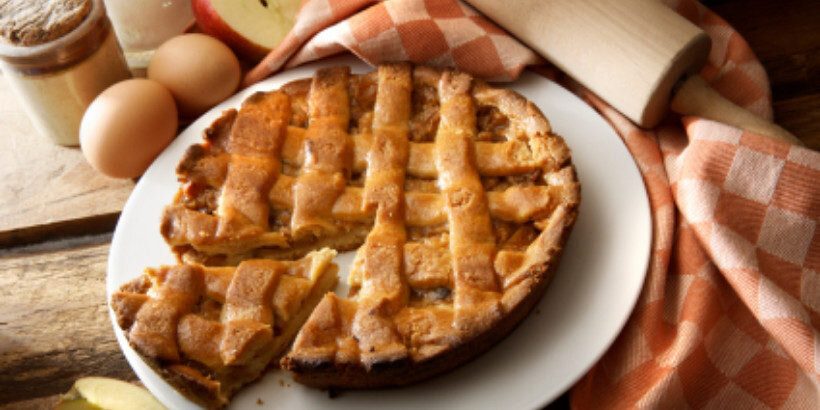
Fall means apples: Walking through orchards picking apples, finding wild apple trees, and best of all…eating apples!
We’ve had the privilege of publishing many books with delicious apple recipes over the years but one of our all-time favorites has to be the Lost Nation Cider Pie from Michael Phillips’ The Apple Grower: A Guide for the Organic Orchardist.
This is a simple, unassuming recipe, but one that evokes the bucolic orchard in northern New Hampshire for which it’s named. Serve with a slice of cheddar cheese on top (in true Vermont style!) or a heaping scoop of vanilla ice cream or both. We won’t judge!
The following is an excerpt from The Apple Grower: A Guide for the Organic Orchardist by Michael Phillips.
How to Make Lost Nation Cider Pie
MAKE AHEAD: The recipe calls for making cider jelly, which is done by boiling fresh apple cider to the jellying stage. The jelly may be made up to 5 days in advance, then covered and refrigerated. Alternatively, prepared cider jelly may be used.
If you’d like to make more than you need for this recipe, a gallon of fresh apple cider will yield about 2 cups of cider jelly. Store in sterilized canning jars.
Makes one 9-inch pie (8 servings)
Ingredients:
For the cider jelly
- 1/2 gallon fresh apple cider (see headnote; may substitute 1 cup store-bought cider jelly)
For the pie

- 2 medium apples, such as Honeycrisp or Granny Smith, peeled, cored, cut in half, then cut into very thin slices
- 3/4 cup sugar
- 3 tablespoons cornstarch
- Pinch salt
- 1/2 cup boiling water
- 1 egg, lightly beaten
- 1 tablespoon unsalted butter, melted and cooled slightly

Directions:
For the cider jelly: Pour the cider into a medium heavy, nonreactive pot. Bring to a boil over high heat. Use a candy thermometer to measure the temperature, which should come up to 220 degrees (the jellying stage). Boil until the cider has reduced to almost 1 cup, adjusting the heat and stirring as needed to avoid scorching. This can take from 75 to 90 minutes.
When the cider has reduced and thickened, remove it from the heat. Transfer to a heatproof container and cool to room temperature, then cover and refrigerate until ready to use.
For the pie: Preheat the oven to 425 degrees. Use the homemade or store-bought crust to line a 9-inch pie plate, folding under and pinching the edges to form a tidy rim. Arrange the apple slices on the surface of the bottom pie crust dough in flat layers. Have the top round of pie dough ready.
Combine the sugar, cornstarch and salt in a medium mixing bowl. Add the cider jelly and just-boiled water; mix well.
Whisk together the egg and melted butter in a liquid measuring cup, then add the mixture to the sugar-cider jelly mixture, stirring to combine. Pour the mixture carefully over the apples in the pie plate. Place the top crust on the pie; crimp the edges around the rim and use a knife to make several small cuts in the top (to allow steam to escape). Place the pie on a rimmed baking sheet (to catch any drips); bake for 40 minutes or until the top crust is golden.
Transfer the pie to a wire rack to cool for at least 20 minutes before serving.
Recommended Reads
Seasonal Desserts: Apple Spice Bundt Cake & Pumpkin Pie with Hazelnut Crust
Read The Book

The Apple Grower
Guide for the Organic Orchardist, 2nd Edition
$44.95
You may like...
-
$44.95
-
$39.95
-
$40.00


Recent Articles

There are reasons that miso paste has become popular around the world: it’s versatile, relatively inexpensive, and can be made in a range of flavors you’d be hard-pressed to find anywhere else. And better yet, you can even make miso at home!
Read More
Wondering where to forage for greens this spring? Look no further than hedges, which serve as natural havens for wild greens and herbs!
Read More
Homemade cheese doesn’t have to be complicated, all you really need is a handful of ingredients, time and a love of cheese.
Read More
Get ready for a comfort dish like no other! Our short ribs recipe features foraged juniper berries for a unique twist. Ever wondered how to forage your own? We’ve got you covered with expert tips!
Read More
Think twice before pulling out that lambsquarter! It is a “super weed” with many edible & medicinal uses. Discover the surprising benefits of lambsquarter!
Read More