

The Future of Sustainable Fashion: A “Farm-to-Closet” Vision
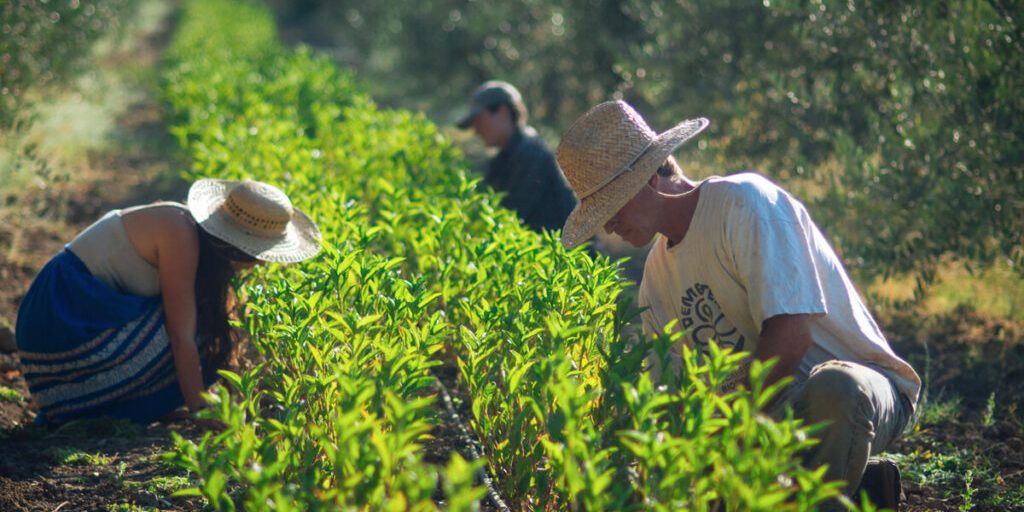
Rebecca Burgess has coined a new term for sustainable fashion that represents a not so new idea: fibershed. Centuries before the advent of fast fashion and the multimillion-dollar fashion industry, functional fibersheds were everywhere.
As a means of protection, spiritual identity, gender, adornment, societal rank, personal style, and modesty, people sourced their fibers from the plants and animals that populated their home ground.
Like the water within a watershed or the food within a foodshed, the fibers in a fibershed embody the ecology, economy, and culture of a place.
The following is an excerpt from Fibershed by Rebecca Burgess from the Winter 2019 Seasonal Journal. It has been adapted for the web.
There is a deep, almost cellular response in humans when we take on work of a fibershed, one that creates an unbreakable bond. In fact, it has been an incredible surprise to see how many people are similarly committed to the cause of regionalizing and relearning what it means to produce your fiber and dye.
Through my work I have seen the act of growing our own clothes to be a galvanizing community experience.
Because we have been disconnected from the impacts our clothes have on land, air, water, labor, and our own human health for such a long time, we’ve been lulled into a passive, non-questioning state of being as consumers. When we begin reconnecting these dots, however, we create opportunities to build new relationships that are rooted in sharing skills, physical labor, and creativity, all of which carry meaning, purpose, and a way to belong to one another and to the land.
While there has been important work in recent decades to ensure access to safe, local, nutritious food as a culture, we have largely overlooked the production of fibers and dyes that make up our clothing.
In fact, when people hear the word clothing, most automatically think, Oh, I don’t care about fashion, and assume it has nothing to do with them. But clothing—like food—matters because we directly engage with it every single day.
In Fibershed you will read a vision of change that focuses on transforming our fiber and dye systems from the soil up. This vision embraces everyone involved in the process, including farmers, ranchers, grassroots organizers, designers, manufacturers, cut- and-sew talent, crafters, fashion pundits, investors, transnational brands, and you—the wearer.
It is a vision for globally impactful solutions that consider and provide a voice on how to reconfigure the seat of power and begin putting decision making into the hands of those most familiar with the social and ecological infrastructure of their communities. It is a vision that enhances social, economic, and political opportunities for communities to define and create their fiber and dye systems and redesign the global textile process. It is place-based textile sovereignty, which aims to include rather than exclude all the people, plants, animals, and cultural practices that comprise and define a specific geography.
This place-based textile system is the fibershed. Similar to a local watershed or a foodshed, a fibershed is focused on the source of the raw material, the transparency with which it is converted into clothing, and the connectivity among all parts, from soil to skin and back to soil. In the fiber- shed where I live, natural plant dyes and fibers such as flax, wool, cotton, hemp, and indigo are being grown using practices that are both traditional and modern.
Many of these cropping and livestock systems are showing benefits that we are just beginning to document in detail, such as ameliorating the causes of climate change, increasing resilience to drought, and rebuilding local economies.
Recommended Reads
Read The Book

Fibershed
Growing a Movement of Farmers, Fashion Activists, and Makers for a New Textile Economy
$34.95
You may like...
-
 $14.95
 -
$34.95
-
$27.00


Recent Articles

Growing your own berries is entirely possible for anyone with a bit of space and a passion for raspberries. With proper planting, location & care they’ll flourish!
Read More
All hail the joyful juneberry! While these berries taste wonderful when they’re fresh, you can also preserve them and create beverages with them.
Read More
Do you have an old, worn-out pair of jeans in your dresser? Instead of throwing them out, try to grow mushrooms on them. Follow these guidelines to get started.
Read More
If you’re planning out a forest garden, or are just looking for a plant to use as ground cover, garden strawberries are a great option.
Read More
Discover the magic of oyster mushrooms! They can grow almost anywhere. Straw is a surprisingly simple way to cultivate the ever-popular oyster mushrooms.
Read More