

Finding Small Silences
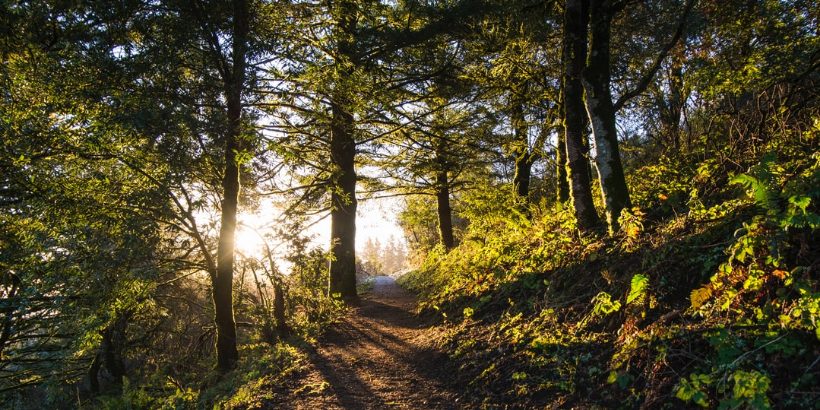
Admired by a pantheon of America’s greatest writers and considered one of our most prolific essayists, Hoagland is in a class of his own. He came of age during our country’s literary heyday, learned to write the old-fashioned way — through direct experience in love, travel, and immersion in the natural world — and then dedicated decades of his life to prose that is not only powerful, but truly original.
The following is an excerpt from Sex and the River Stix by Edward Hoagland. It has been adapted for the web.
Wandering to the edge of Dr. Green’s woods, next door to our new house, at the age of eight, I found a little brook running— my first, because we had just moved from the city to the country. The floating twigs and leaves, the ripples, and yet the water’s mirroring qualities, and the tug on my fingers or feet when I dipped them in, plus the temperature, so remarkably different from the air’s, fascinated me. We, like the other neighbors, had some brush and untrimmed trees in back of our lawn, so the brook picked up interesting flotsam before entering Dr. Green’s pines, where except for scattered boulders or stones the ground was less varied, all needly. The sounds the stream made, thocking and ticking, bubbling and trickling, were equally beguiling, however, and, like the wind-nudged boughs twisting over-head, never precisely the same.

The pond was the great revelation, after, first, the stream and before I could climb a sixty-foot Norway spruce and swing with the wind. Amber, black, and silver, with moss on one bank and cattails on another, it had frogs plopping—leopard and green frogs and bullfrogs with large eardrums who said jugarum. I saw crayfish and a ribbon snake, yellow-striped, and a muskrat swimming in a moving V. Greenish pollywogs and salamanders. The pines, in retrospect, were red pines, and red squirrels of course were chattering in them from all angles, much more vociferous than the gray squirrels that nested in the maple shade trees in front of our house. Also my dog, Flash, an English setter and constant companion, who barked at them, sniffed small silences out an opossum, longhaired, long nosed, pouched like a miniature kangaroo, who promptly swooned and played dead when I picked it up by the tail, just as it was supposed to do. The pines, with their thousand jewely shards of light as you looked up on a sunny day, didn’t like wetting their feet and gave way to white birches whose curling strips of bark you could write on not just with a pencil but with your fingernail if you had to, and dark hemlocks, droopy-branched and unbelievably tall and somber, in the soggy ground, while the pond itself might be as bright as a lens of glass, with tree crowns, mackerel clouds, and blue sky reflected on its surface.

I saw a mink trap an eel, and a musk turtle diving out of reach on the bottom, and tree frogs in the bushes, and “pumpkinseeds,” or sunfish; learned how to fish with a worm and a pole. A blue heron bigger than me would sometimes flap over from the larger ponds (Dr. Green’s, though huge to a ten-year-old, may have been scarcely an acre in size) after amphibians. Or on my repeated expeditions I might see a kingfisher diving for shiners. Nobody could spot me from the road as I circled the water, looking at the strange jointed plants called horsetails, or ferns at the margins. The ordeal of stuttering at school seemed distant indeed, and I was learning how to swim well enough at my parents’ country club not to be a danger to myself if I fell in. I was cautious anyway, as stutterers must be if they are to survive— bicycled home after swimming lessons, before I’d have to try to talk to people on the patio. I could talk to Flash with absolute abandon, and loved Mel Allen, and Tommy Henrich, “Old Reliable,” the Yankees’ right fielder, and watched the New Hampshire Reds’ social goings-on like a budding ethnologist, although I tended to downplay my various excitements in the house lest they be restricted or used against me. It was not a silly instinct because my parents did soon tell me I was reading too much, and by prep school were telling my favorite teachers that I was too intrigued by nature and writing; that these were dodges due to my handicap and might derail a more respectable career in law or medicine—angering the teachers who nurtured me.
Recommended Reads
The Magic of Exploring the Outdoors After Dark: Q&A with Chris Salisbury
You may like...
-
 $17.95
 -
$17.95
-
$24.95


Recent Articles

Fermenting mead is an ancient practice. With step-by-step instructions, learn how to brew fruit-based and flower meads, from foraging to fermenting.
Read More
Whether foraging or gardening, it’s vital to know the proper techniques for harvesting. Read on for how to harvest herbs, roots, flowers, bark, fruit, and more!
Read More
How and why can some plants live to such a great age? Delve into the lifespan of plants and discover the incredible longevity and resilience of these remarkable living beings.
Read More
We’ve been told to kill a lanternfly because they’re “invasive.” In reality, they are living like any other insect would. So why are they under attack?
Read More
Dig into the many varieties of grass seeds, learn about toxicity, and review a list of edible grass seeds. Happy foraging!
Read More