Spring is here and I don’t know about you, but I can’t wait to get started on all of the projects I mapped out during the cold winter months – including trying my hand at incorporating bees into my homesteading adventure! As a new-bee (get it?!), I need help to get started so I did a little rummaging through the CGP archives and stumbled upon some great insight from Deirdre Heekin. Happy beekeeping, ya’ll!
The following excerpt is from An Unlikely Vineyard, by Deirdre Heekin. It has been adapted for the web.
(Photography by Deirdre Heekin unless otherwise noted.)
Biodynamic Beekeeping
Just like all the other aspects of our farm, we approach our beekeeping from a biodynamic perspective and practice. Though if I were to be precise, I would probably not use the word beekeeper, as it connotes the idea that we can actually “keep” bees for ourselves. Not unlike farmers who “have” bees. We cannot keep bees; we cannot have bees. They are unto themselves, and it is they who deign to share with us. Most biodynamic practitioners with bees would consider themselves bee stewards.
The point here about splitting hairs in a name is not unlike raising the differences in the words winemaker versus winegrower or wild-gatherer versus forager. I usually don’t consider myself a winemaker; I think of myself as a winegrower because the work I try to do is in the field, not in the cellar. Any craft or art in the translation of our fruit into wine happens in the nature of the season and my response in care during that season.
By the time we harvest the fruit, my role is to pick the fruit when I believe it is ready to become the wine it wants to become, and to provide a clean space and appropriate conditions for the fermentation. I try to respond to the essences the fruit puts forth in any decisions I might make about how to ferment it. This wine might ferment in an open vat on its skins for six weeks, and this other wine might get pressed immediately and ferment in a 14-gallon glass demijohn.
Another wine might ferment for a while in a glass demijohn, then finish its first fermentation in a bottle to become a pétillant naturel. Certainly, my decisions affect the wine, and that is my part of the terroir equation. But I in no way enforce my desires on the wine. I try to work in opposition to this; I try to respond to the suggestion of the fruit, not unlike a sculptor approaching a piece of stone and trying to intuit the form the stone wants to take.
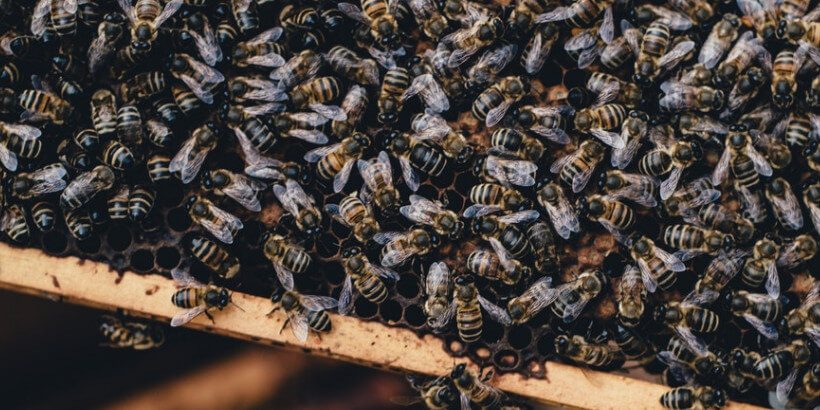
A honey bee nuc.
The biodynamic bee steward approaches the hive in the same way with the same adage: Stay out of the way, and make a clean environment for the bee yard.
Do not bring constant outside inputs via queens and colonies or queens artificially inseminated in the lab and brought in from elsewhere. Do allow swarms, colony splitting, mating, and the bees’ natural choice of their queens so they will thrive in the apiary. Leave the bees as much as possible to their natural inclinations; they will correct their own imbalances if provided with a clean and healthy environment. They know far more than we do about what is right for them. And if loss occurs, a biodynamic bee steward must understand and accept that this is part of the natural selection of the natural world.
I remember the first few nights the bees were with us and how we closed the wire mesh door to their yard once the dusk had settled, to keep them safe from any roaming creature, and to help them understand that this was now their home. We noticed every evening as twilight came, they returned to their makeshift hive like children being called to dinner. I am reminded of being a child myself on such twilit evenings, the air thick with humidity, but dusk providing something cool like a freshly laundered sheet in a north-facing room. I think of the jam jars, lids with small holes poked in them that we’d take out into the horses’ meadow and catch fireflies to make lanterns full of glowing life.
Having the bees on the farm surrounds us with their magic and activity.
They pollinate the orchard, the roses, the vegetables, and even though grapes are self-pollinating, the bees work in the vineyard too, participating in the creation of the unique diversity of fruit and flavors the wine from this place offers.
They remind us to be humble in the face of the wilderness, in the face of nature, and that our abilities are not really our own. We grow a tasty carrot, a unique bottle of wine, a pretty and succulent apple; we harvest delicious and fragrant honey, not because of our own will and effort at shaping what this farm can offer, but because we must work in concert with the natural inclinations of our landscape.
On those warm sunny spring days, when the temperatures start to get up in the 50’s, the time to look inside the hive has arrived, checking for life, honey, the queen, and new eggs. Discovering a dead hive is a sad moment, but it also provides lessons, an opportunity to learn how to care for the hive better. If the honey is not infected by a virus, it can be offered to other hives in need of supplemental food, which is better than some of the other feeding options.
If the hive is thriving, but the food stores look low, you can do some that supplemental feeding to get them through the thin days until the new spring plants can provide nectar. The best food for bees is from untreated honey or what is called bee bread.
Contrary to what a lot of new beekeepers think, if you can’t feed your bees raw untreated honey; it is better to make them a sugar syrup rather than boiled honey. Even more counter intuitive is that it is better to use white sugar rather than brown or raw sugar. Be sure the sugar is from sugar cane and not beet sugar. Around 90% of beet sugar is from GMO beets.
While sugar syrup can get the bees through a tight spot, I can’t stress enough that honeybees are only meant to eat honey, and a sugar syrup is an option devoid of all the benefits in calories, minerals, and vitamins that honey gives to the bees. The sugar syrup is essentially something to resort to just to keep the bees alive for a very short time period.
One way to help mitigate the lack of health benefits of the sugar syrup is to follow a biodynamic protocol and make “bee tea.” While it’s still important not to rely on the tea too heavily, it can be more helpful that a straight sugar syrup if the bees need sustenance between winter and spring, or if the hive has been robbed, or if you are starting a new hive from package bees and you have no honey stored in a hive. Most sugar syrup recipes call for a one-to-one sugar to water mixture in the spring. The biodynamic preparation we use is a little more than two-to-one sugar to water with the addition of dried chamomile and/or thyme with a little sea salt added in.
Bee Tea
The recipe for 1 gallon of tea is as follows:
Ingredients
16 cups white cane sugar
1 teaspoon natural sea salt
6 cups hot tap water
2 teaspoons fresh or dried chamomile and/or thyme
Procedure:
Combine the sugar and the salt. Add the hot tap water to the mixture and stir well. Don’t boil the sugar and water, as that may make the sugar caramelize.
Separately, do boil another 2 cups of water and steep the herbs, covered, for about 10 minutes. Strain that tea, then mix it into the sugar-and-water concoction. Mix thoroughly until the sugar is completely dissolved.
At this juncture, many a beekeeper would allow the tea to steep, then fill their bee feeders to take out to the bees. We don’t have a feeder since it is usually too cold to set it up when feeding might be needed. We spread the sugar syrup tea out on a cookie sheet and let it harden, then place the pieces in the hive, centered over where the colony is clustered.
Adding the chamomile and thyme to the sugar syrup provides and immune boost to the colony, giving the bees something more than just the sweet filler of the sugar alone. If the honey stores look low in late summer or early fall, it is best to feed the bees the tea with a feeder at that time in order to avoid having to feed them in the midwinter when temperatures are cold and the bees might not be able to reach the food source.
There’s no doubt that beavers offer huge support to various ecosystems. Even Teddy Roosevelt learned that when on a hunting trip to beaverless badlands turned out disappointing. This experience was enough to turn him from naturalist to conservationist. Read the full story and you too will become a “Beaver Believer.”
The best health rule? Eat well by sticking to the outskirts of the grocery store where items aren’t prepackaged and the list of ingredients is pronounceable.
Mushrooms are a game-changer. And growing mushrooms outdoors just got easier! We have a mushroom growing method that’s so simple, you have no excuse not to try it out. All you need is a log or tree stump, some mushroom starter, and a couple of basic tools.
It’s no secret that overly manufactured food isn’t good for our health. The production of these foods can also be harmful for agriculture & the environment. We must change the way we grow and purchase food to stay healthy and keep small farms running.