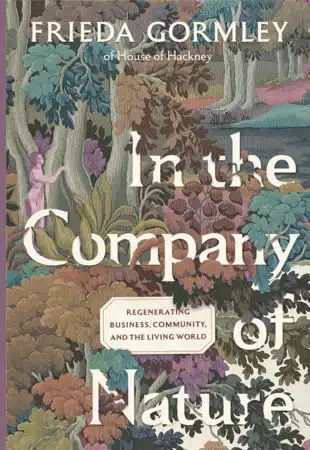
Frieda Gormley

Frieda Gormley is the co-founder of House of Hackney, the British B Corp interiors brand that is redefining what business can be when it works in partnership with Nature. Born in Ireland, her early years were shaped by creativity, curiosity and a back garden that was her endless universe. Inspired by her grandmother’s love of antiques and textiles, Frieda developed a deep appreciation for heritage and craftsmanship. Alongside her creative instincts, her entrepreneurial talent surfaced early and she was named Young Entrepreneur of Ireland at just thirteen.
Frieda began her career in fashion buying at Dunnes Stores, Ireland’s largest retailer, where international sourcing trips exposed her to the exploitation inherent in high-street production. In 2004, she joined Topshop in London under the mentorship of Jane Shepherdson, who first showed her that business could be a force for good. Confronted with the environmental toll of fast fashion and the deeper question of legacy after becoming a mother, Frieda felt called to root her work and life in a more meaningful relationship with the living world.
While seeking interiors for their new home that were beautiful, responsibly made and inspired by Nature, Frieda and her husband, Javvy M. Royle, identified a gap in the market. They founded House of Hackney in 2011 as an alternative to disposable design: a brand grounded in British craftsmanship, creativity and community with Nature as design muse.
A pivotal shift came in 2019, when they became custodians of a nine-acre Cornish castle and its wild gardens. Immersed in the landscape and guided by regenerative farmer neighbours, Frieda experienced what she calls a remembering as she began to understand Nature not only as inspirer but as teacher and strategic guide.
This awakening led House of Hackney to become only the second company in the world to legally appoint Mother Nature to its board.
Today, House of Hackney is recognised as a pioneering model for regenerative business, showing how creativity, profitability and positive impact can coexist.