

Feeding the World: Why Regenerative Grazing Is So Important
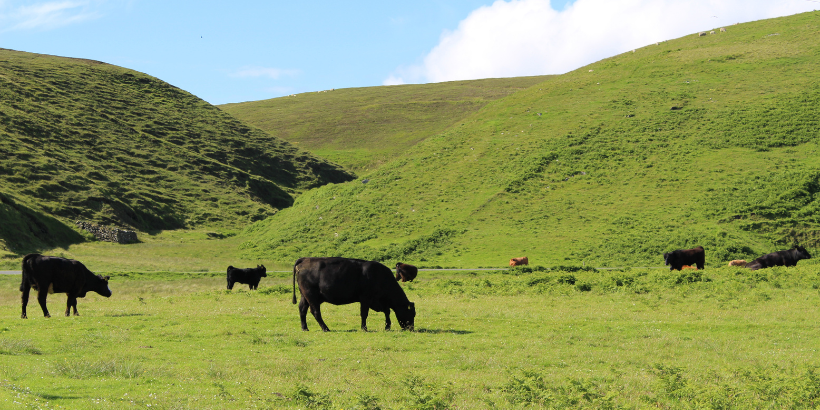
How can we learn from our mistakes and pave a way for sustainable, nutritious, local meat? In Grass-Fed Beef for a Post-Pandemic World, Lynne Pledger and Ridge Shinn take readers on a journey through production agriculture to show how regenerative grazing can benefit our climate and environment.
The foreword below by Gabe Brown, bestselling author of Dirt to Soil and pioneer of the soil-health movement, highlights the true significance of this practice.
The following is an excerpt from Grass-Fed Beef for a Post-Pandemic World by Lynne Pledger and Ridge Shinn. It has been adapted for the web.
Grass-Fed Beef for A Post-Pandemic World: A Foreword by Gabe Brown

Relying on a lifetime of experience with cattle and resource conservation, Ridge and Lynne take us on a journey through production agriculture in the United States. They explain how farmers and ranchers went from grazing livestock on pasture to confining cattle in grassless pens where grain and by-products are brought to them—grain and by-products that are grown with synthetics (fertilizers, pesticides, and fungicides) and the heavy use of fossil fuels. These practices, in no small part, have led to the degradation of our soils, our waters, and, at least to some degree, our health.
This has led many to vilify animals, cows in particular, and falsely claim that they are largely responsible for climate change. This book helps to set the record straight: This new method of grazing cattle has a net climate benefit. As Ridge and Lynne so truthfully state, “Regenerative grazing will change the way our society thinks about beef, because the grazing itself is as significant as the meat.”
The Significance of Grazing
The act of grazing as significant as the meat itself? Yes! Few are aware of just how important it is for plants to be grazed. For eons, the simple act of an herbivore biting off part of a plant has led to what Dr. Allen Williams refers to as “positive compounding effects.”

Ridge and Lynne take a deep dive into this soil health, plant health, animal health, and human health connection. It is this connection that has the ability to bring us together. No matter where your interest lies—be it climate change, clean water, profitability for farmers and ranchers, the revitalization of our rural communities, or improved human health—regenerative agriculture, driven by adaptively grazed cattle, can address many of the issues we face as a society. We can come together, finding common ground for common good.
I believe that we must continue to educate ourselves, no matter what profession we are in. To keep honing our skills, we must learn from those with experience. In Grass-Fed Beef for a Post-Pandemic World, Ridge and Lynne share their lifetimes of experience. In fact, every chapter highlights stories of people, places, and predicaments that Ridge encountered over the years as his understanding of grass-fed beef production developed.
I learned from this book and am confident that you will, too.
— Gabe Brown, June 2022
Recommended Reads
All About Cows: What has Four Legs, Says “Moo,” and Could Save the Planet?
Read The Book

Grass-Fed Beef for a Post-Pandemic World
How Regenerative Grazing Can Restore Soils and Stabilize the Climate
$24.95
You may like...
-
 $17.95
 -
$17.95
-
$39.95


Recent Articles

Growing no-till arugula is a simple way to grow your own food. These greens can be used on pizzas, salads, and as a garnish on almost any dish.
Read More
The leaves are falling, which means it’s time start figuring out what to do with them. This year, try turning your fallen leaves into mulch for your garden!
Read More
Enjoy fresh produce all year long by growing your own food! Achieving a twelve-month growing season is as simple as using the right crop protection structure.
Read More
Beets can be grown year-round and are a perfect, flavorful addition to meals. Get started on growing your own no-till beets with help from these tips!
Read More
All hail the mighty garlic clove! Become a master at garlic growing with these simple tips for growing no-till garlic from seed to harvest.
Read More