

Staying Warm with Rabbit Wool
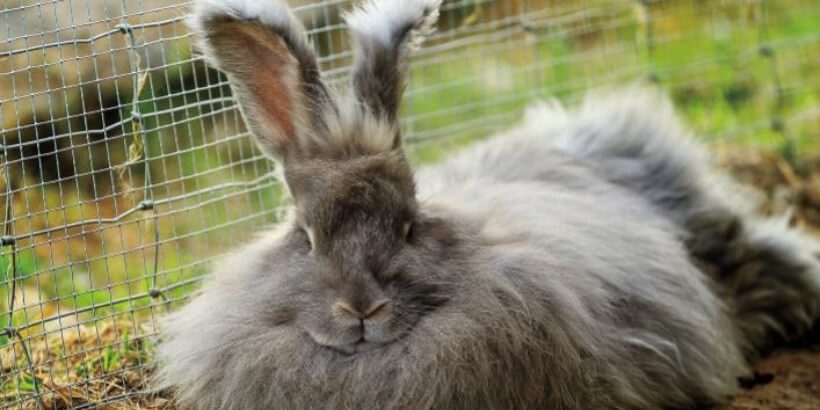
Most people think of sheep when they think of wool, but in actuality this soft, curly, ever-growing hair can come from many different animals. People have been using rabbit fur for wool for hundreds of years and each breed of rabbit has a different textured coat. When it comes to rabbits, the Angora is the most commonly used breed for wool production. The wool from Angoras is exceptionally fine and renowned for its softness, warmth, and fluffiness.
The following is an excerpt from Raising Pastured Rabbits for Meat by Nichki Carangelo. It has been adapted for the web.
I have been obsessed with animal breeds since way before I ever considered a career in livestock farming.
If my childhood memories can be trusted, my interest in this particular science was first born while watching the original 101 Dalmatians when I was little. In the movie there is a scene where Pongo, the canine lead, is looking out the window of his owner Roger’s apartment. Down below, humans who resemble their pets parade a variety of iconic, purebred dogs down the road.
There’s an Afghan hound striding alongside a tall, lean woman with long, straight hair, an elegant poodle leading a haute Londoner, and a little, round pug trotting beside a little, round lady. The fact that somehow, over the span of a millennium, humans managed to take some wild canid and, from it, magically develop the perfect companion for each one of us, wildly different as we are, had me awestruck. Today I still think it’s all really cool, and I love learning about what makes each breed of animal special.
The technical term for breeding and raising domestic rabbits is cuniculture (cuniculus is the Latin word for “rabbit”). As far as we can tell, humans have been practicing cuniculture for at least 1,500 years, and over the course of that millennium and a half we have managed to create more than 300 breeds of rabbits throughout 70 countries. Of these, the American Rabbit Breeders Association (ARBA) recognizes 49, which, for the cuniculturalist’s purposes, can be divided into three categories based on usage.
Rabbits for Wool
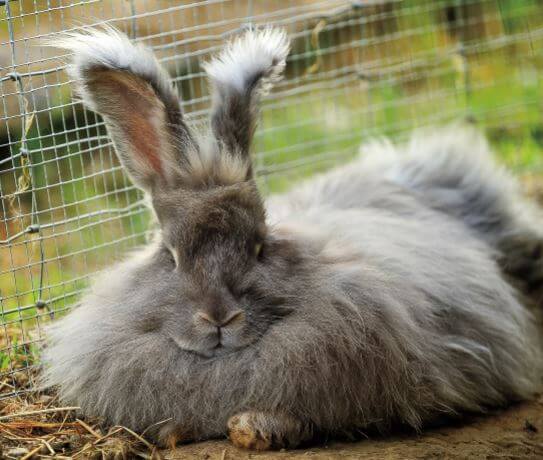
Angoras are a fiber breed of rabbit, known for their soft wool. Photo by gygyt0jas.
Most people think of sheep when they think of wool, but in actuality this soft, curly, ever-growing hair can come from many different animals. Goats, alpacas, cattle, and even camels are used to manufacture wool all around the world. When it comes to rabbits, the Angora is the most commonly used breed for wool production. Producers harvest their long hair by shearing it or combing it loose.
The wool from Angoras is exceptionally fine and renowned for its softness, warmth, and fluffiness. Jersey Woolies, Lionheads, and American Fuzzy Lops are also wool-breed rabbits, but because of their small size, they are typically kept as pets and show animals rather than for fiber production.
Because these types of rabbits have been bread for fur quality rather than meat quality, I would not consider these breeds if meat production is the primary goal. Wool rabbits require regular brushing and other special treatment that meat breeds do not, so while meat could very well be the by-product of a wool operation, wool is unlikely to make sense as the by-product of a meat operation.
Rabbits for Fur and Pelts
Some rabbits have been specifically bred for the purpose of fur trading. Fur rabbits typically have short, shiny coats rather than the long, fluffy hair of their wool-breed counterparts. Their pelts, which are skins with the fur still attached, can be used for hats, ballet shoes, gloves, and many other clothing items.
Rex, Satin, and Silver Fox rabbits are the most commonly used breeds for fur production because of their large size and desirable coat qualities. Fur rabbits must be raised to maturity (at least five months) in order to obtain pelts that are large enough and of high enough quality. Both rabbit wool and rabbit fur markets are marginal in the United States, so most producers of these breeds are hobbyists.
Recommended Reads
Read The Book

Raising Pastured Rabbits for Meat
An All-Natural, Humane, and Profitable Approach to Production on a Small Scale
$24.95
You may like...
-
 $35.00
 -
$24.95
-
$29.95


Recent Articles

Garlic mustard can be consumed in its entirety and has great nutritional value. Plus, the flavor is perfect for recipes that call for mustard!
Read More
Growing & using your own medicinal herbs keeps you healthy AND helps improve our environment. So what’re you waiting for? Check out these quick tips and get ready to start an agricultural revolution with medicinal herbs!
Read More
Want a thriving farm or garden? Here’s the secret: healthy soil! Learn how to boost your soil and plant health with these simple principles. Supercharge your soil and plants and discover the secrets of healthy soil!
Read More
Interested in growing trees? Check out these tips for successfully planting, transplanting, and pruning to create a thriving edible landscape!
Read More
Mushrooms are a game-changer. And growing mushrooms outdoors just got easier! We have a mushroom growing method that’s so simple, you have no excuse not to try it out. All you need is a log or tree stump, some mushroom starter, and a couple of basic tools.
Read More