

Why Rabbit is the New Chicken
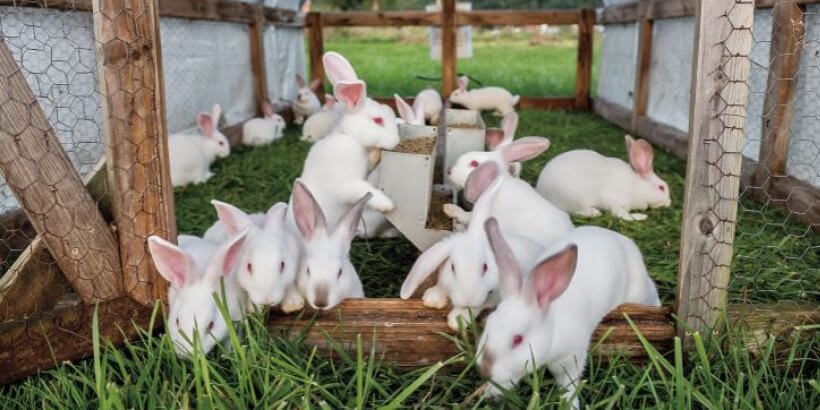
Not convinced that a pasture-based rabbit production could amount to a sustainable business enterprise for the beginner to market-scale farmer?
Nichki Carangelo, a third-generation Italian American, second-generation small business owner, and first-generation farmer from Waterbury, Connecticut, proves that a viable pasture-based rabbitry is not only user-friendly, it’s also profitable. In 2014, she founded Letterbox Farm Collective in Hudson, New York, which now contributes to a burgeoning local food economy.
The following excerpt from Carangelo’s book, Raising Pastured Rabbits for Meat, makes the case for rabbits over chicken. It has been adapted for the web.
In a country with a $41 billion broiler chicken industry, Michael Pollan’s 2010 claim that “rabbits make more sense than chicken” seems pretty bold, but Time magazine agreed in its piece, “How Rabbits Can Save the World.” Even the New York Times has hopped aboard the bandwagon.
The wider world is abuzz about the supposed super protein, and yet very few farmers are stepping up to meet the rapidly increasing interest in sustainably raised rabbit.
I can’t help but wonder why, as I see tremendous opportunity for any new and seasoned agrarians willing to learn this increasingly lost art of raising such triple-purpose wonders. With comparatively little money, space, or labor, rabbits can earn you an honest living and return some much-needed (and demonstrably desirable) diversity back into the markets for food, fiber, and fertility.
For starters, rabbits are easy to handle. 
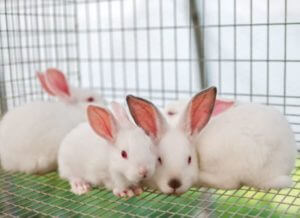
Unlike a lot of other livestock, they’re small and docile. Well-bred rabbits from good stock are unaggressive and easy to pick up and move around. Plus, they aren’t heavy. Even the largest breed of domestic rabbit, the Flemish Giant, maxes out at a very manageable 22 pounds (10 kg).
Rabbits, and everything they require, are light and portable. This is true in terms of both daily chores and major moves, like relocating to a new piece of land. Aside from mobile rabbit tractors, of which you’ll need some version, should you decide to use a pasture-based method, the heaviest item on the list is going to be a wheelbarrow. . . .
That rabbits are so portable makes them a great starter enterprise or farmers and homesteaders without secure land tenure.
Unlike some larger livestock, like dairy cows, who require more permanent infrastructure like a milking parlor, or goats who may need extensive fencing systems, everything you need for a rabbitry can fit right into a U-Haul and be moved across town or even cross-country in a jiff.
Rabbits require minimal start-up capital. In fact, a well-managed commercial rabbitry can repay its entire initial investment in a single year.
Finally, rabbit adds diversity to your diet. The traditional American dinner plate had a lot more than beef, chicken, and pork on it. Prior to the widespread implementation of concentrated animal feeding operations (CAFOs), which heavily focused on the production of these three proteins, our dinner tables were laden with a wide variety of proteins, like venison, bison, pheasant, and of course rabbit. To eat rabbit is to eat food that is rich in heritage.
Recommended Reads
Read The Book

Raising Pastured Rabbits for Meat
An All-Natural, Humane, and Profitable Approach to Production on a Small Scale
$24.95
You may like...
-
$29.95
-
$24.95


Recent Articles

All hail the mighty garlic clove! Become a master at garlic growing with these simple tips for growing no-till garlic from seed to harvest.
Read More
Try your hand at preserving veggies by freezing them! Freezing vegetables is a quick, simple way to preserve them for winter meals.
Read More
If you keep your hens in a stationary coop, you’re missing out on their soil building talents. Un-coop that poop by putting your flock in chicken tractors!
Read More
Growing mushrooms on logs is an easy way to cultiavte your own fungi! Work in tandem with nature to grow many varieties of mushrooms.
Read More
As your favorite variety of home grown tomatoes start ripening on the vine this summer, be sure to save those seeds for next year’s planting.
Read More