

Dried Apples: Two Ways to Enjoy All Year Long
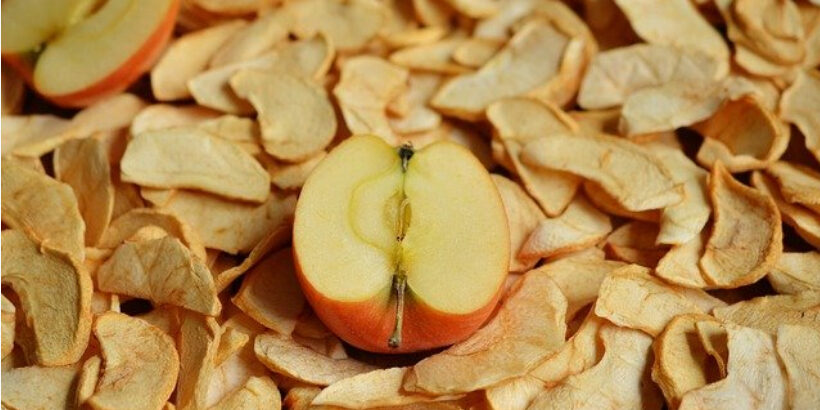
Autumn is undeniably apple season, but how do you take your apples after you can’t get them straight from the tree? Instead of buying mealy apples from your grocery store, try drying your fresh apples and enjoying them later!
The following is an excerpt from Preserving Food Without Freezing or Canning by The Gardeners & Farmers of Terre Vivante. It has been adapted for the web.
String-Dried Apples
Variation 1:
Materials
- Apples
- A peeler and corer Butcher’s string Radiator
- A clean cloth
- Plastic or cloth bags, or tin cans
Peel whole apples at the end of winter, when they begin to wrinkle. Core and slice them into 1⁄4-inch rounds. Thread the rounds onto sturdy string (such as butcher’s string), and shape the strings into 1⁄2-pound necklaces, which are to be hung above one or more radiators. If the radiator is located under a window, several necklaces can be hung from the window hardware. If the radiator is only lukewarm, you can start the drying process by placing the necklaces on a clean cloth set directly on it. Depending on the radiator temperature, it can take anywhere from four to six days for the fruit to dry. At the end of the drying process the rounds will have shrunk by half, but will feel flexible. It is best to start tasting them after the fourth day. Store them in plastic bags that you’ve sealed after letting out all the air; put them away or hang them in a dry, cool place. The apples will keep for one year. Tin cans or cloth bags certainly would be equally suitable.
Ruth Goldstein, Canteleu
Variation 2: Apples Dried with Elderflowers

- Pippin-type apples
- A peeler and corer String
- Stove or boiler
- Tin can or wooden box
- A handful of dried elderflowers (from the previous summer)
Core the apples and slice them into 1⁄4-inch rounds. Thread them on a string, through the center hole, and dry them over the stove or a central heating boiler until they become flexible. Seal them in a tin can or a wooden box, along with a handful of dried elderflowers. The apples will take on a delicious taste of pineapple, and keep indefinitely.
Pascale Dey-Marquis, Montigny-en-Gohelle
Andrée Motsh, Amierle
Recommended Reads
Read The Book

Preserving Food without Freezing or Canning
Traditional Techniques Using Salt, Oil, Sugar, Alcohol, Vinegar, Drying, Cold Storage, and Lactic Fermentation
$25
You may like...
-
 $44.95
 -
$29.95
-
$27.95


Recent Articles

All hail the joyful juneberry! While these berries taste wonderful when they’re fresh, you can also preserve them and create beverages with them.
Read More
Looking for something to munch on that’s both tasty and good for you? These ginger carrots are a healthy snack that are easy to make at home! The following excerpt is from The Heal Your Gut Cookbook by Hilary Boynton and Mary G. Brackett. It has been adapted for the web. Ginger Carrots Recipe…
Read More
Mead is one of the oldest fermented beverages and is made by fermenting honey with water, offering countless flavor possibilities. Let’s dive into the world of mead making!
Read More
Learn how to make the anti-inflammatory cocktail, Gates of Immortality! This is a vibrant, botanical twist on the classic Whiskey Smash.
Read More
Hot sauce fans, this one’s for you! This easy recipe for fermented hot sauce with wild greens is sure to add an extra punch of flavor to your favorite meal.
Read More