

Happy Pigs Really Do Taste Better
For ten years Alice Percy operated a commercial hog operation on her farm in Whitefield, Maine, becoming the largest certified hog producer in the state. Percy has mentored hog farming startups through the Maine Organic Farmers and Gardeners Association (MOFGA), and helped to develop the association’s Raising Organic Pigs fact sheet. She has presented workshops on organic hog husbandry at MOFGA events and the annual NOFA Summer Conference. Percy currently works as the manager of the Organic Growers Supply division at Fedco Seeds and served on the board at MOFGA.
The following is an excerpt from Happy Pigs Taste Better by Alice Percy. It has been adapted for the web.
Few Americans have a direct connection to how their food is produced anymore, or think much about where their BLT came from, but most are sentimental to some degree about animals and want them to be treated well. Most also want their great-grandchildren to have water to drink, food to eat, and air to breathe. When confronted with the negative impact of the modern livestock industry on the environment and animal welfare, some consumers will absolutely go into ostrich mode rather than change their buying habits, and some will decide to avoid meat entirely.
Others, though, learn about alternative ways of getting meat to the table and decide either to raise their own meat or to support producers who are dedicated to environmental protection and animal welfare—and they understand that those principles come at additional financial cost.
This demand creates a genuine opportunity to start creating a better system.
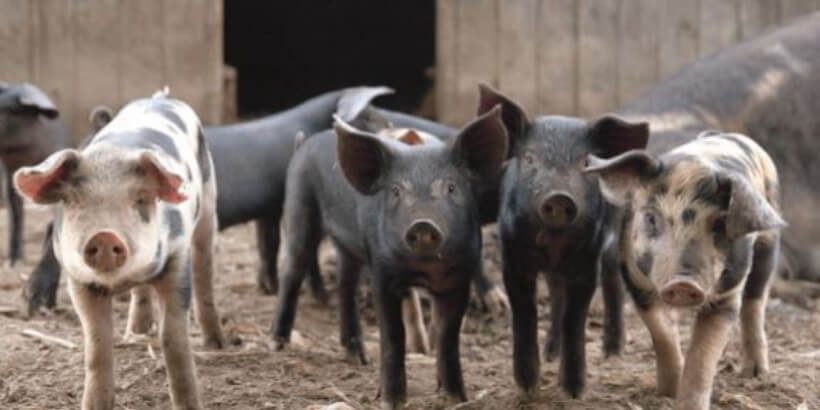
Alternative methods of hog production (including certified organic, pasture based, and other extensive methods) on homesteads and family-scale farms benefit the farmer, the hog, the environment, and the consumer. High-welfare hog production benefits the farmer because the product distinguishes itself on the market.
Competing in the mainstream markets as a small producer is most likely a nonstarting proposition, and definitely a losing game, especially if you are committed to maximizing animal welfare (the margins in mainstream production are too slim to allow this commitment). As a niche producer, however, you can exercise some control over your scale, your markets, and your profitability. The pig obviously benefits because it is allowed to be a pig (and a happy pig, at that!) instead of just a production unit. Like its ancestors, it gets to experience sunshine and free movement and exercise its natural instincts.
The environment benefits because small-scale farms are well adapted to composting manure instead of handling it as liquid effluent, turning farm “waste” into a resource rather than a contaminant. If you grow or purchase organic feed, the environment benefits doubly because your farm supports crop production practices that conserve soil quality and avoid toxic synthetic materials.
Consumers benefit from the satisfaction of a connection with the source of their food, the comfort of knowing that their bacon habit doesn’t come at the expense of animal welfare, and above all from an improved dining experience—happy pigs really do taste better!
Recommended Reads
Read The Book

Happy Pigs Taste Better
A Complete Guide to Organic and Humane Pasture-Based Pork Production
$29.95
You may like...
-
$39.95
-
$29.95
-
$35.00


Recent Articles

Growing no-till arugula is a simple way to grow your own food. These greens can be used on pizzas, salads, and as a garnish on almost any dish.
Read More
The leaves are falling, which means it’s time start figuring out what to do with them. This year, try turning your fallen leaves into mulch for your garden!
Read More
Enjoy fresh produce all year long by growing your own food! Achieving a twelve-month growing season is as simple as using the right crop protection structure.
Read More
Beets can be grown year-round and are a perfect, flavorful addition to meals. Get started on growing your own no-till beets with help from these tips!
Read More
All hail the mighty garlic clove! Become a master at garlic growing with these simple tips for growing no-till garlic from seed to harvest.
Read More