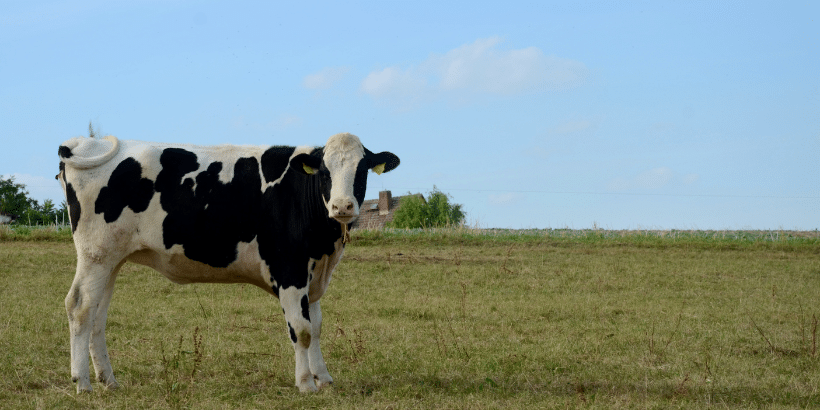
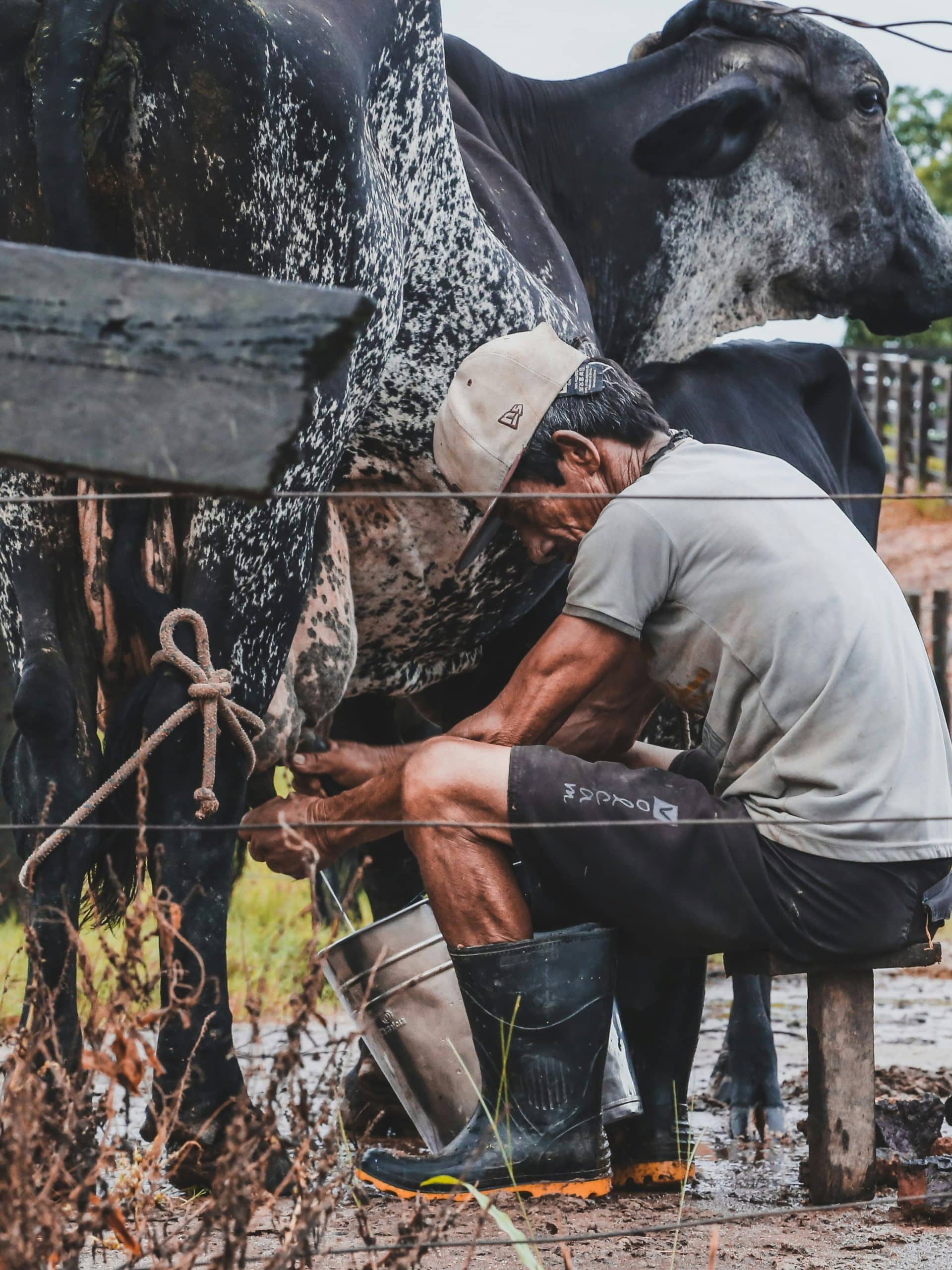
Looking to get started with a family cow? Bringing your first cow home marks a special milestone, and having the right tools and knowledge will make all the difference. Here are the must-have tools and the safety precautions worth considering to ensure a healthy, happy cow!
If a dairy cow followed you home this afternoon and put herself away in the back pasture, you wouldn’t have to rush out and buy a lot of equipment before the two of you could get down to business. We’ve tied a cow to a post, milked into a cooking pot, and strained through a clean jelly bag, and so have lots of other people, and it works just fine; and if that’s your style, stick to it. But you’re starting on a life journey of good dairying, so if you want a few dedicated tools for the purpose, here’s what we would suggest.
A stanchion
This is a head gate for holding your cow in position while you milk, and you can make one with five salvaged two-by-fours and a few-odd nuts and bolts. A good stanchion is an important tool, and an inconvenient one is going to be inconvenient every day.
A milking machine
If your hands work, you probably don’t need one. If you have osteoarthritis, though, get yourself the smallest, simplest unit you can find that has good reviews. A small bench. Put it next to the milker, to hold things like the bucket.
A stainless steel bucket
You want the seamless kind with the rim turned out but not rolled. The bail handle should attach to lugs on the rim, not to those little welded jobs that come off. You want something durable, with nowhere for milk or grime to get lodged where your sponge can’t reach it.
A stainless steel milk can or tote
Maybe; this is up to you. If you’re milking more than one cow, you’ll want a can to dump the first cow’s milk into while you milk the second cow. The lid is nice for keeping out rain, flies, and anything the barn swallows drop.
A strip cup
This is a small cup with a screen top, and you shoot the first squirt from each teat through the screen, partly to get rid of any little thing on the teat aperture you may have failed to wash off, partly so if there is any flocculation (thickness) in the milk, you’ll see it on the screen and investigate. Actually, if you don’t have a strip cup you can just shoot that first squirt against the side of your muck boot to accomplish the same goals. Likewise, you can use the screen without the cup.
A rag or brush
You want some way of cleaning your cow’s udder before you begin. We carry a small bucket of water and a soft rag; some folks use a spray bottle instead of a bucket. Some folks use a soft brush, wet or dry. Dealer’s choice. Most of the time, a grass-fed cow is going to have a clean udder, because with frequent pasture moves she’ll seldom end up lying in her poos. Accidents do happen, though, so we wash, and in any case that preliminary lavage and massage become your cow’s signal to let down her milk. It doesn’t really matter what you do for udder cleaning, just be consistent; cows love routine.
Water
For washing the udder. Nothing else: no disinfectant, detergent, or such-like necessary; we’re not trying to kill anything.
Something to sit on
This could be a three-legged stool, a 5-gallon bucket, or anything else that will let you scoot in close under your cow and hold a milk pail between your calves. We mostly use a stool or a bucket, but when a cow with a really large udder freshens, we’ve been known to milk for the first couple of weeks sitting on the ground.
Kicking hobbles
Although you may never need them, it’s good insurance to have a pair of these restraints handy. A good dairy cow doesn’t want to kick you, but if something gets her started—the barn cat spooks her, for instance—kickers will discourage her before it becomes a hobby.
Security Matters
That first day on the farm you want your new cow behind some kind of hard fence, just while she’s getting her bearings. Very soon she’s going out on pasture behind, in all likelihood, a single strand of white string. Yes, it’s electrified, and if she’s trained to respect polytwine she should stay in all right, but there are a few things you can do to lower your tension factor in case she doesn’t.
Bell her
A cow with a collar and bell is a whole lot easier to find on a dark night, or in the woods, than one without. Get one with a nice tone, not a clank; you’re going to be hearing it a lot. We love our bells.
Use a halter and lead rope
Normally, safety is in favor of leaving a cow unhaltered when she’s out on pasture—you wouldn’t want her to snag on something and get hung up. But there are times when the safest thing isn’t the best thing, and if you anticipate having trouble catching a cow or calf, a trailing lead rope certainly increases the odds you’ll get her. If you find yourself chasing her cross-country, you’re going to be really glad you left yourself a handle.
Tell your neighbors
This takes us to the other safety precaution for straying cows: neighbors. Why not let everyone in your immediate vicinity know the good news in advance and tell them you’re bringing home a dairy cow? It’s exciting, and those who aren’t thrilled for you will enjoy the superiority of believing you’re crazy. In any case, if you’ve given them due warning, they’ll know who to call if they find a stray cow in their yard.
Bedtime is not the moment on which to dwell on straying cows, nor do you need to spend the first night in the corral with your new bovine partner to make sure she doesn’t get the jitters. Yes, there may— will—be some unsettling moments ahead of you, but you’ve just taken a step that will change your life in a dozen ways that are profoundly good. So when night falls, check, if you must, to see that there’s water in your cow’s bucket and some hay within reach—and then go to bed, to dream of milk and cream and butter, and how lovely and green your pastures soon will be.
If you keep your hens in a stationary coop, you’re missing out on their soil building talents. Un-coop that poop by putting your flock in chicken tractors!