

From Seed to Salad: Your Go-To Guide for Growing Greens Year-Round
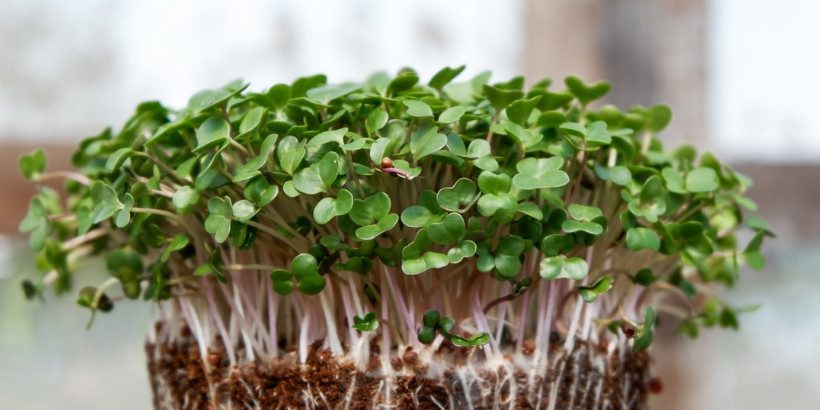
Think you need a vast outdoor garden in order to enjoy fresh produce? Think again! Don’t let cold temperatures and snow fool you—there are plenty of ways to enjoy vibrant greens year-round.
Follow this quick start guide to year-round greens for fresh salad greens in just a couple of weeks.
The following is an excerpt from Year-Round Indoor Salad Gardening by Peter Burke. It has been adapted for the web.
Indoor Gardening and Salad Sprouts
I teach gardening, and there comes a point in each class when I see smiles and nodding heads and I get the question, “Why haven’t I heard about this before?”
When people get it—the idea and how simple it is—they realize they can do this: They can grow a garden indoors. Indoor salad gardening is honest-to-goodness easy. Those moments when I see the light come on for people have special meaning for me. I remember when I first realized the same thing.
With my methods, seeds that could only be planted in the outdoor garden in the past can now be used to grow fresh greens indoors. They’ve found a useful place in the pantry as winter food. An indoor salad garden can even work as a full-time garden for those who live in apartments or condominiums with no other place to grow their own food.
Get Ready Guide

Five 3-inch by 6-inch trays (aluminum foil, half-loaf bread pans) or similar

1 gallon soil mix (standard germination mix), usually peat moss, vermiculite, perlite, and lime

5 tablespoons compost, one per tray (commercial or homemade compost)

3 teaspoons liquid sea kelp mixed with water, or 3 teaspoons dry kelp meal. Use 1/2 teaspoon per tray

1 tablespoon each sunflower, pea, radish, and buckwheat seeds

1 teaspoon broccoli seeds. You can substitute Chinese cabbage, kohlrabi, or any Brassica.

A stack of newspapers—one full sheet per tray. You can substitute paper towels, newsprint packing paper, or paper napkins.
|
|
|---|
Quick Start Guide

Soak the seeds in small cups covered with plenty of water.

Add 4 cups water to the soil mix and set aside.

Wait a minimum of 6 hours for the seeds to soak.

Fold newspaper to serve as covers, each just a little larger than the tray.

When seeds are ready to plant soak folded newspaper covers in water.

In the bottom of each tray mix ½ teaspoon of kelp and 1 tablespoon of compost.

Fill the trays with about 1¼ cup 7 moistened soil mix.

Level the soil, leaving about ¼ inch to top of tray for seeds and paper cover.

Drain water from seeds with small strainer.

Spread moistened seeds over soil so they touch but do not overlap each other.

Press soaked newspaper cover into tray so it is in contact with the seeds.

Place planted tray in a warm, dark place for 4 days.

On day 5 remove cover, tray & place on a well-lit windowsill.

. Once a day water with about 2–4 tablespoons of water per tray.

After 3–4 days of growth and greening in the light, harvest shoots with scissors.

Wash harvested greens, and remove any remaining hulls.

Chop greens into ¼-inch to ½-inch pieces and toss in a salad.

|
|
|---|
Recommended Reads
Read The Book

Year-Round Indoor Salad Gardening
How to Grow Nutrient-Dense, Soil-Sprouted Greens in Less Than 10 days
$29.95
You may like...
-
 $27.95
-
$34.95
-
$34.95


Recent Articles

Don’t let winter kill your plants! Prepare them and set yourself up for a flourishing garden come spring. Discover how to prep your less-hardy plants to keep them healthy and balanced for a thriving harvest.
Read More
Read on for tips for potatoesand sweet potato variety selection, harvesting, processing, and storage. And extend your success beyond growing and master essential techniques for crop longevity.
Read More
Edimentals are plants that are both edible and ornamental. Discover the best edible plants—for beauty and for flavor—for your growing space.
Read More
Prepare for the year ahead with cover cropping! It creates nutrient-rich soil for winter gardening AND provides a boost to your seedlings come springtime.
Read More
Having an indoor sprout garden is easier than you might think and yields a bountiful harvest. Here’s how to get started — right from your windowsill!
Read More