

Pinching Flowers to Prolong Bloom: When and How
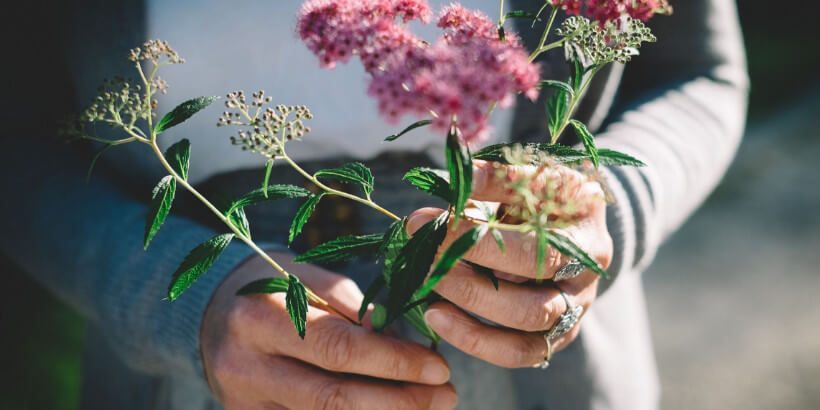
This time of year, flowers are in full bloom! To get the most out of them, try pinching flowers to prolong the bloom. This may sound simple enough, but there’s more to this trick than you might think.
The following gardening tip is from The Flower Farmer by Lynn Byczynski.
Pinching Flowers to Prolong Bloom
Pinching can be used to increase yield and to prolong bloom. It can be an important strategy for the commercial cut-flower grower, so it’s useful to understand how and when to do it.
When growers talk about pinching flowers, they are referring to the practice of cutting off the top of a flower stem. A “soft pinch” removes just the growing tip (officially called the apical meristem) and less than an inch of stem. A “hard pinch” removes several tiers of leaves and several inches from the top of the stem. When you pinch a plant, it sends out new stems below the spot where you pinched it.
By cutting off the growing tip before it has a chance to bloom, you stimulate the plant to branch and send up multiple stems that bloom at the same time. An unpinched snapdragon, as an example, will send up one flower stem. A snapdragon that is pinched when young will send up multiple flowers. It may seem obvious that  you should pinch snaps in order to get more flowers, but not everyone does.
That’s because there’s a trade-off in height and earliness—unpinched snaps are taller and bloom earlier than pinched snaps. Pinching, then, can be a way of extending the bloom time of a specific flower; you can leave some unpinched for an early crop and pinch the rest for later blooms.
The concept behind pinching is pretty simple, but the practice gets complicated.
Some flowers should never be pinched. Those that grow from a rosette of leaves, such as statice, don’t benefit from pinching and will, in fact, become misshapen if you do pinch an emerging stem. Others get too tall and lanky if you don’t pinch them; chrysanthemums and dahlias are good examples. Sometimes seedlings start to bloom in the plug tray, and you have to pinch off the flowers before planting them outside so they will send up new flower stems. (It’s often easiest to shear off the tops of the whole flat with sharp scissors.) Sometimes nature, in effect, pinches your young plants for you: When wind, cold, or hail kills the growing tip, the plant will often branch lower on the stem and rebound, looking much fuller.
When your information reference recommends pinching, it usually will tell you whether you should do a hard or soft pinch, and at what stage in the plant’s development. If there is no mention of pinching, don’t be afraid to experiment on your own. Pinch one side of the bed and leave the other side unpinched, and see if it makes a difference.
As with so many things about flowers, local conditions will determine the best practices. The important thing to remember is that plants want to grow, and you probably aren’t going to hurt them by pinching them—or by not pinching them. Even if you forget to pinch, you can usually compensate by cutting a long stem of the first flower that blooms in the center of the plant. That effectively removes the apical meristem, forcing the plant to send out branches lower down on the stem. Those eventually will grow just as tall as the central stem, and you’ll still get multiple blooms from each plant.
Recommended Reads
Read The Book

The Flower Farmer
An Organic Grower's Guide to Raising and Selling Cut Flowers, 2nd Edition
$35
You may like...
-
 $34.95
 -
$29.95


Recent Articles

All hail the mighty garlic clove! Become a master at garlic growing with these simple tips for growing no-till garlic from seed to harvest.
Read More
Try your hand at preserving veggies by freezing them! Freezing vegetables is a quick, simple way to preserve them for winter meals.
Read More
If you keep your hens in a stationary coop, you’re missing out on their soil building talents. Un-coop that poop by putting your flock in chicken tractors!
Read More
Growing mushrooms on logs is an easy way to cultiavte your own fungi! Work in tandem with nature to grow many varieties of mushrooms.
Read More
As your favorite variety of home grown tomatoes start ripening on the vine this summer, be sure to save those seeds for next year’s planting.
Read More