

| Pages: | 352 pages |
| Size: | 8 x 10 inch |
| Publisher: | Chelsea Green Publishing |
| Pub. Date: | September 11, 2013 |
| ISBN: | 9781603584739 |
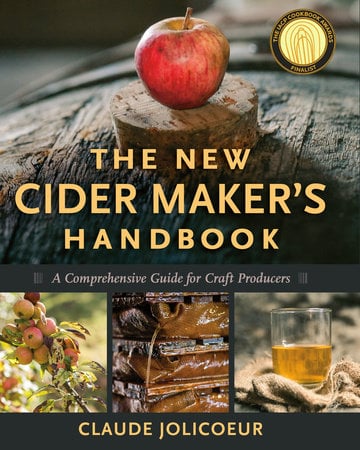
The New Cider Maker’s Handbook
A Comprehensive Guide for Craft Producers
“I’ve caught the cider bug, and I’ve caught it bad. You too? Then seek out this book without delay. The New Cider Maker’s Handbook is like having all your birthdays come at once for hard cider geeks like us. From the choosing the right apples and building your own cider press to measuring cider’s alcohol content and adjusting the final sweetness, it’s all right here.”—The Kitchn
All around the world, the public’s taste for fermented cider has been growing more rapidly than at any time in the past 150 years. And with the growing interest in locally grown and artisanal foods, many new cideries are springing up all over North America, often started up by passionate amateurs who want to take their cider to the next level as small-scale craft producers.
To make the very best cider—whether for yourself, your family, and friends or for market—you first need a deep understanding of the processes involved, and the art and science behind them. Fortunately, The New Cider Maker’s Handbook is here to help. Author Claude Jolicoeur is an internationally known, award-winning cider maker with an inquiring, scientific mind. His book combines the best of traditional knowledge and techniques with up-to-date, scientifically based practices to provide today’s cider makers with all the tools they need to produce high-quality ciders.
The New Cider Maker’s Handbook is divided into five parts containing:
- An accessible overview of the cider making process for beginners;
- Recommendations for selecting and growing cider-appropriate apples;
- Information on juice-extraction equipment and directions on how to build your own grater mill and cider press;
- A discussion of the most important components of apple juice and how these may influence the quality of the cider;
- An examination of the fermentation process and a description of methods used to produce either dry or naturally sweet cider, still or sparkling cider, and even ice cider.
This book will appeal to both serious amateurs and professional cider makers who want to increase their knowledge, as well as to orchardists who want to grow cider apples for local or regional producers. Novices will appreciate the overview of the cider-making process, and, as they develop skills and confidence, the more in-depth technical information will serve as an invaluable reference that will be consulted again and again. This book is sure to become the definitive modern work on cider making.
A mechanical engineer by profession, Claude Jolicoeur first developed his passion for apples and cider after acquiring a piece of land on which there were four rows of old abandoned apple trees. He started making cider in 1988 using a “no-compromise” approach, stubbornly searching for the highest possible quality. Since then, his ciders have earned many awards and medals at competitions, including a Best of Show at the prestigious Great Lakes International Cider and Perry Competition (GLINTCAP).
Claude actively participates in discussions on forums like the Cider Digest, and is regularly invited as a guest speaker to events such as the annual Cider Days festival in western Massachusetts. He lives in Quebec City.
Reviews & Praise
“Claude Jolicoeur is a true student of the art and science of cider.From clear, concise discussions of the technical aspects of cider making, to the selection of proper cider apples, this is a treatise for all time.The text is straightforward, and can be an excellent guide to novice cider makers, but it is endowed with a wealth of information that will benefit ciderists at all levels of the craft. I only wish this book had been available when I first began making cider.”—Chuck Shelton, ciderist, Albemarle CiderWorks, North Garden, VA
“Have you ever tasted a true farmhouse cider, full-bodied and richly flavored, or finished a meal with a sweet ice cider? Then you know the astonishing range of this once nearly forgotten drink. Whether you’re a hobbyist interested in learning about fruit selection, or a commercial producer looking for better quality and consistency, this is your book. Claude Jolicoeur informs every page of his hands-on, comprehensive guide with 25 years of research and experience. For anyone who aspires to make the finest quality fermented cider, The New Cider Maker’s Handbook is as indispensable as an apple press.”—David Buchanan, author of Taste, Memory
“We wish we’d had this book when we were starting out. Cider making is an art, of course, but it’s also very much a science, and Claude shows he is among the leading experts in both aspects. The New Cider Maker’s Handbook is a practical, approachable, well-organized, extensively researched guide to cider making, from apple selection to pressing to fermentation and beyond. As experienced cider makers, we find it essential, but it’s excellent for beginners as well. As craft cider grows in popularity and stature throughout the U.S. and Canada, we expect Claude’s book to become North America’s preeminent cider reference.”—Scott Heath and Ellen Cavalli, co-owners, Tilted Shed Ciderworks, Sonoma County, CA
"Based on Claude Jolicoeur’s 25 years experience in craft cider making, The New Cider Maker’s Handbook combines the author’s personal perspectives with solidly researched information from cider makers worldwide, to create a manual which is both practical and inspirational. Some of the detail, for instance on press design, alcohol measurement, and naturally sweet and ice ciders is simply unavailable elsewhere. The focus on North American apple varieties and conditions will be welcomed by many, but this book is invaluable to hobbyists and small commercial cider makers no matter where they live. A worthy addition to the modern cider literature."—Andrew Lea, food scientist and author of Craft Cider Making
“J.M. Trowbridge wrote the first Cider Makers’ Hand Book in 1890. This modern take on the apple fermenter’s art picks up the trail anew. Claude Jolicoeur makes exceptional cider doable for even a guy like me. Balancing the acids and sugars of righteous juice lies at the heart of the method. Pour your friends the ‘nectar of the gods’ from here on in when next you pop a cork.”—Michael Phillips, author of The Apple Grower and The Holistic Orchard
“Claude Jolicoeur’s New Cider Maker’s Handbook is an invaluable resource for the serious home cider maker. However, serious professionals will also find a lot of great reference material, especially the sections devoted to apple varieties.”—Mike Beck, president, U.S. Association of Cider Makers
“This is the book so many craft cider makers have been waiting for: at once comprehensive, detailed, and authoritative. Planting an orchard? There are guidelines and suggestions. Need a mill or a press? There are plans and instructions. Trying to grasp the process, or to know how to measure? It's there--sugar, acidity, pH, tannin, balance. Troubleshooting a problem? All the common shortcomings are covered. It really is ‘orchard to bottle,’ with both guidance and technical background all along the way.”—Dick Dunn, president, Rocky Mountain Cider Association
"Award-winning cider maker Jolicoeur provides a comprehensive guide to cider making, covering the selection of apple varieties, chemical formulas and charts, and the construction of mills and presses. Though Jolicoeur claims that his work is appropriate for the amateur cider maker, his perspective as a mechanical engineer results in a book that is far too technical, dense, and text heavy for a novice. However, its accuracy and tone will be of value for serious hobbyists and small-scale professional cider makers."— Library Journal
"Jolicoeur is a mechanical engineer who delights in the details of cider-making, from calculations and formulas to spreadsheets. Based in Quebec, he 'discovered' cider in 1988 after finding rows of abandoned apple trees on newly acquired land. His vocation and avocation combine to bring readers a step-by-step guide with a number of color photographs. It starts simply enough, with an overview of the process, apple growing and selection, and seven principles for producing the best, from 'good cider needs great apples” to “remember what you did.' After a careful review of dozens of regional apple varieties (and a few pears, to make the cider equivalent called perry), complete with notes on sugar, acidity, tannin, juice yield, harvest date, and pressing season, he dives into the more difficult processes, including juice extraction, fermentation, and troubleshooting. Some good chemistry basics help, as do an 'I can build it' mentality and competency."— Booklist

About Claude Jolicoeur
Claude Jolicoeur is the author of The New Cider Maker’s Handbook, which has been acclaimed worldwide as a major reference on the topic of cider making. In French, he has authored Du pommier au cidre (From Apple Tree to Cider) and collaborated to the collective work La transformation du cidre au Québec (Cider Processing in Quebec).
A mechanical engineer and research scientist by profession, he started in the late 1980s making cider as a hobby. Since then, he has accumulated vast experience, always searching to obtain the highest quality possible. His ciders have earned many awards at competitions, including Best of Show at the prestigious Great Lakes International Cider and Perry Competition (GLINTCAP).
Claude has traveled widely throughout the Cider Planet, is regularly invited to be a guest speaker or cider judge at international cider festivals and events, and actively participates in discussion forums such as the Cider Workshop. He currently works on the evaluation of wild native apples for the establishment of collections of high-quality cider apple varieties that are well adapted to the conditions of eastern Canada. He lives in Quebec City.
Connect with Claude Jolicoeur
Books by Claude Jolicoeur


You may also like...
-
 $24.95
 -
$29.95
-
$39.95


