

The Organic Farmer’s Business Handbook
A Complete Guide to Managing Finances, Crops, and Staff – and Making a Profit

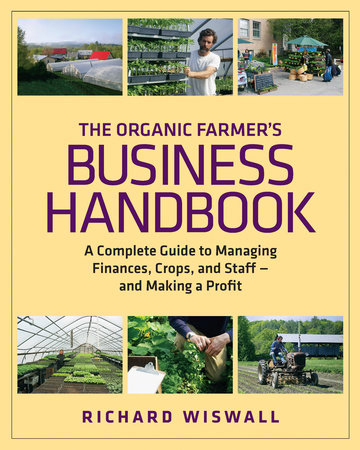
| Pages: | 224 pages |
| Book Art: | Black and white photos charts |
| Size: | 8 x 10 inch |
| Publisher: | Chelsea Green Publishing |
| Pub. Date: | September 30, 2009 |
| ISBN: | 9781603581424 |
The Organic Farmer’s Business Handbook
A Complete Guide to Managing Finances, Crops, and Staff – and Making a Profit
Paperback
$34.95
Contrary to popular belief, a good living can be made on an organic farm. What’s required is farming smarter, not harder.
In The Organic Farmer’s Business Handbook, Richard Wiswall shares advice on how to make your vegetable production more efficient, better manage your employees and finances, and turn a profit. From his twenty-seven years of experience at Cate Farm in Vermont, Wiswall knows firsthand the joys of starting and operating an organic farm—as well as the challenges of making a living from one. Farming offers fundamental satisfaction from producing food, working outdoors, being one’s own boss, and working intimately with nature. But, unfortunately, many farmers avoid learning about the business end of farming; because of this, they often work harder than they need to, or quit farming altogether because of frustrating—and often avoidable—losses.
In this comprehensive business kit, Wiswall covers:
- Step-by-step procedures to make your crop production more efficient
- Advice on managing employees, farm operations, and office systems
- Novel marketing strategies
- What to do with your profits: business spending, investing, and planning for retirement
A companion toolkit, available for download upon purchase of the book, offers valuable business tools, including easy-to-use spreadsheets for projecting cash flow, a payroll calculator, comprehensive crop budgets for forty different crops, and tax planners.
Reviews & Praise

About Richard Wiswall
Rebecca Thistlethwaite is the author of Farms with a Future (Chelsea Green, 2012). She runs Sustain Consulting, which specializes in food and farm issues, working with both nongovernmental organizations and for-profit businesses. Her website is http://rebeccathistlethwaite.com.
Rebecca also operates a small farm and a community farm stand in Oregon with her husband and coauthor, Jim Dunlop, and their daughter, Fiona. They previously owned TLC Ranch in Watsonville, California, where they raised organic, pastured livestock and poultry, selling to direct markets across Northern California.
Richard Wiswall started Cate Farm in East Montpelier, Vermont, where he has farmed since 1981. Known for his work on farm profitability and appropriate business tools, Wiswall consults with other farmers, and writes and speaks frequently on organic-farm business issues. He is the author of book The Organic Farmer’s Business Handbook and Business Advice for Organic Farmers, a practical workshop available on DVD. To learn more about Wiswall and Cate Farm, visit www.catefarm.com.
Connect with Richard Wiswall
Books by Richard Wiswall
You may also like...
-
 $29.95
 -
$39.95
-
$27.00


