

| Pages: | 304 pages |
| Book Art: | Black-and-white illustrations |
| Size: | 6 x 9 inch |
| Publisher: | Chelsea Green Publishing UK |
| Pub. Date: | June 3, 2020 |
| ISBN: | 9781603589864 |
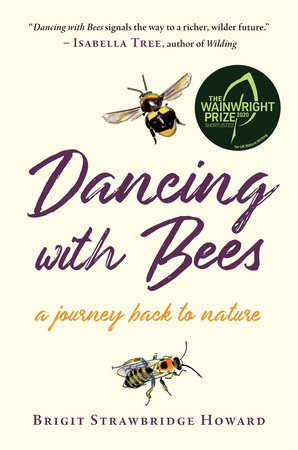
Dancing with Bees
A Journey Back to Nature
SHORTLISTED FOR THE 2020 WAINWRIGHT PRIZE
The Sunday Times Best Nature Writing Books 2020
A naturalist’s passionate dive into the lives of bees (of all stripes)—and the natural world in her own backyard
Brigit Strawbridge Howard was shocked the day she realised she knew more about the French Revolution than she did about her native trees. And birds. And wildflowers. And bees. The thought stopped her—quite literally—in her tracks. But that day was also the start of a journey, one filled with silver birches and hairy-footed flower bees, skylarks, and rosebay willow herb, and the joy that comes with deepening one’s relationship with place. Dancing with Bees is Strawbridge Howard’s charming and eloquent account of a return to noticing, to rediscovering a perspective on the world that had somehow been lost to her for decades and to reconnecting with the natural world. With special care and attention to the plight of pollinators, including honeybees, bumblebees, and solitary bees, and what we can do to help them, Strawbridge Howard shares fascinating details of the lives of flora and fauna that have filled her days with ever-increasing wonder and delight.
Reviews & Praise
"[A] fascinating and wide-ranging exploration of nature. . .This satisfying memoir of a woman’s reawakening to the importance of nature in her life will appeal to fans of natural history memoirs, bees, the natural world, or ecology."—Library Journal
“[An] engaging, richly descriptive tale of natural discovery."—Booklist, Starred Review
"In this delightful book, Brigit Strawbridge Howard brings us into the fascinating and often overlooked world of bees. She introduces us to solitary nesting bees that lay their eggs in empty snail shells, cuckoo bees that make other bees take care of their eggs, and the amazing social lives of bumblebees and honeybees. Her curiosity and wonder at these small creatures are infectious and will inspire a greater appreciation of our natural world.”—Nancy J. Hayden, coauthor of Farming on the Wild Side
"Hovering through Brigit Strawbridge Howard’s remarkable encounters with bees, alighting on beautiful and often unexpected descriptions of bumblebees, miner bees, and even parasitizing cuckoo bees, one dips into a world most of us have forgotten. By leading us gently and discretely into the minutiae of nature, Brigit shows how rewarding it is to reconnect—how the world’s tiniest beings can not only lift our spirits, but signal the way to a richer, wilder future.”—Isabella Tree, author of Wilding
"Dancing with Bees is a passionate hymn to nature, a joyful celebration not just of bees, but of the power of paying attention. Strawbridge Howard’s rediscovery of the natural world is infused with a sense of wonder both irresistible and infectious. And the promise of this beautiful book is that if we take the trouble to notice our natural surroundings, we too can find a way to reconnect not just to nature, but to a deeper sense of ourselves.”—Caroline Lucas, MP, former Green Party Leader
"I devoured this book as I would a jar of exquisite honey. I was as fascinated by it as I would be watching a hive of bees at work. I may read another nature book this year, but not a better one. Or a more important one. As is made so manifestly clear in these pages, we need our bees. Thank God, then, for Brigit Strawbridge Howard, our queen bee-advocate.”—John Lewis-Stempel, author of Still Water and Meadowland
"Dancing with Bees is one of the most important and accessible and entertaining books I’ve ever read. Brigit has poured meticulous detail and research into her book, which has left me with even more respect for our precious bees than I ever thought possible. What’s more, it’s a touching, sensitive account of what makes us human and how we connect to the natural world. Everyone should read it.”—Kate Bradbury, author of Wildlife Gardening and The Bumblebee Flies Anyway
"A beautiful book and one that hums with good life. Brigit Strawbridge Howard came late to bees but began noticing them at a time when their going was being widely announced. Her attention has been clear-sighted but also loving. By looking closely at the hummers and the buzzers, she has begun to take in the whole of what Charles Darwin called the ‘tangled bank’ of life, where there are bees (and Brigit’s winning descriptions will help you know them) and there are plants, and there are other pollinators and nectar-seekers, including Homo sapiens. No other insect—surely no other animal—has had such a long and life-giving relationship with humans. Bees may well have shaped our evolution; our continued well-being is certainly dependent on them. Bees have long been part of our consciousness and art, buzzing in parables and fables and ancient and modern poems made out of their industry and their organisation and their marvellous sweet products. All that is in this book: It is ambrosia.”—Tim Dee, author of Landfill
"While the plight of our overworked honeybees elicits much hand-wringing, the rest of Earth’s splendorous apian diversity has remained unjustly obscure. In this winning tribute to our black-and-yellow fellows, Brigit Strawbridge Howard celebrates the virtues of dozens of less heralded, but no less crucial, wild species—mining bees, leaf-cutting bees, mason bees, cuckoo bees. Like a bee herself, Strawbridge Howard is at once pragmatic and whimsical, flitting lightly between practical advice for crafting a bee-friendly garden and wise digressions about our manipulative relationship with nature. By the end of Dancing with Bees, you’ll wholeheartedly agree that these indispensable creatures should be extolled as ‘our equals, not our minions.’”—Ben Goldfarb, author of Eager
"A joy-filled voyage of discovery through the wonderful world of bees.”—Dave Goulson, author of Bee Quest and A Sting in the Tale
"Sprinkled with moments of pathos, this exquisite book is the perfect introduction to the often neglected world of wild bees—and the beautiful plants with which they dance an ecosystem into life.”—Hugh Warwick, author of Linescapes and Hedgehog
"Brigit Strawbridge Howard is an excellent pollinator of information. Dancing with Bees is a book teeming with love: for bees but also for the natural world as a whole and, by extension, for life itself. Everyone who cares about the future of our planet should read it.”—Tom Cox, author of 21st-Century Yokel
"Dancing with Bees is an antidote to the reality of modern life that’s spent nose down in our smartphones while the wondrous stuff—nature—goes on all around us. Brigit Strawbridge Howard chronicles her own journey of reconnecting with the natural world with heartfelt eloquence. Her descriptions of the creatures, plants, and landscapes that populate her journey are made with the unabashed joy of someone for whom a veil has been lifted, revealing a world to be cherished but also in great need of our protection.”—Matthew Wilson, garden designer; author; panelist, BBC Radio 4’s Gardeners’ Question Time
"We are handed a lens—light, bright, beautiful things come into focus. Brigit’s flare for observation and description, passion for knowledge, and ease with communication involve us in adventuring through the looking glass to explore with her the intimate life of wild bees. Gently, this timely book reminds us that nature is in trouble and that we must all join the dance.”—Sue Clifford and Angela King, founding directors, Common Ground
"Dancing with Bees is a brilliantly described journey of discovery of bees, trees, people, and places, imbued with a childlike wonderment. Learn about cuckoo bees, carder bees, bees that are not bees, the commonplace and the rare. It is never too late to reconnect with nature and rewild oneself.”—Steven Falk, author of Field Guide to the Bees of Great Britain and Ireland
"Well written and researched, beautifully illustrated, and packed with natural history detail, Dancing with Bees is a book to start you off on a journey that could well become an obsession. Even if you are well versed in the ways of bees, you will still want to wrap yourself in the warmth of this charming book. Brigit Strawbridge Howard gently shows you all the things you may have been missing; you are about to enter a macro-world of wonder and delight. I absolutely loved this book. If, due to infirmity perhaps, I am ever unable to walk in the countryside, I can now go dancing with bees whenever I choose.”—Dr. George McGavin, president, Dorset Wildlife Trust; honorary research associate, Oxford University Museum of Natural History
"Brigit Strawbridge Howard leads us on a wistful pilgrimage of awakening into the world of bees who are among the most fascinating, charismatic, and important of insects. Written in an easy, accessible style without shying away from solid facts and beguiling detail, and beautifully illustrated by renowned Devon naturalist John Walters, Strawbridge Howard’s book is the result of hundreds of hours of watching, listening, and learning in her garden and the wider countryside, wondering what the future might bring and how human excesses may be curbed.”—Stuart Roberts, entomologist

About Brigit Strawbridge Howard
Brigit Strawbridge Howard is a bee advocate, wildlife gardener and naturalist. She writes, speaks, and campaigns to raise awareness of the importance of native wild bees and other pollinating insects. She lives in North Dorset with her husband, Rob.
Connect with Brigit Strawbridge Howard
Books by Brigit Strawbridge Howard

You may also like...
-
 $24.95
 -
$22.95
-
$19.95


