Join Us!

 
Like this book? Digg it!

Share on Facebook

Book Data

ISBN: 9781931498920
Year Added to Catalog: 2006
Book Format: Paperback
Book Art: Glossary, Notes, Index
Number of Pages: 464 pages
Book Publisher: Chelsea Green Publishing
Old ISBN: 193149892X
Release Date: November 30, 2006
Web Product ID: 214

Also By This Author

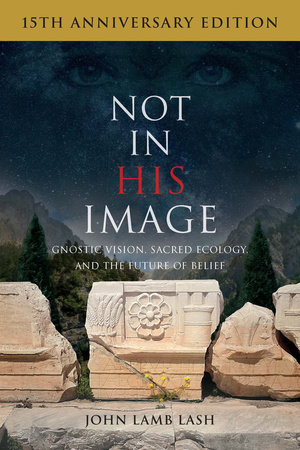
Not in His Image

Gnostic Vision, Sacred Ecology, and the Future of Belief

by John Lamb Lash

Afterword by Derrick Jensen

Reviews

NewsObserver.com

From the Middle and Out

By Susan Campbell

January 5, 2007

A book about early Christianity that hasn't received nearly enough attention is "Not In His Image: Gnostic Vision, Sacred Ecology, and the Future of Belief" by John Lamb Lash (Chelsea Green Publishing, $21.95). Before Christianity, the European religious world was far from monolithic. There were goddesses and priests and shamanistic healers and pagans in the ancient sense of the word. Lash explores how the early church circumvented those groups and established a king of kings. Heavily footnoted (from what the author says is 40 years of research), this is a dense book meant for a serious scholar.


Traditional Yoga Studies

Book Review

December, 2006

Inspired in his youth by Nietzsche’s transvaluation of values, Lash eagerly left behind the narrow fundamentalist Advent Christianity inherited from his parents and went in quest of a more convincing worldview. He found it in pre-Christian Paganism, the Mystery schools, or Gnosis, celebrating the goddess of wisdom, Sophia. He sees pathology at the core of the Judeo-Christian tradition of salvation and at least in this regard attempts to “complete Nietzsche’s critique,” though “continue” or, as he puts it elsewhere in the book, “extend” that critique might have been a more modest claim.

He pointedly and rightly rejects the victim-perpetrator ideology he detects at the heart of Christianity, as it has been transmitted down the ages. He rejects the idea that someone outside oneself could ever serve as our savor. He rejects the concomitant Christian notion that suffering is good and redemptive.

He argues that the teachings of the Gnostics, for which he projects a Neolithic beginning, are highly relevant to our contemporary crisis, because they herald modern ecology. There are naturally many elements in Gnostic traditions, East and West, which are more Earth-friendly than mainstream Christianity. Lash does a good job of ferreting out ecologically pertinent teachings.

As with any large-scale interpretation of history, there are points with which one may want to disagree, such as the author’s adoption of Riane Eisler’s concept of gylanic societies; or his conflation of Gaia with Sophia, which seems central to his work; or his belief that we live in the last days of the kali-yuga (which, according to Hindu sources is actually said to last for another 129 million years); or his seeing evidence for extraterrestrial visitors in several of the Dead Sea Scrolls or that extrahuman predation is even a problem. (A minor point but one that I as an Indologist could not fail to notice is the author’s consistent misspelling of Sir John Woodroffe’s name.)

One may also want to differ with the author in his claim that “[t]he greatest difference between Buddhism and Gnosis is that Gnosis provides a guiding narrative, a directive script for assisting humanity to find its niche in the natural world, and Buddhism does not” (p. 213). Many “engaged” Buddhists would object. Let it be said, however, that there are plenty of arguments and statements in Not in His Image with which at least the present reviewer can wholeheartedly agree. Certainly, this passionate book is a vigorous re-telling of the historical play between so-called Paganism and Christianity, containing any number of striking insights and felicitous formulations.

Lash reminds his readers that the Greek word heraisthai, from which stems the English term “heresy,” means “to choose.” His book represents his own conscious choice: a reclaimed Gnosis, or “Sophianic vision.” The Sophia mythos is indeed complex and fascinating. But it is a mythos, after all, a narrative that can inspire but that cannot be a substitute for experienced reality, especially the realization of Gnostic vision, which, as the author rightly notes, depends on the transcendence of the ego and the conceptualizing mind.


Los Angeles Times

Book Review

By, Jonathan Kirsch

December 3, 2006

Gnosticism is a label applied to a collection of religious ideas that has long exerted a certain appeal to public intellectuals and controversialists, ranging from the theologian Marcion in the 2nd century AD to literary critic Harold Bloom in our time. What attracts them, I suppose, is the conviction that the highest truths are available only to a small circle of initiates — the Greek term gnostokoi can be translated as "those who understand divine matters, knowing what the gods know."

The latest to unfurl the banner of Gnosticism is John Lamb Lash, who describes the Gnostics of the ancient world as "the elite of Pagan intellectuals" and declares that their writings are "the explosive charge that can blow the institution of the Faith off its foundations, for good and all." By "the Faith," he means the Judeo-Christian-Islamic tradition in its entirety, and he intends to do nothing less than convert his readers into latter-day Gnostics.

Lash, whose publisher describes him as "an exponent of the practice of mythology," rejects much of the contemporary scholarship on Gnosticism. For example, he dismisses the work of Princeton historian Elaine Pagels, author of "The Gnostic Gospels," because she places the texts discovered at the Egyptian archeological site of Nag Hammadi within the context of early Christianity. Such an approach, he insists, "has hampered understanding of who the Gnostics were, and why they protest so vehemently against the rise of Christianity."

Lash seeks to rescue Gnosticism from the dustbin of Christian history and restore it to its rightful place amid the splendors of pagan antiquity. To signal his admiration for the fecund religious imagination of paganism, he capitalizes the word "Pagan" as if it were a single faith rather than a phantasmagorical assortment of beliefs and practices. But he does point out that Gnosticism itself shouldn't be described as a religion or even a sect, if only because gnostokos was "the generic term for any person learned in divine matters." Above all, he insists that Gnosticism represents the path toward "spiritual deep ecology," symbolized by today's adherents of the Greek earth goddess Gaia.

"Not in His Image" is perhaps best compared to Robert Graves' "The White Goddess," an earlier and only slightly less eccentric effort to find and explain the linkages among the fantastic variety of religious experiences in the ancient world. Like Graves, Lash is a self-invented scholar who has read widely and thought deeply. (He is the author of "Quest for the Zodiac," "The Hero" and "The Seeker's Handbook," and the co-founder of metahistory.org with a former wife, Joanna Harcourt-Smith, who lived with Timothy Leary in the 1970s. And he is general executor of the estate of Jack Kerouac's daughter, Jan, to whom he also was once married.) He confidently issues pronouncements about what he calls "the wholesale genocide of Pagan culture" and prescriptions for the spiritual salvation of the world.

Lash offers this work as a corrective to the "scholarly specialization" that condemns the Gnostics to "an obscure and uncertain place on the margins of the history of religion." Along the way, he seeks to repudiate what he sees as the pigheadedness of the academic establishment. Thus, for example, he condemns biblical scholars who do not see the continuities that Lash detects between the early Christians and the religious community at Qumran. He calls them "Zaddikites," but they are better known to the lay reader as the custodians of the Dead Sea Scrolls: "They fail to realize that the message of love in the charming miracle tales of the New Testament is a sugar coating on the bitter cyanide of Zaddikite ravings."

But Lash is not concerned merely with scolding biblical scholars. His goal is to melt down the religious and philosophical ideas of antiquity and recast them as a serviceable faith for our world. In place of the Judeo-Christian-Islamic tradition, which he links to "the religious schizophrenia of the ancient Hebrews" and which he flatly condemns as "annihilation theology," he proposes that we embrace Gnosticism and what he dubs "Gaian ethics," which he describes as "not a call to faith in God, but faith in the human species."

Lash is capable of explaining the mind-bending concepts of Gnosticism and pagan mystery cults with bracing clarity and startling insight. At moments, however, he slips into a kind of New Age rant as baffling as any mystical text. "What we seek in 'Gaia theory' is a live imaginal dimension," he writes in one such passage, "not a scaffolding of cybernetic general systems cogitation." Or: "Gnosis, taken as a path of experimental mysticism, and the Sophianic vision, taken as a guiding narrative for co-evolution, can provide the spiritual dimension for deep ecology independently of the three mainstream religions derived from the Abrahamic tradition."

Even he acknowledges that his book can be "a long haul and a lot to follow" and that his line of reasoning "demands exceptional concentration from the likes of us, many of whom cannot stay in the moment for three minutes at a time."

Lash's arguments are often lively and entertaining, even when they aren't convincing. When he contends that Celtic civilization spread to the far corners of the ancient world — "An apocryphal legend claims that John the Baptist was a Celt," he writes, "and Mary Magdalene was Circassian, half Celt, half Jewish" — he is reduced to citing the film "Lawrence of Arabia" to support the proposition that "Celtic half-breeds survived in the Levant down into the early twentieth century."

And when he considers what he calls the "sci-fi theology" of the ancient Gnostics, he comes uncomfortably close to affirming that the otherworldly "Archons" of Gnostic myth were authentic extraterrestrials.

"It is worth noting that the first great UFO wave of the twentieth century occurred in the summer and fall of 1947 when Jean Doresse was in Cairo examining the Nag Hammadi Codices, at the very moment the first Dead Sea Scrolls were found," Lash writes. "This was also the year that the CIA was founded, with the dual intention (according to UFO conspiracy buffs) to co-opt alien technology and cut a deal with the aliens, allowing them to experiment covertly on human subjects.... In fact, a CIA agent named Miles Copeland was dispatched to Damascus to examine and photograph some of the first scroll fragments to be unearthed."

At one telling moment at the outset of his book, Lash describes how his life was transformed when, in early adolescence, he was reading a copy of Nietzsche's "Thus Spake Zarathustra" in the back seat of the family car on the way back from an orthodontist's appointment in upstate New York. "I swore to finish what Nietzsche had begun," he declares. "I vowed to think through and live out his critique of Christianity to the end."

With "Not in His Image," he keeps that vow. But when Lash invites us to embrace the "high strangeness" of what he calls the "ET/Archon" hypothesis "with the Gnostic theory of alien intrusion" — "the stranger it gets, the more sense it makes," he insists — he passes wholly through the looking glass.

Jonathan Kirsch is the author of, most recently, "A History of the End of the World: How the Most Controversial Book in the Bible Changed the Course of Western Civilization."


Restoring Balance – Reclaiming our Spiritual Heritage


By, Maggie Lee

Santa Fe, New Mexico

November 1, 2006

Meeting John Lash in the early 70’s and studying with him in Santa Fe, New Mexico during the 80’s, I had the privilege to observe his gathering body of knowledge grow and mature.

His new book Not in His Image, narrates the retrieval of the ancient roots of humanity's religious experiences and its flowering in our sacred and mystical communion with the Earth and challenges the many millennium-old Savior-Victim belief system, inclusive of man’s domination over nature.

He states his primary objectives in the Introduction: “To recover Pagan wisdom and restore the Sophianic vision of the Mysteries and in correlating these teachings with Gaia theory and deep ecology, add a spiritual dimension.” His research and experiences are melded with numerous insightful references from the codices of antiquity to historians, cutting-edge biologists and astro-physics to deep ecology.

From a brilliant perspective, Mr. Lash unravels historical textural evidence exposing the cover-up, conspiracy and agenda behind the betrayal of humanities’ spiritual heritage. Principals, he informs, deviated by a political system in the guise of religion. A religion modeled primarily from patriarchal domination; ignited by delusional beliefs, intimidation and the power of suffering ; leaving in its wake a horrific legacy of conquest and conversion by violent force, suppression and hypocrisy. “Salvation history mirrors the hidden workings of our most narcissistic, self-destructive impulses.”

His exposition cites evidence describing the source and motivation behind the tragic eradication of the Mystery Schools by these forces.

2000 years later, this “world-wrenching tragedy meets a fateful moment.” In 1947, the Dead Sea Scrolls were discovered, providing what Mr. Lash refers to as “the ideological infrastructure of Christian religion.” In 1945 in the desert mountains, an Arab peasant found 13 volumes which were destined to become the Nag Hammadi Library. This choice cache was published in English in 1978 and reveals the other side of the story…rare writings including the Sophia Mythos and Pagan and Gnostic cosmology. Quoting from the book, “The message of the Gnostic revealers is theological semtex.”(explosive)

While evoking the ambience of the Mystery sanctuaries, he quotes Walter Buckert, “Mysteries were initiation rituals of a voluntary, personal and secret character that aimed at a change of mind through experience of the Sacred.” “These schools were the universities of antiquity and their teachings were dedicated to the continuing consecration of the Earth as the Great Goddess – Sophia, whose unique wisdom is the living intelligence of the planet.” The Gnostic documents describes the lost creation myth of Sophia and how she became the body of our earth Gaia; about the Aeon Christos; about the Mesotes, the supportive intermediary to our self-guiding and self-correction and about instruction given by the Light. The Mystery centers taught the arts of civilization, social organization, ecological ethics, language and writing skills.

The Gnostics spoke of the Anthropos, the genetic template of authentic humanity, “As a learning animal…free to err, correct and learn from our mistakes. Failing to own and evolve the intelligence innate to the species, we risk being deviated by another kind of mind, an artificial intelligence through which we become unreal to ourselves.”

He continues, “The Gnostics warned, the male-god fixation belies the preference for simulation over reality that is the primary risk of deviation for our species. We incur this risk through being exceptionally endowed with modeling and abstracting faculties. Preference for replication will come to the fore in human cerebral activity, taking on a life of its own, if not detected and kept within limits. Exposing and overcoming co-optive re-plication may be the spiritual challenge that decides the fate of Humankind.”(The origin of replication means to ‘hold back’)

Within the last 30 years or so, “Western society has acquired a new spiritual dimension centered on the image of Gaia. The Gaia Hypothesis and deep ecology appeared in the world almost simultaneously.” Mr. Lash cites other converging links and feels hopeful that Gnosis will find its place within these movements, illuminating and deepening recognition of the intensive dimension of nature. He quotes Jeremy Narby, “How could nature not be conscious, if our own consciousness is produced by nature.”

Gaia-Sophia relies and waits for our awareness and communication of this reciprocal perception in our senses and telepathic resonance in our memory and thinking. So we might come to learn and understand Gaia’s transhuman purposes and our contribution to Her correction.

“Loving Gaia is the highest calling of humanity.”

John Lash’s generosity of spirit is his gift of freedom. Not in His Image is a wise story that engages a force that can heal.


Price: $24.95
Format: Paperback
Status: Available to Ship
Ships: Next day


US Orders Only.
International Orders: Click here.
Also available in: Hardcover

's Upcoming Events

  • Judy Wicks at Economics of Happiness Conference
    Economics of Happiness Conference, Berkeley CA
    March 23, 2012, 12:00 pm
  • Judy Wicks at the 2012 BALLE Conference
    BALLE Conference, Grand Rapids MI
    May 16, 2012, 12:00 pm
  • Judy Wicks at Bioneers by the Bay
    Bioneers by the Bay Conference, New Bedford MA
    October 26, 2012, 12:00 pm