

Not in His Image (15th Anniversary Edition)
Gnostic Vision, Sacred Ecology, and the Future of Belief

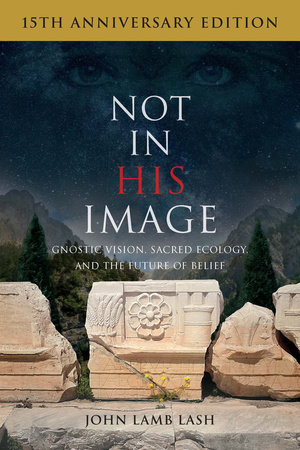
| Pages: | 470 pages |
| Size: | 6 x 9 inch |
| Publisher: | Chelsea Green Publishing |
| Pub. Date: | September 9, 2021 |
| ISBN: | 9781645021360 |
Not in His Image (15th Anniversary Edition)
Gnostic Vision, Sacred Ecology, and the Future of Belief
“Lash is capable of explaining the mind-bending concepts of Gnosticism and pagan mystery cults with bracing clarity and startling insight. . . . [His] arguments are often lively and entertaining.”—Los Angeles Times
Fully revised and with a new preface by the author, this timely update is perfect for readers of The Immortality Key.
Since its initial release to wide acclaim in 2006, Not in His Image has transformed the lives of readers around the world by presenting the living presence of the Wisdom Goddess as never before revealed, illustrating that the truth of an impactful Gnostic message cannot be hidden or destroyed.
With clarity, author John Lamb Lash explains how a little-known messianic sect propelled itself into a dominant world power, systematically wiping out the great Gnostic spiritual teachers, the Druid priests, and the shamanistic healers of Europe and North Africa. Early Christians burned libraries and destroyed temples in an attempt to silence the ancient truth-tellers and keep their own secrets.
Not in His Image delves deeply into ancient Gnostic writings to reconstruct the story early Christians tried to scrub from the pages of history, exploring the richness of the ancient European Pagan spirituality—the Pagan Mysteries, the Great Goddess, Gnosis, the myths of Sophia and Gaia.
In the 15th Anniversary Edition, Lash doubles down on his original argument against redemptive ideology and authoritarian deceit. He shows how the Gnostics clearly foresaw the current program of salvation by syringe, and places the Sophianic vision of life centrally in the battle to expose and oppose the evil agenda of transhumanism, making this well-timed update more relevant than ever.
“Sometimes a book changes the world. Not in His Image is such a book. It is clear, stimulating, well-researched, and sure to outrage the experts. . . . Get it. Improve not just your own life, but civilization’s chances for survival.”—Roger Payne, author of Among Whales
Abo
About John Lamb Lash
John Lamb Lash is a comparative mythologist known for his ground-breaking work on Gnosticism, the Pagan Mysteries, and shamanism. He is a leading exponent of the power of myth to direct individual experience and drive historical events over the long term. In September 2018, John launched Nemeta.org. Intended primarily as a platform for the restoration of the Humanities, the Sophianic School of Arts and Sciences echoes the sacred calling of the ancient Mysteries: to guide humanity toward excellence in moral and creative expressions.
Connect with John Lamb Lash
Books by John Lamb Lash
You may also like...
-
 $24.95
 -
$22.95
-
$24.95


