

The Earth Care Manual
A Permaculture Handbook for Britain and Other Temperate Climates

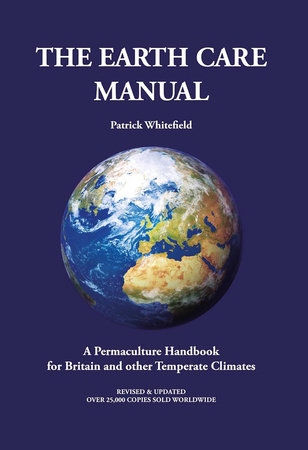
| Pages: | 480 pages |
| Book Art: | B&w and color photos diagrams and tables throughout |
| Size: | 8-3/4 x 12 inch |
| Publisher: | Permanent Publications |
| Pub. Date: | August 16, 2016 |
| ISBN: | 9781856232791 |
The Earth Care Manual
A Permaculture Handbook for Britain and Other Temperate Climates
As seen on the BBC 2 TV Series, It’s Not Easy Being Green, the critically acclaimed and definitive permaculture design book, reprinted due to popular demand
“You’ve probably never thought of yourself as the ultimate ‘eco-warrior’, but this book will make you think again… essential reading.” Kitchen Gardener
This is the book which inspired Brigit Strawbridge (It’s Not Easy Being Green, BBC2) to attended her first permaculture design course with Patrick Whitefield, and to set her and her family off on a voyage of discovery which is helping to introduce and inspire others to explore permaculture.
Already hailed in the UK, Europe and America as definitive, The Earth Care Manual offers an inspirational yet practical vision of a sustainable future invaluable to those new to the subject as well as to the experienced practitioner.
Permaculture started in the 1970s as a sustainable alternative to modern industrial agriculture, taking its inspiration from natural ecosystems. It placed an emphasis on gardening but since then, expanding on its principles, it now includes many other aspects, from building and community design to energy use. It is an interconnecting framework which links a diversity of green ideas. Its aims are a low input, high output efficient use of resources – and genuine sustainability.
The Earth Care Manual gives a vision of a sustainable future and the practical steps we can take towards it, both large and small, urban and rural. The book defines permaculture and places it in the context of the green movement.
Written by Patrick Whitefield, one of Europe’s foremost teachers and practitioners of temperate permaculture, it explains in depth how to apply permaculture to any situation, from the smallest of buildings or apartments, to houses, gardens, orchards, farms and woodlands. It covers subjects vital to sustainability including food, energy, water, microclimate and shelter.

About Patrick Whitefield
Patrick Whitefield (1949 – 2015) was an early pioneer of permaculture, adapting Bill Mollison’s teachings with a strong Southern Hemisphere bias to the cooler, maritime climate of the British Isles. He wrote a number of seminal books, including Permaculture in a Nutshell (1993), How to Make a Forest Garden (1996), The Living Landscape (2009), How To Read the Landscape (2014) and his magnum opus, The Earth Care Manual (2004), an authoritative resource on practical, tested, cool temperate permaculture. Patrick appeared in several BBC TV programmes, popular gardening videos, and taught many permaculture and other practical courses, throughout the UK.
Books by Patrick Whitefield


You may also like...
-
 $18.95
 -
$35.00
-
$24.95


