

EXCERPTS
| Pages: | 356 pages |
| Book Art: | Full-color photographs throughout |
| Size: | 8-1/2 x 8-1/2 inch |
| Publisher: | Chelsea Green Publishing |
| Pub. Date: | March 7, 2018 |
| ISBN: | 9780997520835 |
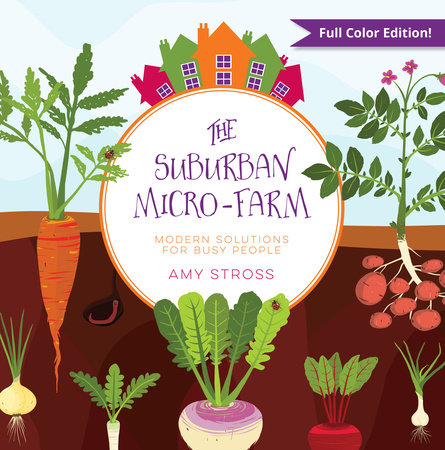
The Suburban Micro-Farm
Modern Solutions for Busy People
Nonfiction Book Awards 2018 Gold Winner
Foreword INDIE Awards 2018 Gold Winner (Hobbies & Home category)
Nautilus Book Awards 2018 Silver Winner (Green Living & Sustainability category)
Reduce your lawn and your grocery budget. Take gardening to the next level!
Would you like to grow healthy food for your table? Do you want to learn the secrets of farming even though you live in a neighborhood? Author Amy Stross talks straight about why the suburbs might be the ideal place for a small farm.
In these pages you’ll learn:
- How to make your landscape as productive as it is beautiful
- Why the suburbs are primed with food-growing potential
- How to choose the best crops for success
- Why you don’t need the perfect yard to have a micro-farm
- How to use easy permaculture techniques for abundant harvests
If you’re ready to create a beautiful, edible yard, this book is for you.
The Suburban Micro-Farm will show you how to grow your own fruits, herbs, and vegetables even on a limited schedule. From seed to harvest, this book will keep you on track so you feel a sense of accomplishment for your efforts.
You’ll learn gardening tricks that are essential to success, like how to deal with a ‘brown thumb’, how to develop and nurture healthy soil, and how to manage garden pests.
Although this book has everything a new gardener needs to get started, experienced gardeners will not be disappointed. With helpful tips throughout, you will love the in-depth chapters about permaculture and making money on the micro-farm.
Reviews & Praise
“Bored with the lawn? Love to garden? Learn how to turn your suburban yard into a suburban farm with Amy Stross' concise, detailed and well-organized how-to garden manual.”—Erik Knutzen and Kelly Coyne, authors of The Urban Homestead and Making It: Radical Home Ec for a Post Consumer World
"Amy definitely knows her way around the garden! She’s a permaculture expert who makes gardening exciting for those of us who want to grow food in the city, yet her well-researched ideas can be applied to farms of all scales."—Rachael Brugger, Managing Editor of HobbyFarms.com
"Amy Stross is engaging, knowledgeable, inspiring and brimming with ideas. You will come away with at least one solution for a trouble spot in your landscape."—Ann Hicks, Master Gardener
"Our Garden Club members were intrigued by Amy's interesting and entertaining presentation on permaculture. She patiently and expertly answered questions from our members who are always searching for a better way to improve their gardens."—Margie Jansing, Co-Vice President, Western Hills Garden Club
"Amy's design process, with her attention to detail and extensive research, blends edible landscaping with beauty. Her blog, Tenth Acre Farm has inspired me to implement her ideas in my design at our family homestead."—Andy, Pathway Homestead
"The synchronicity of Amy's writings and teachings are inspiring to my own efforts in the landscape. Her level of research and comprehension on multiple subjects keeps me intrigued."—Gregory Lang, Cincinnati Permaculture Institute Board
"Amy Stross has not only written a helpful book, but an important one too. Suburbia is ripe with healthy and delicious food-growing potential. Amy shows us how to tap this potential by sharing practical tips gleaned from her own experience as a micro-farmer on one-tenth of an acre. Get ready to feel both empowered and inspired!"—Roger Doiron, Founding Director of Kitchen Gardeners International
"Bored with the lawn? Learn how to turn your suburban yard into a suburban farm with Amy Stross’ concise, detailed and well organized how-to garden manual."—Erik Knutzen and Kelly Coyne, authors of: The Urban Homestead and Making It: Radical Home Ec for a Post Consumer World
"For new gardeners, the biggest problem is often simple overwhelm. In The Suburban Micro-Farm, Amy Stross breaks the giant topic of ‘gardening’ into bite-sized tasks to help readers begin to grow their own food, no matter their experience level or space limitations. She covers detailed information in a friendly, accessible manner and offers a multitude of methods for tackling various projects like composting, soil improvement, creating garden beds, and choosing your crops. The information and guidance offered in this book will put you well on your way to a productive backyard oasis."—Kris Bordessa @AttainableSustainable.net
"What a valuable resource! The Suburban Micro-Farm is full of practical information from an experienced gardener. Not only will you learn how to build soil and grow fruits, vegetables and herbs, you’ll learn how to do it efficiently with her time-saving tips. And Amy Stross will keep you organized with worksheets, checklists, calendars and a harvest log. This author has thought of it all!"—Susan Vinskofski @LearningandYearning.com
"With practical advice, hands-on projects, and time-saving suggestions, The Suburban Micro-Farm demonstrates that you don't need a lot of land to grow food for your family and that your yard can be both productive and beautiful. Amy Stross digs deep into restorative gardening techniques such as permaculture, showing how to develop healthy soils and plan and plant edible landscapes and food forests. A must-read for suburban growers, The Suburban Micro-Farm will inspire you to make the most of your small yard and empower you to grow more food than you thought possible!"—Teri Page @Homestead-Honey.com
"The Suburban Micro-Farm should be the go-to resource for the time-crunched suburbanite foodie. This is the book that will turn any yard no matter how large or small into a homegrown food oasis all while giving the gardener permission to spend time on other activities. Have a garden and a life! Grow amazing food, embrace mistakes, and simply get started under the guidance of someone who’s been there and done it herself. Loaded with practical advice for turning lawns into gardens with natural amendments, types of plants to grow (and where), as well as how to build numerous types of gardens for all the different spaces in the yard - The Suburban Micro-Farm covers it all in down-to-earth, easy to apply fashion for every aspiring farmer."—Kathie Lapcevic @HomespunSeasonalLiving.com
"I’m a new gardener and after numerous failed gardens, I feel this book gives me some great ideas to have a productive and sustainable organic garden. Amy seems very knowledgeable in all things gardening, and I think this is a great book for beginning and advanced gardeners alike!"—Alyssa @PureLivingForLife.com

About Amy Stross
Amy Stross is a permaculture gardener, writer, and educator with a varied background in home-scale food production.
Through years of experience as a professional gardener specializing in ecologically friendly and edible landscapes, she discovered that healthy fruits and vegetables could actually grow right outside her own door.
After receiving her permaculture design certificate, she began to design ecologically regenerative and productive landscapes for others. Her own 0.10-acre micro-farm became a thriving example, with berry bushes, fruit trees, herbs, flowers, and vegetable gardens.
Amy also founded and ran a 5-year community food forest project at her local university, which included a variety of edible gardens.
Her current adventure is transforming a 3-acre property into a micro-farm with her husband and mischievous farm cat. She reaches hundreds of thousands of people with her adventures and expertise in small-scale permaculture gardening on her popular website, TenthAcreFarm.com.
Books by Amy Stross

You may also like...
-
 $35.00
 -
$27.95
-
$27.95


