

Magic Within Every Garden: Sharing the Love
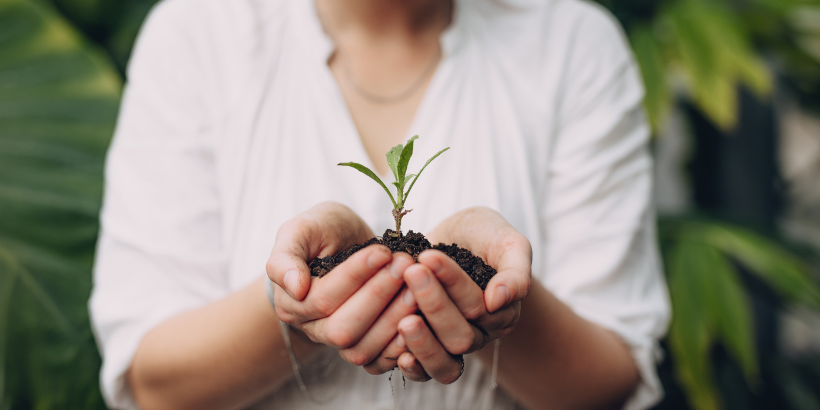
When we garden, we establish a close relationship with every element: the plants, the soil, and even the creatures that interact with them. And while some elements of this activity are less-than-glamourous, the collaboration cultivated between the garden and gardener is one of pure beauty. In the excerpt below, author Maria Rodale discusses how simply changing the way think about gardening can open up a new, magical world.
The following is an excerpt from Love, Nature, Magic by Maria Rodale. It has been adapted for the web.
The Joy of Gardening: A Creative Collaboration
Dear Reader,
I found Love, Nature, Magic in my garden. While weeding, actually. I was trying to eradicate a plant called mugwort, a seemingly pesky plant that plays a starring role in this book. Little did I know what a strange path mugwort would lead me on once I decided to try to listen to it.

Growing plants for food, beauty, and pleasure is a creative collaboration with the greatest artist of all—nature. It took me decades to learn that I am not the one in control, and the more I relax and pay attention to what everything in my garden wants, the happier we all are. It’s not a war, it’s a dance. It’s not a competition, it’s a partnership. It’s not a race, it’s a festival. It’s not easy, but it’s the kind of hard that builds strong muscles and creates something new and wonderful. And isn’t that what we want to do in this world? Create something new and wonderful, encouraging everyone to live to their full potential and enjoy this strange experience we call life? With a garden, we can create the world we want to see and live in. That, my friends, is magic.
Exploring the Magic: Shamanic Journeying
One day, afer a particularly frustrating bout in the garden trying to “control” an “invasion” of mugwort, I decided to see if I could do a shamanic journey to understand what, if anything, this plant was trying to communicate to me. (A shamanic journey is a drug-free way of going inward to seek understanding of the outer world by speaking directly with spirit in other realities. I’ll explain more about journeying in a moment or two.) That experience was transformative. Fascinating. Illuminating. It made me want to journey to com- municate with all the other beings in my yard that annoyed me, and that I needed or wanted to understand better.
The idea for this book came from that experience. What if, I thought, I combine my experience as a gardener, where my roots have spread and deepened and connected me to Earth, with what I have learned as a journeyer, where I have soared to other worlds? One of the things we learn when we journey is that the best way to honor the spirits who guide us is to listen and show that we heard their message. Writing a book felt like the best way I could honor them.
It was exciting to think about writing that book, but terrifying to imagine sharing it with the world. This was not the kind of thing I felt comfortable talking about with people. Except my kids, and yes, they think I’m weird. But I’m getting too old to worry about what other people think of me. The path started opening before me, and I couldn’t help but follow to see where it led. The more I started talking with people about shamanic journeys, the more they shared with me about their own similar experiences and deep curiosity. It wasn’t that scary after all.
Getting to Our Roots & Learning to Love

We humans often seem trapped in a series of arguments that it feels like no one will ever win. Logic and facts don’t seem to matter. We lose trust in each other and in the systems that were created to seemingly sustain us. I decided to journey because I needed to know if there was another way. I was looking for answers to satisfy my own longing to know, to understand, and to find hope.
Through shamanic journeying, I found those things and more.
I now believe it’s possible to create a new Eden where knowledge is not a sin, desire is recognized as part of our human purpose, and love and understanding are the original blessing to be nourished and cultivated in the garden of our lives. I also believe we can create a place where diversity is celebrated and embraced as a beautiful gift from nature, because nature thrives on diversity.
It’s easy to love the obviously delightful parts of nature, the plants and birds and other creatures that have become our friends and delight us with their beauty—the roses, the tomatoes, the lilies of the field, the butterflies, the hummingbirds. Just like it’s easier to love our own families or people who look like us. But what about those beings that are harder to love? The ones we try to exterminate or eradicate? The weeds, the pests, the invasives? They may have important things to teach us. What are we capable of learning from them if we really listen? I realized that I stood to learn the most from the plants and animals that frustrated and frightened me. And they were eager to help teach me.
This is where my adventure begins and what these stories explore.
Recommended Reads
Read The Book

Love, Nature, Magic
Shamanic Journeys into the Heart of My Garden
$28
You may like...
-
 $22.00
 -
$22.95
-
$22.95


Recent Articles

All hail the mighty garlic clove! Become a master at garlic growing with these simple tips for growing no-till garlic from seed to harvest.
Read More
Try your hand at preserving veggies by freezing them! Freezing vegetables is a quick, simple way to preserve them for winter meals.
Read More
As your favorite variety of home grown tomatoes start ripening on the vine this summer, be sure to save those seeds for next year’s planting.
Read More
Curious about carrots? Before you get started on cultivating, check out these insights on growing & harvesting carrots from gardening expert Will Bonsall.
Read More
Squash newbies, this one’s for you! Learn how to harvest, cure, and store squash with these tried-and-true techniques from gardening expert Carol Deppe.
Read More