

In Search of the Shadow Wolf: Beginning the Hunt
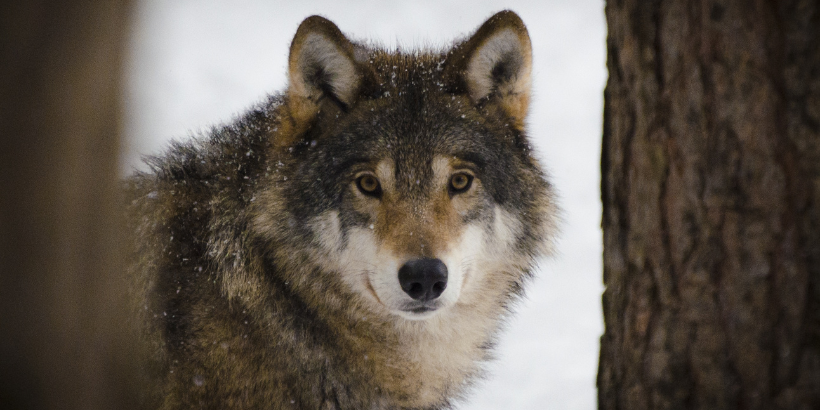
What ever happened to the wolves in Britain? Rewilder Derek Gow seeks to answer this question as he embarks on a quest for the shadow wolf.
The following is an excerpt from Hunt for the Shadow Wolf by Derek Gow. It has been adapted for the web.
Starting the Search for the Shadow Wolf
When my journey began to reintroduce the beaver to Britain and I undertook many European trips to view the rich waterworlds they create, wolves were a nothing. They did not exist in most of the landscapes I visited a quarter of a century ago.
I recall a field trip to the Netherlands with an agricultural college in Hampshire to look at an engineering project near Nijmegen.
As we viewed the steel-grey konik ponies and black Galloway cattle contentedly grazing, I asked the project manager accompanying us if, as part of his ambitious rewilding agenda, he would ever consider reintroducing predators.
I recall he laughed before saying no and stating it was his belief that, as more green bridges covered with trees linked to river corridors were built or other landscapes were recovered for nature, in time wolves would arrive of their own volition.
History of the Shadow Wolf

When several years later a young wolf was killed on a motorway equidistant from the Dutch border and its east German birthplace, it still seemed far-fetched that, long after the last was killed in 1869, they could recolonise the Netherlands.
Now, of course, they have and, despite several road deaths and a number of illegal killings, in 2023 there are believed to be nine packs – wolf pairs that have borne cubs – seven of which, plus a scattering of single wolves, are living without great issue in the sprawling pine forests of the central Veluwe.
Making A Comeback
As the wolf has returned to France and Germany, to Belgium and the Netherlands, to Luxembourg, Lichtentein and Switzerland, more old beavering chums have told tales of their comeback.
Some sad about their strange sudden deaths or disappearances. Odd incidents with tame kangaroos. Of weeping schoolteachers and the hatred of wolves associated with the worst politics of the rising far right.
But there are governments who have banned their killing and many people of all sorts who have decided to offer them welcome. Wolves are not easy to live with.
Living With the Wolf
Although wolf-proof fences can be erected to protect sheep in small fields, for large roaming mountain flocks guard dogs and corrals not used since the Middle Ages need to be re-employed and rebuilt.
Foals and calves can and will be attacked as wolf numbers increase and, while there remains little evidence that they pose any real threat to us, the fear of the wolf that many individuals carry in the darkest portals of their hearts remains all too alive.
Perhaps we resent them for being a life force that’s ungovernable by us.
The English Channel, deep and wide, ensures our sanctity for a wolf-free future here in Britain. If we ever wish, like the Coloradans have just done, to acquire them once more, they will have to be captured and crated from European forests.
A Voice for the Wolves
While, of course, the draconian unions of the farming elite will say no and persuade their pals in power perhaps to back them for a while, there are others in increasing number who long for a different future. More rewilding estates and progressive farm owners are relaxed.
Foresters, who wish to bring deer numbers down and so reinstate a natural equilibrium between landscape and wildlife, know that the materials used for the fences they erect now to deny deer access will only do so for around fifteen years and that, one day, an alternative must come.
Other voices in wider society are also rising.
Large conservation groups, journalists and writers, sober scientists, young filmmakers, poetsand children. In short, people of all sorts are asking: why not?
Many have come to realise that the story of the wolf’s eradication from Britain was simply a curtain-raiser for the sheep and the deer, which, in ever-rising numbers, have flayed our uplands bare.
One day, perhaps the slim candle of hope that’s smoking slowly may flare fiercely into a torch of ambition.
What Happened to the Shadow Wolf?
My quest to find out what happened to the wolves that were once here has become both a mission and delight.
As one story faltered or came to a conclusion, another would beckon from the page of an elderly account, a hint from a place name or through the chance encounter with an individual who knew more.
Several times, a sentence that I started to explain to a listener would be finished by them with information of which I knew nothing.
For what it’s worth, the International Union for Conservation of Nature, in its official reintroduction guidelines, requires that both the cause of a species’ extirpation and the absence of the initial drivers of its extinction are understood before any programme of res- toration begins.
Although we know that we killed wolves in Britain because they ate our sheep, that is a simplistic understanding without any depth of complication.
A better account of what happened in Britain to the wolf might therefore constitute a beginning of sorts for any movement that sought their return.
So, shall we commence?
Recommended Reads
Turning My Farm into an Ark for Lost Species: Not a Lark or a Lizard Lived There
Read The Book

Hunt for the Shadow Wolf
The lost history of wolves in Britain and the myths and stories that surround them
$24.95
You may like...
-
 $25.00
 -
$22.00
-
$28.00


Recent Articles

Fermenting mead is an ancient practice. With step-by-step instructions, learn how to brew fruit-based and flower meads, from foraging to fermenting.
Read More
Whether foraging or gardening, it’s vital to know the proper techniques for harvesting. Read on for how to harvest herbs, roots, flowers, bark, fruit, and more!
Read More
How and why can some plants live to such a great age? Delve into the lifespan of plants and discover the incredible longevity and resilience of these remarkable living beings.
Read More
We’ve been told to kill a lanternfly because they’re “invasive.” In reality, they are living like any other insect would. So why are they under attack?
Read More
Dig into the many varieties of grass seeds, learn about toxicity, and review a list of edible grass seeds. Happy foraging!
Read More