

Up Your Gardening Game! The Ultimate Guide to Raised Garden Beds
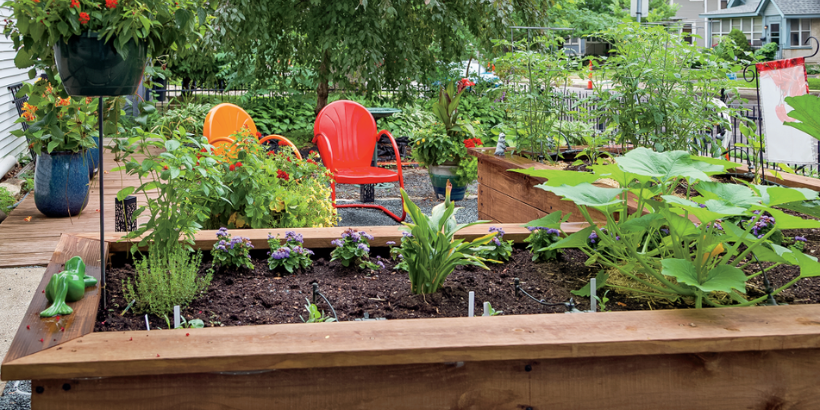
Raised garden beds are an effective way to maximize small spaces for a flourishing garden. This guide will help you design and build beautiful, low-maintenance raised beds. Let’s get started on creating your perfect garden!
The following excerpt is from Garden for Life by Rhonda Fleming Hayes. It has been adapted for the web.
PHOTO: This L-shaped cedar raised-bed garden creates both a nice alcove for sitting and more growing space.
Up Your Game with Raised Garden Beds
Raised beds aren’t revolutionary anymore, but if you’ve resisted getting on the raised bed bandwagon, now’s the time to make the leap. They can make gardening possible for years beyond the bending and stooping phase of life, to name one clear benefit. Raised beds are a big reason for my kitchen garden’s success. Sure, I’ve got lots of sunshine on that side of the house, but it’s the soil I’ve been able to build in those beds that makes the magic.
They make it a joy to play in the dirt. Once you’ve gardened in raised beds, you might never look back.

Shawna Coronado using her CobraHead to cultivate raised beds. Photo courtesy of Cindy Dyer
Let me count the ways I love them.
- Raised beds warm up faster than the ground does in the spring, allowing for earlier planting and a longer growing season. I gain as much as two weeks on either end of the growing season.
- You control the soil composition in raised beds, ensuring it’s rich in nutrients, well-draining, and free of contaminants. This can be a saving grace if you live in a flood zone where heavy metals could contaminate your ground soil.
- Raised beds allow for better drainage, preventing waterlogging and root rot, which can be a problem in clay soil.
- They allow for better aeration and root development, leading to healthier and more productive plants. This makes for a high-yield harvest in limited space.
- The soil doesn’t get compacted by foot traffic because you never need to step into the beds to reach all of your plants.
- You’ll have fewer troublesome perennial weeds, and the weeds you do have will be easy to remove in looser soil.
- They can deter some pests.
- They look great.
There are a few cons to raised beds, for those of you keeping score.
- Raised beds act as a large container, so they dry out faster.
- The taller the beds, the more frequently you’ll need to water.
- However, this can be remedied with drip irrigation or a gridded irrigation system that also functions as a square-foot gardening guide.
In cold climates (Zones 3–4), you’ll want to stick with annual crops and flowers since raised beds aren’t insulated from the cold like in-ground beds.
In a raised bed, perennial plant roots will freeze quickly instead of undergoing the gradual process that helps a plant move toward dormancy.

The raised beds in my kitchen garden are made of Corten steel, which has a natural weathered patina.
Raised Bed Size and Depth
Think twice, and maybe a few more times, before building (or buying) and placing your raised beds; they aren’t easy to move.
Multiple smaller beds might work better than a single enormous one. Make sure you are near a water source or can bring water there without added hassle or expense.
If you use more than one bed, be sure there is enough path space between them for a mower, cart, wheelbarrow, or just maneuvering around—at least 2′ (.75 m) in width.
The most common size of raised bed is 4′ × 8′ (1 × 2 m), which is largely determined by standard lumber dimensions. An ideal width is 3’–4′ (1 m) to allow access to the center from both sides, so there’s no need to step in the beds. A narrower bed limits your planting options.
You’ll want to factor in planting space if you use blocks or pavers; their width can take up a few more inches of planting area in the bed—valuable growing space if you have limited room for growing. Stake it off and walk it to get a feel for it first.
Different situations call for different heights
12″–18″ (30–45 cm) is considered ideal, but you might want to go to 36″ (91 cm) to foil rabbits and other pests. To avoid excessive bending, aim for somewhere between 24″–30″ (61–76 cm).
What you want to grow determines the depth
8″ (20 cm) is the minimum; 12″–18″ (30–45 cm) is adequate for crops like lettuce, greens, kale, cucumbers, herbs, strawberries, and even zucchini; for tomatoes you’ll need 15″–18″ (38–45 cm).
Raised Bed Materials
Cedar is the gold standard when it comes to decay-resistant, long-lasting wood. There’s also oak, hemlock, black locust, and redwood, any of which could be harder to source.
Pressure-treated wood is the most decay-resistant of the standard wood options. It has gotten less toxic over the years, but it is still made with toxic chemicals that can leach into soil. If you want to go this route, you should research further on your state’s Extension website. Never use older treated lumber or railroad ties, which contain highly toxic creosote.
Galvanized steel is an attractive option with lots of different sizes and designs available. Note that zinc (used for galvanizing steel to add corrosion resistance) might leach out of this in highly acidic soils. Steel beds that have been dipped in special eco-friendly coatings (like Vego Garden) are gaining in popularity.
My raised beds are made of Corten steel, or weathering steel. Corten steel is considered an eco-friendly material due to its high durability, extended lifespan, 100 percent recyclability, and low maintenance requirements. Mine are longer than typical beds, as they were designed to conform to our long driveway for maximum planting space. My only regret is not having the steel edge rolled at the top; the edges are sharp making them uncomfortable to lean against.
Soil For Raised Beds

Garden centers, lumber yards, and other landscaping supply companies now carry blends of soil specifically formulated for raised beds, and some are certified organic.
To make your own blend, the recipe is simple
Two-thirds topsoil and one-third compost. You can buy it in bags for smaller beds, but if you’re going big, buying soil materials in bulk and having them delivered is the most painless way to get your raised beds up and going.
I refresh my beds with a few inches of manure and compost each spring to revitalize the soil and top up what has sunken down over the winter.
You should do a soil test every two to three years.
Consult your local Extension office for soil testing procedures (some garden centers do this, too). You want to be sure that the soil has the right nutrients before you plant (and that you’re not over-applying amendments).
It can take a while to get your soil balance right when first using raised beds.
Phosphorous can build up in the soil with excessive fertilization. Heavy feeders, like tomatoes, squash, peppers, melons, and cucumbers, can deplete the soil by the end of the growing season. Rotate your crops every three to four years ( just as you do with conventional gardens) to avoid pests and diseases.
Recommended Reads
Read The Book

Garden for Life
Strategies for Easier, Greener, More Joyful Gardening as We Age
$29.95
You may like...
-
 $34.95
 -
$34.95
-
$34.95


Recent Articles

All hail the mighty garlic clove! Become a master at garlic growing with these simple tips for growing no-till garlic from seed to harvest.
Read More
Try your hand at preserving veggies by freezing them! Freezing vegetables is a quick, simple way to preserve them for winter meals.
Read More
As your favorite variety of home grown tomatoes start ripening on the vine this summer, be sure to save those seeds for next year’s planting.
Read More
Curious about carrots? Before you get started on cultivating, check out these insights on growing & harvesting carrots from gardening expert Will Bonsall.
Read More
Squash newbies, this one’s for you! Learn how to harvest, cure, and store squash with these tried-and-true techniques from gardening expert Carol Deppe.
Read More