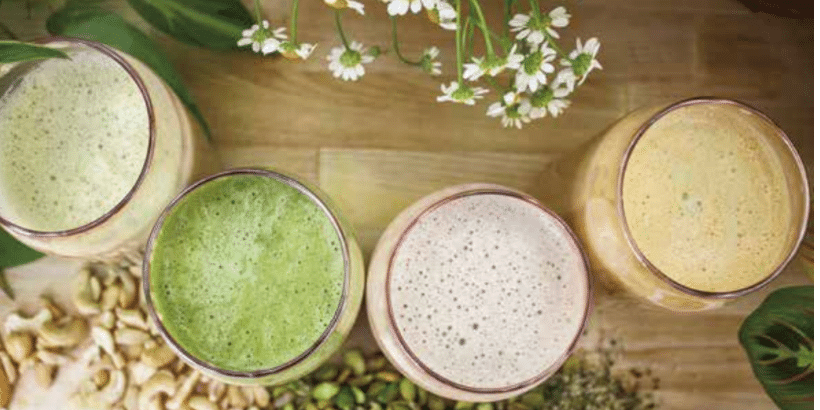
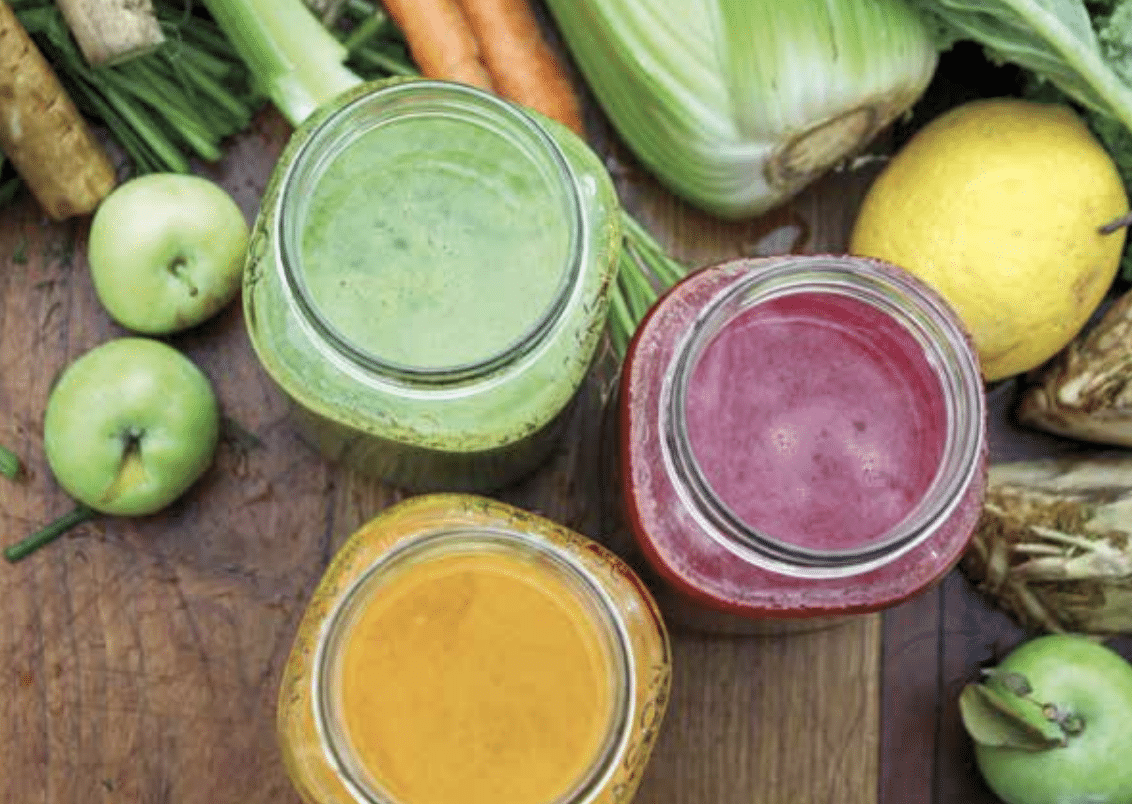
Are you ready to improve your gut health? Juicing is a simple and effective method to enhance your metabolic health or serve as a reset for better digestion. Remember to dilute your juice with water for better absorption.
Makes 6 to 8 ounces (180–240 ml) fresh juice extract
Here’s my basic formula and method for making a juice extract, plus ingredient lists for one of my favorite juice extract blends. I always add water to a fresh juice extract before drinking it. Juices are rich in minerals and vitamins, and the body has a limited capacity to absorb these nutrients within a short period. Diluting juice with water can aid your body in absorbing the nutrients.
I recommend drinking a 16-ounce (500 ml) glass of diluted juice extract in the morning between 7:00 and 9:00 a.m. Drink part of the juice, wait 30 minutes, then drink some more. This gives your body time to digest. If you are doing a liquid-fasting routine, drink the contents of two 1-quart (1 L) jars of diluted juice between 7:00 a.m. and noon, drinking 8 ounces (250 ml) an hour. Then you can repeat between 1:00 and 4:00 p.m. I use a cold-press juice machine that extracts the juice fully. If you don’t have a juice machine, you can use a large Vitamix or other high-speed blender.
Follow Your Gut Juice
This juice is a powerful general tonic for the whole body.
1 cup (240 ml) filtered water
Four 6-inch (15 cm) pieces burdock root or 1 parsnip
4 dandelion leaves
1/4 cup (30 g) white radish
5 parsley sprigs
5 cilantro sprigs
1/4 medium lemon
1/2 medium green apple, cored
1 tablespoon grated fresh ginger
Clean the ingredients properly. Since we use the vegetables and fruits whole, skin and all, thorough cleaning is important.
Cut the ingredients into 2-inch (5 cm) or smaller cubes, depending on the capacity of your juice machine.
Put the ingredients in the juice machine slowly, avoiding clogging, and process them. If you don’t have a cold-press juicer, use a high-speed blender: add the ingredients and an equal amount of water, blend them well together, then filter the blended liquid through cheesecloth or a fine-mesh strainer to remove fibrous material.
Measure the quantity of juice extract you’ve made, and dilute the extract with three times that amount of water.
The Gut and Bone Health
The gut is one of the most potent influences on all body health, including bone health, because it is the screen through which all of our nourishment must pass. The health of the gut is of primary importance to ensure plant nutrition is properly broken down and absorbed. This screen, the gut lining, is guarded by the many and varied bacterial residents that live in our gut, collectively known as the microbiome.
The Microbiome
It’s estimated that 100 trillion commensal gut bugs (bacteria beneficial to human health) are present in the gut to help us digest food, create nutrients such as vitamin K2, produce neurotransmitters, manage pathogens, and produce the short-chain fatty acids that feed the cells of our gut lining, helping to keep it intact. Interaction with gut receptors also triggers the secretion of hormones that directly signal the brain, influencing learning, memory, and mood.
Thousands of these special commensal bacteria colonize the gut and promote the work of nutrient absorption and digestion. Since we rely in part on these friendly gut bacteria for health and happiness, we mustn’t forget to feed them. The food they like most is an indigestible carbohydrate, called a prebiotic, commonly found attached to plant proteins. The gut lining is delicate and is only one cell thick.
Inflammation, toxins, and a microbiome deficient in beneficial bacteria may cause separation between the cells, leading to a condition known as “leaky gut.” Through this leaky gut, bacteria that normally reside only in the gut can infiltrate other parts of the body and may lead to an inflammatory or autoimmune response. Furthermore, 70 percent of the tissue in the gut is immune system tissue.
Why is there so much immune tissue in the gut? Because the gut is a place of contact with the outside world and is the first line of defense protecting the body from inflammatory and other toxic or unwelcome substances. Because gut health and immune system health are linked in this way, the ill health of one can imperil the other. Inflammation in the gut, which has many causes, will affect the immune system. An activated or overactive immune response that can arise in autoimmune diseases can cause inflammatory response in the gut, which can cause systemwide inflammation, thereby affecting the health of the whole body.
The Gut-Brain Axis
The brain is also directly affected by the health of the gut, in this case via the gut-brain axis. The healthy brain in turn provides proper signaling to the body via hormone and messenger release from the hypothalamus and pituitary primarily. These signals reach glands and organs that further release hormones and signal molecules to manage system health. Ninety percent of serotonin—the neurotransmitter that is responsible for focus, a sense of stability, and happiness—is made in the gut. Communication between the gut and brain appears to be modulated via the vagus nerve, which runs from the brain to the gut. This nerve controls parasympathetic processes such as respiration, heart rate, urination frequency, blood pressure, immune response, and digestion. That means full-body health and brain health are interlinked and interdependent, and perhaps are one and the same.
Keeping the Gut Healthy
A healthy gut is the foundation for all good health and longevity. If you eat food that is fresh off the land and grown without toxic pesticides, and your water and air are clean, your gut lining will be intact and the gut will function seamlessly to absorb nutrients. While this ideal environment is a luxury most of us do not enjoy, there are steps we can take to improve the likelihood that the gut will be healthy and its contribution to body health will be robust.
Avoid Highly Processed Foods
Highly processed foods are impatient; they do not make it through the full digestion process. Instead, they are absorbed quickly in the upper gut and released into the bloodstream, where they can cause blood sugar levels to spike and raise a variety of false alarms. As a cybernetic system, the body responds, signaling the pancreas, thyroid, parathyroid, and brain. A full-on inflammatory response may endure for all the years one is on a diet of primarily highly processed food.
Avoid GMO Foods
Some food crops, such as maize (corn), are genetically modified to resist insect pests. Scientists use genetic engineering techniques to insert genes into the plant that themselves produce insecticide. Other major food crops, such as corn and soybeans, have been genetically engineered to be resistant to a specific herbicide, such as glyphosate (Roundup). So far by appearances it seems that consumption of genetically modified foods does not make humans ill or otherwise affect health.
However, we know that genes from the modified foods can be taken up by our gut microflora, and we do not yet know what effect this may have. We do know, though, that the insecticides plants produce as well as the insecticides and herbicides growers apply to crops can affect health.
It is no longer speculation that glyphosate is a carcinogen. It alters the gut microbiome significantly, reduces the synthesis of neurotransmitters, and causes reactive oxygen species to form, which in turn causes oxidative stress and oxidative damage. Glyphosate, which can destroy many commensal gut bacteria species, is linked to IBS.
Laura advises her patients to avoid any foods that have been in contact with glyphosate or any pesticide or insecticide that the body must detoxify, including most conventionally grown wheat. Many wheat growers spray glyphosate on the wheat crop shortly before harvesting it in order to hasten the drying of the grain.
The most reliable way to avoid pesticide residues on food is to start a home food garden and not use any pesticides on it. However, a home garden is not always an option. There is also insurance in choosing organically grown food, as discussed earlier in this chapter. Since nutrients communicate with genes, it is reasonable to question the effect on genetic expression of unnaturally altered food. For this reason, among others, Laura advises her patients to avoid GMO foods.
Juicing
Juicing can be a fast way to improve your metabolic health or cleanse your body to reset for better digestion. Juicing facilitates easy nutrient absorption and enhances vitamin and mineral intake. In contrast to a traditional heavy breakfast that demands your digestive system’s full attention early in the morning, potentially leaving your body feeling tired instead of energized to kick off the day, juicing allows for quicker nutrient assimilation.
Consequently, your body conserves a significant amount of energy. Smoothies are the ultimate combo of health and deliciousness. What could be better than a nutritious smoothie in the midst of a busy morning? Packed with fruits, veggies, and protein, they provide an instant energy boost.
The recipe included above can also help improve digestion and boost immunity. Smoothies curb your hunger, helping you sail through the day without feeling the urge to reach for a sugary snack.
The possibilities are pretty much endless with wild ingredients — use almost any fresh fruit or juice and a sweetener to create your own custom jam or syrup!
Small But Mighty! Crab Apples are easy to find, simple to store, and incredibly flavorful. Keep reading to learn more about the unsung heroes of the apple family.
Add a rich and robust twist to your meals with help from red wine salt! This seasoning is a perfect addition to dishes like short rib, potatoes, and more.