

Keeping Seeds Organized: Saving & Storing
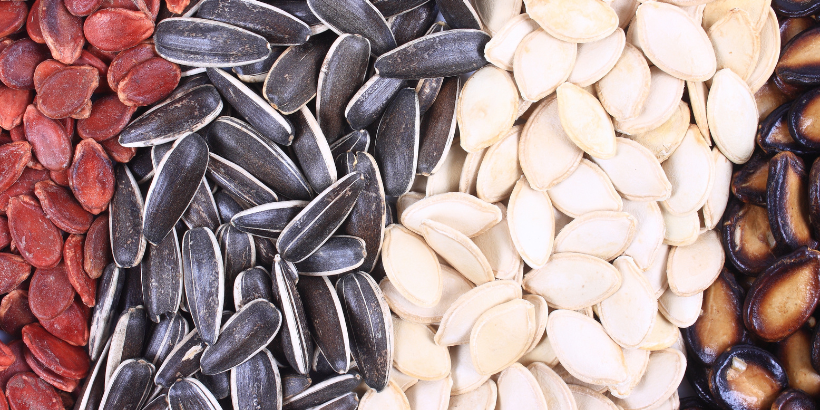
To achieve a bountiful harvest this growing season, effective seed storage is crucial. Follow these tips for keeping seeds organized so you’re ready to plant as soon as the time is right. Take charge of your garden and set yourself up for success!
The following is an excerpt from The Celestial Garden by Jane Hawley Stevens. It has been adapted for the web.
My first step in the growing season is to take inventory of the seeds I have left over from previous years. A digital spreadsheet works well for this task because you can add new columns or tabs for each new year.
Keeping Seeds Organized
If you store seeds from one year to the next, keep them in a cool, dark place with low humidity. Warmth, light, and humidity can ruin viable seeds. I keep seed packets in a tightly sealed plastic bin in the coolest part of a dark basement. I separate them into groups: herbs, vegetables, root crops, and flowers.
Because I have been saving my own seeds for many years, I find it worthwhile to buy 2 × 4-inch (5 × 10 cm) manila envelopes to store them in. Being one of the ultimate recyclers, it took me a long time to give up my penchant to store seeds in any random envelope at hand, but the uniformly sized packets are much tidier and easier to organize.
Once I’ve reviewed my inventory and made a list of what I need to buy, I order seeds as soon after January first as I can, to ensure my favorites will still be in stock.
Seed-Starting Supplies
It’s a good idea to gather your seed-starting supplies in advance. You will need:
- seeds
- shallow flats/trays and 2- to 4-inch (5–10 cm) pots
- covers such as a clear plastic dome or plastic bag to hold in humidity over the tray
- watering can or hose end with mist/breaker nozzle
- vermiculite or other light soil medium labels (a good trick is to cut Venetian blinds into appropriate sizes)
Generally speaking, you’ll want to be ready to start seeds six to eight weeks before outdoor planting time. Here in Zone 4, I start the earliest seeds around Valentine’s Day. These are crops that take longer to germinate and grow, as well as those that can be transplanted outdoors very early when it still may freeze or frost. Plants in this category are perennials, parsley, and onions.
Crucifers, like broccoli and cabbage, can be sown a couple of weeks later, about March first. When I calculate seed-starting times and expected transplanting dates, I factor in a period of hardening off before transplanting, as I explain later in this chapter.
Since I mainly grow transplants for my own use, not for sale in nurseries, I do not need to produce showy transplants; I concentrate on producing sturdy plants!
Recommended Reads
Read The Book

The Celestial Garden
Growing Herbs, Vegetables, and Flowers in Sync with the Moon and Zodiac
$29.95
You may like...
-
 $49.95
 -
$35.00


Recent Articles

Beets can be grown year-round and are a perfect, flavorful addition to meals. Get started on growing your own no-till beets with help from these tips!
Read More
Everyone loves a refreshing, nutritious drink…even your garden! Take your fermentation skills into the garden by brewing fermented plant juice.
Read More
Cows are the gold standard for milk production. They are the ultimate heroes of sustainable living! Explore the benefits of having a cow on your farm or homestead.
Read More
Thinking about building a greenhouse but worried about an uneven or sloped yard? Building a greenhouse on a slope offers a bonus: the ability to use gravity to harvest rainwater. Embrace the natural landscape and get ready to grow your garden dreams!
Read More
Ready to transform your gardening game? Revolutionize your gardening with permanent beds! They help improve soil health, ensure crop growth, and are extremely easy to design, even for beginners!
Read More