

Rewilding: Restoration by Letting Go
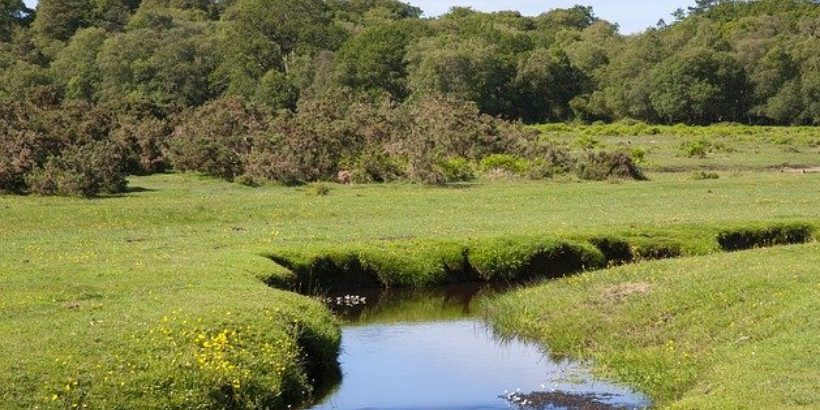
When it comes to revitalizing the environment, sometimes the best thing we can do is take a step back and let rewilding work its magic. Time and distance often feel like inaction on our part, but removing ourselves from the land is the one action we can take that allows nature the time and space it needs to heal itself.
Award-winning science journalist Judith Schwartz shares inspiring stories from a passionate group of eco-restorers who are following nature’s lead to help revitalize some of the most degraded places on earth—and succeeding.
The following is an excerpt from The Reindeer Chronicles by Judith D. Schwartz. It has been adapted for the web.
Frans Vera, is a Dutch biologist who claims that rather than closed-canopy forest, primeval lowland Europe was mostly savanna. He says that large herbivores like wild horses (tarpan) and cattle (aurochs) helped sustain a woodland-pasture system that was productive and diverse and allowed for sun-loving trees like oak and hazel to thrive. This challenges a long-held notion that in Europe ecological succession inevitably leads to dense forest.

However, the hands-off management of herbivores led to dramatic population fluctuations. With mild winters, animal numbers grew. Harsh weather meant starvation and death. In 2018 there was a public outcry. People protested and brought in bales of hay, while Dutch state foresters culled animals so that they wouldn’t suffer.1 One complication is that Oostvaardersplassen was only partially wild: The site lacked large predators to manage the population of grazers. Currently beset by lawsuits, Oostvaardersplassen’s fate is unclear.
Still, Vera’s insights remain compelling and the reserve, which demonstrates interdependence among herbivores, trees, and wetland birds like geese, provides useful lessons. British author Isabella Tree was inspired by Vera’s work, and undertook a similar project at her Knepp Estate in West Sussex, which she describes in her book, Wilding.
In 1987 Tree’s husband, Charles Burrell, inherited fourteen hundred hectares (thirty-five hundred acres) of arable land, parkland, and historical buildings. The couple moved there to raise their children and set up a conventional grain and dairy farm. By 2000 they realized that it made no economic sense to continue farming conventionally, and they let the operation go. Two years later the property was returning to prairie conditions. She writes,
“The land, released from its cycle of drudgery, seemed to be breathing a sigh of relief. And as the land relaxed, so did we.”2

The revitalization of the land and the emergence of more bird, insect, and plant species continues to amaze Isabella Tree. She opens a 2018 5X15 talk with the soft cooing of turtledoves, noting that Knepp is the only place in England where their numbers are rising.3 She says bringing grazing (and rootling) animals onto the property was like
“injecting dynamism into a flat landscape. Suddenly there’s energy there again, and it’s like putting a glider up into the air. Extraordinary things start to happen. Things start to fly.”
One impediment to more widespread rewilding, she says, is the favored aesthetic in which everything, even nature, should be tidy, a preference that arises from people’s desire for control. We’ve grown up with this “Victorian corseted culture,” she says, adding, “We have to sit back and let nature be in the driver’s seat.” This includes learning to live with nature’s boom and bust cycles. She calls rewilding “restoration by letting go.” It is an exercise in learning to appreciate the hidden potential of our landscapes, she says, as well as an opportunity to “rewild ourselves.”4
Notes
- Patrick Barkham, “Dutch Rewilding Experiment Sparks Backlash as Thousands of Animals Starve,” U.K. Guardian, September 27, 2018, accessed January 23, 2020, https://www.theguardian.com/environment /2018/apr/27dutch-rewilding-experiment-backfires-as-thousands-of -animals-starve.
- Isabella Tree, Wilding: The Return of Nature to a British Farm (London: Picador, 2018), 43.
- Isabella Tree @5X15, May 2018, accessed January 23, 2020, https:// www.youtube.com/watch?v=4cug0KcTnXI.
- Isabella Tree @5X15.
Recommended Reads
Read The Book

The Reindeer Chronicles
And Other Inspiring Stories of Working with Nature to Heal the Earth
$22.95
You may like...
-
 $22.95
 -
$24.95
-
$24.95


Recent Articles

Discover the magic of oyster mushrooms! They can grow almost anywhere. Straw is a surprisingly simple way to cultivate the ever-popular oyster mushrooms.
Read More
Known for their tall stature and distinctive flower heads, cattails thrive near lakes and marshes. From edible shoots and nutrient-rich roots to pollen used in baking, cattails offer a wealth of uses.
Read More
There are several ways to embrace nature – no matter the size of your garden. It’s time to rebug & rewild our gardens, lawns, and parks!
Read More
These much-loved titles are the perfect books for Mother’s Day! Gardening books, cookbooks, memoirs and more — there’s a book for every mom on this list.
Read More
Make a difference in the kitchen! Prioritize sustainable cooking through zero waste methods. From the ingredients we choose to how we dispose of what’s left behind, every small step in the kitchen can make a BIG difference!
Read More