

The Grain-Free, Sugar-Free, Dairy-Free Family Cookbook
Simple and Delicious Recipes for Cooking with Whole Foods on a Restrictive Diet

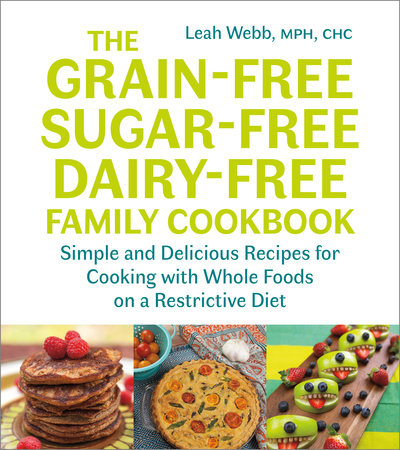
| Pages: | 320 pages |
| Book Art: | Color photographs throughout |
| Size: | 8 x 9 inch |
| Publisher: | Chelsea Green Publishing |
| Pub. Date: | April 1, 2019 |
| ISBN: | 9781603587594 |
The Grain-Free, Sugar-Free, Dairy-Free Family Cookbook
Simple and Delicious Recipes for Cooking with Whole Foods on a Restrictive Diet
Includes one month of deeply nutritious, kid-friendly, whole foods recipes, meal plans, and detailed shopping lists to make life easier!
“Informative and user-friendly. . . . the dishes are beautifully and simply photographed, and recipes are uncomplicated and attainable . . . . As a mother with a passion for delicious and healthy food I found this book inspiring.”—Natural Medicine Journal
“This is a must-read for anyone involved in the health and well-being of children! It’s valuable information we all need to hear.”—Hilary Boynton, author of The Heal Your Gut Cookbook
The Grain-Free, Sugar-Free, Dairy-Free Family Cookbook offers a new system to preparing food and approaching the kitchen that gets kids involved in cooking, encouraging excitement around food (a major challenge with restrictive diets). The recipes are rich in healthy fats, nutrient-dense vegetables, ferments, and grass-fed meats, and include snacks, school lunches, and delicious sweet treats that rival the flavors of sugar-dense desserts. By following Leah’s meal plans, parents will be sure to please everyone in the family and make cooking on a restrictive diet enjoyable and doable over a long period of time. Families that know they would like to rid themselves of grain, sugar, and dairy, but are intimidated by starting, will find Webb’s advice and troubleshooting invaluable.
Recipes include:
- Breakfasts and “breads”
- Main courses
- Vegetable sides and salads
- Soups and stews
- Snacks
- Sauces, dips, and dressings
- Smoothies and other drinks
- Ferments
- Sweet Treats
The cookbook outlines family-tested methods that make for effective and efficient preparation, including everyday basic recipes that will become part of a cook’s intuitive process over time. The best part is that although Leah prepares nearly every single one of her family’s breakfasts, lunches, dinners, and snacks using whole food ingredients, she only spends four to six hours on food preparation per week! Through stocking her freezer, prepping the kitchen, shopping and cooking in bulk, and consistently planning meals, this diet plan is not only possible; it is manageable and fulfilling.
Prepare for this cookbook to radically change your life!
Reviews & Praise
“Mothers are my heroes! And here another mother has had a steep learning curve in understanding how to heal her children. Having helped her own family, Leah Webb is now generously sharing what she learned on her journey. Parents will find this book very helpful! It is full of practical tips and good ideas on how to feed children from day to day and make the whole process happy and doable.”—Natasha Campbell-McBride, MD, author of Gut and Psychology Syndrome
“Leah Webb’s The Grain-Free, Sugar-Free, Dairy-Free Family Cookbook should be in the hands of any family looking to manage multiple food allergies or simply eat healthfully in the face of chronic illness. If you are looking to learn the hows and whys of dietary change in an approachable way, as well as try some kid- and family-friendly recipes and meal plans, this book is for you!”—Mickey Trescott, NTP, author of The Autoimmune Paleo Cookbook and The Nutrient-Dense Kitchen
“The Grain-Free, Sugar-free, Dairy-free Family Cookbook should not be seen as just part of an unusual dietary niche as more and more families are now faced with illnesses and will find important solutions in this comprehensive book. Leah Webb tells the compelling story of her own journey in a compassionate and informed manner. Inspired by her family’s serious health conditions, she explored a grain-free, dairy-free, sugar-free diet due to its purported benefits on gut health and found it changed the way she cared for her two children. While filled with many time- and kid-friendly recipes, this book is more than just a cookbook. Practical strategies are offered to assist families transitioning to a healthful way of eating and in regaining health while on a budget. Sections on creating a kitchen, stocking the pantry, and meal planning offer practical advice for all readers and eaters, and the resources and thorough bibliography will help those desiring further inquiry. Make room for this book on your kitchen counter!”—Michelle Perro, MD, author of What’s Making Our Children Sick?
“Us mamas who walk the walk and have found the beautiful power of food as medicine want to shout from the rooftops to prevent others from enduring the pain of chronic illness. As we begin to understand the intricacies and differences of our microbiomes, we are realizing more and more that personalized medicine and intuitive eating are vital. Returning to a baseline with real food is where the magic unfolds. Yet for so many, with the swirling of life’s busyness, this seems impossible. Leah not only inspires us with her own honest reflections, she sets us up for delicious success by teaching us the rudimentary and lost life skill of cooking. It does not have to be complicated, but you do have to be dedicated—a small price to pay for health. This is a must-read for anyone involved in the health and well-being of children! It’s valuable information we all need to hear.”—Hilary Boynton, author of The Heal Your Gut Cookbook

About Leah Webb
Leah M. Webb, MPH, obtained her health coach certification from the Institute for Integrative Nutrition after earning a Bachelor of Science degree in Environmental Biology from Appalachian State University and a Master of Public Health degree in Environmental Health Sciences from Georgia Southern University. She has worked in nutrition and gardening education since 2009 with a focus on engaging children in healthy eating habits through experiential learning and discovery. Leah started and runs the Deep Rooted Wellness blog, on which she posts stories and tips regarding nutrition, gardening, and healthy families. Leah lives in the mountains of North Carolina with her husband, T. C., and her two children, Owen and June. Owen has a life-threatening anaphylactic allergy to wheat, and June has cystic fibrosis, a genetic disease severely impacting the lungs and pancreas. Leah’s commitment to a restrictive, nutrient-dense diet has played an important role in her children’s integrative care. When not at work, you’ll find Leah in her garden, tending to her chickens, volunteering in her children’s schools, or engaging in a variety of forms of exercise that feel nourishing.
Connect with Leah Webb
Books by Leah Webb
You may also like...
-
 $29.95
 -
$35.00
-
$29.95


