It may be too early to plant your garden, but it’s not too early to PLAN your garden! Beyond what and how you will plant, it’s important to have a plan for enriching your soil. For us, soil amendments are the perfect solution. Do you add compost to your garden? Congratulations! You’re using soil amendments. Compost is only the tip of the iceberg, and there are so many more amendments to choose from!
Revitalize your garden—and go beyond compost—by making your own biologically diverse inoculants and mineral-rich amendments using leaf mold, weeds, eggshells, bones, and other materials available for little or no cost! You’ll improve the quality of the food you grow by amending the soil, as growers of the distant past did.
Everybody knows that food harvested from the garden tastes better than store-bought.
Why is this? Is it the freshness, because the food made such a short journey in time and space from garden to plate? Is it the effect of ingesting the diverse microbes that reside on the surfaces of the crop’s leaves, fruits, and roots? Perhaps it’s the complete absence of chemicals on those surfaces. Or maybe the food tastes so good because of the attention and intent that we express while working in the garden?
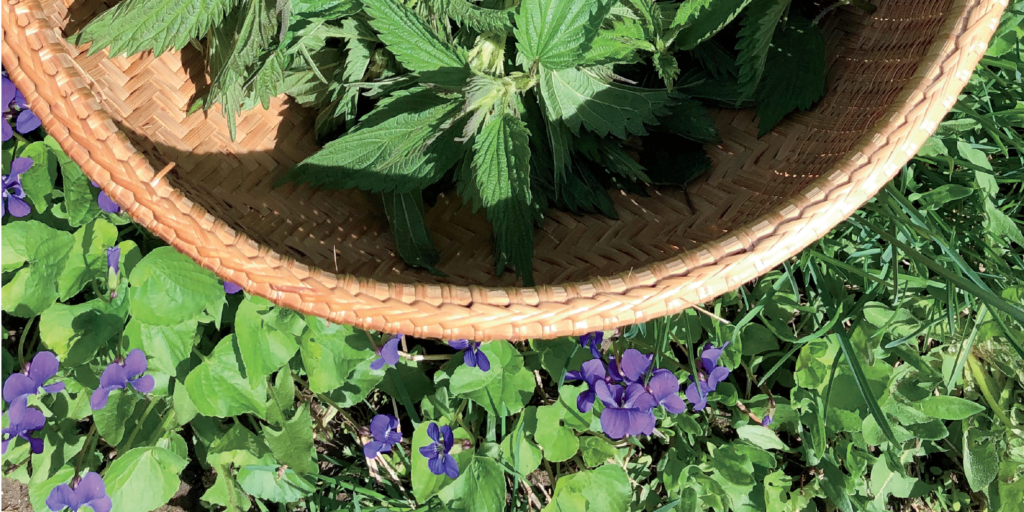
Stinging nettle is one of my favorite plants to include in amendments because of the broad spectrum of minerals it contains.
I have tended a garden since my early twenties, and my wife, Joan, and I have expanded our gardens over the decades. We began growing berries and herbs along with the vegetables, attracting a wider diversity of pollinators as a result. We always processed some of the harvest for storage, too. Canning tomatoes and drying herbs is just good clean fun. Opening up that jar of salsa in the dead of winter provides a respite from the heavy foods we often eat at that time of year. We called it “summer in a jar.” We began to grow enough garlic to supply our needs throughout the year, and then potatoes and more. This was no longer a casual garden; this was our new health program.
Learning how to improve the quality of these crops using local sources, as indigenous peoples have done for millennia, was the next step.
In looking for ways to expand this health care program to grow old with, I turned to the world around me. Nature manages to produce beautiful ecosystems—savannas, rain forests, hardwood forests, and more—without the assistance of any products made by humans in factories or laboratories. And for millennia, indigenous cultures have used local nutrient-rich materials as amendments to produce high-quality foods. Learning about these techniques became a passion for me. I already knew the value of manure for gardens, and I practiced cover cropping and crop rotation. Joan and I have always built and managed compost piles to break down the manure from our chickens. Rotating crops is easy in a small garden simply by forgetting what was planted where in previous years.
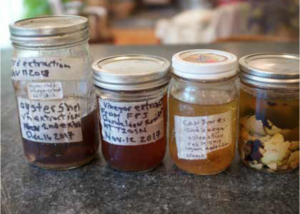
My next phase of garden experimentation began with putting some weeds in a bucket of water and letting them rot. These turned into very, very stinky concoctions, but it somehow seemed to be the right thing to do at the time. I eventually learned that I could strain these mixtures after the pH dropped to about 5.0, and the strained liquid would be shelf-stable and not extremely stinky. I then diluted these products and watered my plants with them—and the results were encouraging. I recalled using vinegar to extract minerals from eggshells when in elementary school—those shells fizzing away, releasing calcium and other minerals into the liquid. Surely I could do something similar.
By diluting these liquids and watering my garden with them, I felt that I was amending the soil in ways similar to those employed by growers of the distant past.
As I searched for voices that spoke about the old and new ways of growing high-quality foods, I found another level of information that stirred my interest and passion: the topics of soil mineralization and mineral proportions, soil biology as a plant’s digestive system, and the use of a refractometer to measure the quality of fruits and vegetables. The idea that blueberries all have different levels of antioxidants and other secondary metabolites needed for health, and that better-tasting blueberries have higher sucrose levels (an indication of those antioxidants and metabolites), which could be measured—all of this was empowering. I could put a number on plant health.
In addition, I began to learn about the degenerative effects of genetically modified foods on the land and human health, and the deleterious effects of glyphosate on the soil and on human health. This gave me further pause about eating foods purchased from the grocery store. All this learning solidified my conviction to grow my own foods and to do so without purchasing and using any of the agricultural chemicals on sale at the garden center or hardware store.
I continued searching for information about using local materials to make amendments.
I knew there was more out there—people have been amending soils for millennia—I just hadn’t found it yet. Then I came across a book called Natural Farming Agriculture Materials by Cho Ju-Young. This book’s recipes used indigenous materials in a way that supported the kind of local, sustainable, and regenerative approach I had in mind. The idea of fermenting a specific kind of common plant such as dandelion in order to capture the minerals it contains in a form I could then apply to my garden as a foliar spray was fantastic! And the process that Cho described for capturing indigenous microorganisms (IMO)—local biology, available in the backyard for free—and using it to digest minerals and revitalize the soil ecosystem was just sensational! Tincturing herbs like garlic, ginger, cinnamon, licorice, and angelica root for their medicinal properties to facilitate the digestive characteristics of the soil is an eye-opening and sensible idea.
Humans have used tinctures of these powerful herbs for centuries to promote good health; why not use them to facilitate the ecology in the soil?
This was the information I was searching for: practical methods that would facilitate nature’s processes, rather than chemicals bought in a store designed to destroy parts of the ecosystem. I would never look at stinging nettles, dandelions, purslane, chickweed, comfrey, and valerian the same way again. They were valuable sources of the minerals, especially trace minerals, I was looking for.
Raised garden beds are a great way to utilize small space to create a bountiful garden. Discover how to create beautiful, easy-to-maintain raised garden beds!
Hot sauce fans, this one’s for you! This easy recipe for fermented hot sauce with wild greens is sure to add an extra punch of flavor to your favorite meal.