

Cheesemaking: An All-Natural, Traditional Approach
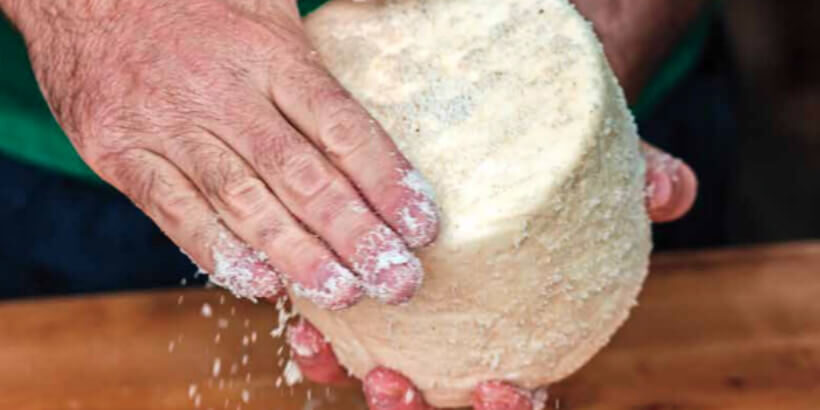
Get ready to change the way you look at cheese. David Asher, author of The Art of Natural Cheesemaking, practices and preaches a traditional, but increasingly countercultural, way of cheesemaking —one that is natural and intuitive, grounded in ecological principles and biological science.
Most DIY cheesemaking books are hard to follow and call for the use of packaged freeze-dried cultures and expensive cheesemaking equipment. Asher takes a decidedly different approach that is down-to-earth, accessible, and organically inspired, empowering both small-scale commercial cheesemakers and the home cook to experiment with their own “wild” cultures that provide more distinctive, unique flavors.
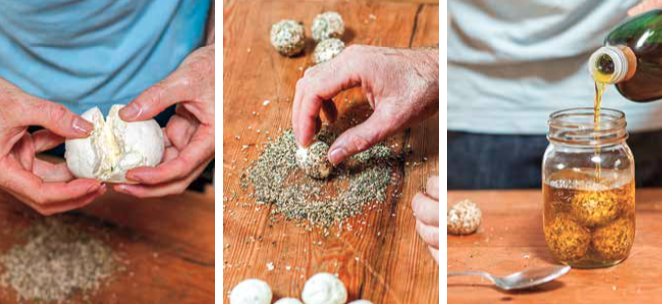
With more than 35 step-by-step recipes for a variety of cheeses, from kefir and paneer to washed-rind and alpine styles, plus illustrative triptych photographs, The Art of Natural Cheesemaking will have you on the hunt for the perfect place to build a cheese cave in your own home.
In the following interview with Chelsea Green, Asher talks about the history of cheesemaking in North America, his inspirations, exciting cheese experiments he is working on now, and more .
A Conversation with Organic Farmer, Goatherd and Cheesemaker David Asher
You start your book boldly with the line, “Cheesemaking, as practiced in North America, is decidedly unnatural.” What is so unnatural about it and how do the methods you describe differ from mainstream commercial and even artisanal cheesemaking practices?
Artisan cheesemakers in North America have taken great strides towards developing a strong ethic for a small-scale, naturally-made cheese; indeed we’ve come a very long way from the industrial cheesemaking that defined the American cheese landscape for the better part of the last century. However, some of the most important elements of cheesemaking have not changed despite the artisanal cheese movement; for artisanal and industrial cheesemakers make cheese according to very similar methodologies.
My main argument that contemporary cheesemaking practices are unnatural stems from the overwhelming use of laboratory raised, freeze-dried, direct-vat-inoculant cultures. The use of these freeze-dried cultures, which include dozens of single strain starter and ripening cultures, defines artisanal cheesemaking culture in North America; and it is here that there is vast room for improvement.
My methods of cheesemaking differ from standard artisanal and industrial practices because they work with milk’s indigenous microorganisms to make cheese. In my cheesemaking, I use only what many might call “wild” cultures (I prefer the idea that they are semi-domesticated). This diversity approach to cheesemaking works on a different premise than the monoculture approach of industrial cheesemaking in which specific cultures are added for making specific cheeses. In my process, given the right conditions, the right cultures of microbiodiverse raw milk, come to define the development of a cheese.
For example, in standard industrial artisan cheesemaking methods, the milk is first pasteurized to destroy milk’s resident microbial community, and two or three strains of freeze-dried culture are added to help the milk develop into a certain cheese. According to my methods, if a cheese is handled a certain way, conditions are created that encourage the milk’s indigenous microbial community to develop into the same cheese.
However, the two cheeses won’t exactly be the same. The use of sensitive laboratory raised cultures demands that cheesemakers keep the conditions of their cheesemaking environment perfectly sterile to prevent contamination from “wild” microorganisms, whereas a cheese made more naturally does not need to be kept in sanitized conditions. The diverse community of microorganisms in the cheese actually protects it from contamination. Making cheese more naturally results in numerous benefits to the cheese, and the cheesemaking process—ultimately, it makes cheeses that look and taste better, and that are more ethically and ecologically responsible.
Farmers have been practicing ecologically inspired agriculture for years — brewers make beer with wild yeasts, bakers are raising breads with heirloom sourdough starters — yet cheesemakers have yet to get on board with the traditional food movement. Why do you think that is?
The absence of a traditional approach in North American cheesemaking (I cannot speak for the European case) stems from our culture being severed from its agrarian roots. We are in the midst of a re-establishment of the deep importance of our agricultural culture, and ecological farming, sourdough baking, and wild fermenting are all signs of positive change in that direction.
However, cheesemaking has been influenced by the forces of progress and science more than any other agricultural spheres, and has yet to find its way. We’ve been making cheese the industrial way in North America for generations now, so long that our traditions have essentially been lost; Cheesemakers today don’t realize that a more natural cheesemaking is even possible.
A small number of cheesemakers do continue to practice a traditional cheesemaking in Europe. However their methods have not been made widely available possibly because these cheesemakers are interested in protecting their cheeses from imitators, and possibly because other cheesemakers perceive their methods to be inferior.
No one here seems to have bothered trying to rediscover the cheesemaking methods of our ancestors the same way farmers and fermenters have for similar reasons. There’s a strong belief in the world of cheesemaking that traditional methods, such as keeping mother cultures and using natural materials like wood, make inconsistent and poor quality cheeses. There’s another belief that raw milk is inherently dangerous, that the microbes in milk are only there as a result of contamination, and that the culture of cheese does not originate in the milk. It is these myths that drive the culture of industrial cheesemaking; and it is these myths that my book aims to dispel.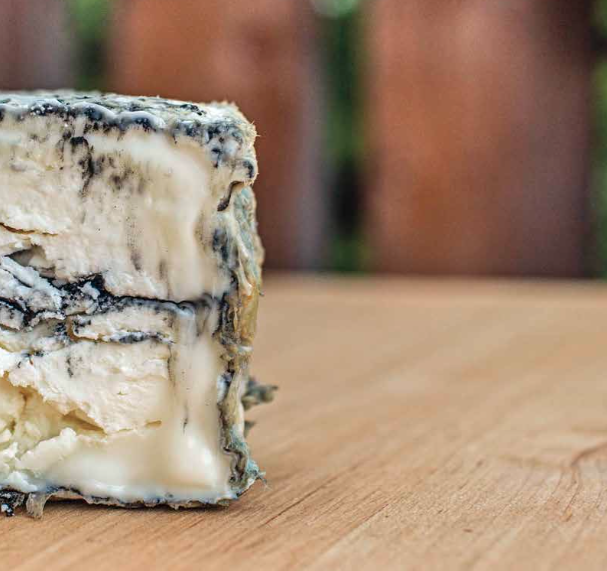
What inspired you to start using traditional methods to make natural cheese?
I question the status quo in all that I do. I cannot simply accept the standard way we do things as the only way. It is for this reason that I’ve essentially “dropped out” of our modern consumerist western culture, it is for this reason that I have become an organic farmer, and it is for this reason that I started using traditional methods to make cheese.
As an organic farmer, I strive for a natural approach. From the soil I cultivate, to the seeds I save, to the harvest I preserve, I work to preserve traditional ways. And when I started making cheese with the milk from my goats, I aimed for the same down-to-earth ideals.
When I started out in my cheesemaking adventures, I went looking to guidebooks and the Internet for advice on how to make cheese naturally and traditionally. And all of the recipes I found instructed me to purchase freeze-dried cultures. I knew, intuitively, that traditional cheesemakers didn’t use these packaged cultures to make cheese, but there were no references, no resources for making cheese without them.
I didn’t know where to go to learn how to make cheese traditionally. I tried apprenticing with a number of cheesemakers, but was always disenchanted with their use of DVI cultures. From what information I could gather, it seemed most cheesemakers around the world had adopted the industrial approach. But I knew that there had to be another way, and I set out to rediscover it. It took many years of research and experimentation and many years of playing with raw milk and with kefir to be confident enough with my methods to write a book on the subject.
Sandor Katz’ breakthrough book, Wild Fermentation, helped. At first, I was reluctant to read what I thought would be just another recipe book. But when I picked it up after much hesitation, I realized that the message of the book was aligned with my intentions of rediscovering traditional and natural foodways. And though the book didn’t exactly show me how to make cheese naturally, it helped motivate me to further my exploration of the simple beauty of natural cheesemaking.
What styles of cheese are you most excited about making now?
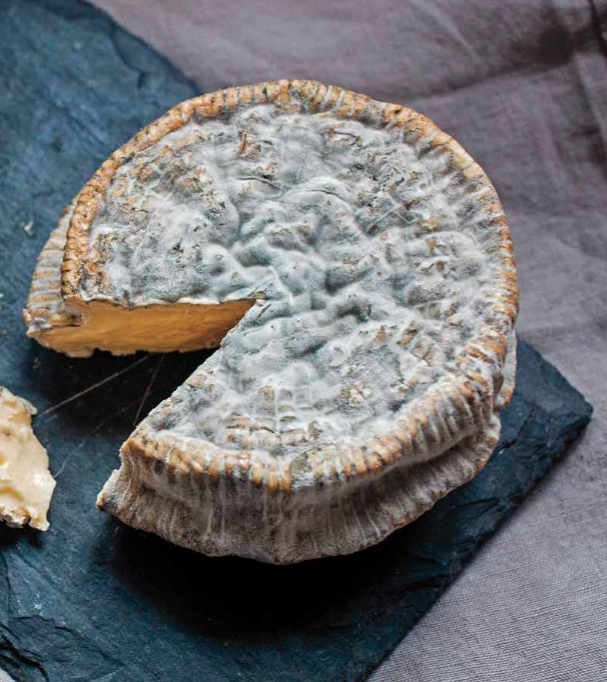
I’ve been playing a lot recently with pre-drained lactic cheeses. This French method of cheesemaking, uniquely suited to goats milk, allows a cheesemaker to make a clay-like curd that can be molded to any shape they desire, then cured to develop its natural Geotrichum rind. This process produces fascinating textures for the interestingly shaped cheeses.
One such cheese I’ve been making a lot of lately is seine de nounou, which translated from the French means ‘wet-nurse’s breast’. It is, as you may have guessed, a breast shaped cheese, complete with nipple, that develops an intricately wrinkled skin – reminiscent, I suppose, of those of the long past wet-nurses. I should say that this cheese is not a breast fetish, but a celebration of milk. In my mind it equates the nourishing and life giving qualities of milk from across all species.
Recommended Reads
Read The Book

The Art of Natural Cheesemaking
Using Traditional, Non-Industrial Methods and Raw Ingredients to Make the World's Best Cheeses
$34.95
You may like...
-
 $27.95
 -
$39.95
-
$25.00


Recent Articles
Looking for something to munch on that’s both tasty and good for you? These ginger carrots are a healthy snack that are easy to make at home! The following excerpt is from The Heal Your Gut Cookbook by Hilary Boynton and Mary G. Brackett. It has been adapted for the web. Ginger Carrots Recipe…
Read More
Mead is one of the oldest fermented beverages and is made by fermenting honey with water, offering countless flavor possibilities. Let’s dive into the world of mead making!
Read More
Learn how to make the anti-inflammatory cocktail, Gates of Immortality! This is a vibrant, botanical twist on the classic Whiskey Smash.
Read More
Hot sauce fans, this one’s for you! This easy recipe for fermented hot sauce with wild greens is sure to add an extra punch of flavor to your favorite meal.
Read More
Known for their tall stature and distinctive flower heads, cattails thrive near lakes and marshes. From edible shoots and nutrient-rich roots to pollen used in baking, cattails offer a wealth of uses.
Read More