

Miso Soup for the Soul
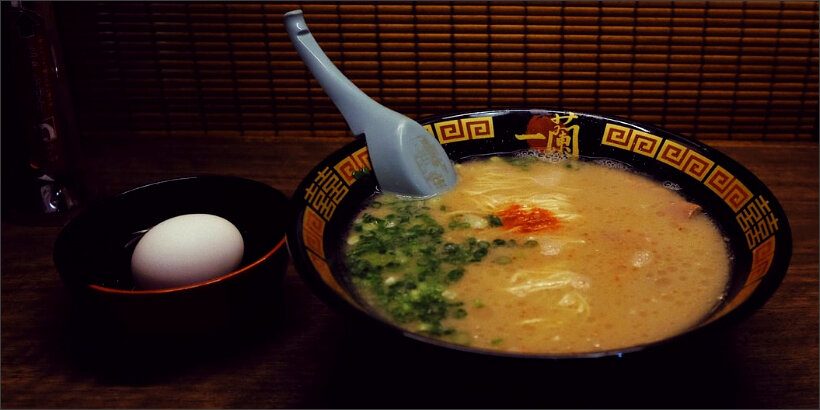
Miso soup is the perfect, soul-healing meal. Not only does this soup taste great, it has amazing health benefits.
Add in a little imagination and you can build your own culinary creation on this humble miso soup base.
The following is an excerpt from Wild Fermentation by Sandor Katz. It has been adapted for the Web.
Warm Your Soul With Miso Soup
The classic way to enjoy miso is in the form of miso soup. The comfort and healing that Jewish grandmothers have proverbially offered in the form of chicken soup, I have more often found in miso soup. No food I know is more soothing.
When you make miso soup, miso is the last thing you add. In its simplest form, miso soup is just hot water with miso, about 1 tablespoon (15 milliliters) of miso per cup (250 milliliters) of water. Add the hot water to the miso and blend it thoroughly. Boiling miso will kill it.
On the other hand, miso soup can be as elaborate as you want. Adding seaweed is generally where I start. Seaweeds have deep, complex flavors. Some people think it makes them sound more appealing to call them sea vegetables. But I like to honor their wildness by calling them weeds. They carry the essence of the sea. They are rich in nutritional and healing properties. One of their specific benefits is a compound called alginic acid, which binds with heavy metals, such as lead and mercury, and radioactive elements like strontium 90, and 
Seaweeds also nourish the cardiovascular system, improve digestion, help regulate metabolism and glandular and hormonal flows, and calm the nervous system. I love to throw seaweed into pretty much anything I cook. Miso soup is almost always prepared with seaweed. Japanese recipes for dashi, or soup stock, traditionally call for kombu, a Pacific Ocean seaweed. I get my seaweed from small-scale seaweed harvesters on the Maine coast, where kombu is not found. The North Atlantic equivalent is called Laminaria digitata. Digitata is a thick and hardy variety of kelp. Each stalk’s growth splits off into several digits of wavy greenbrown flesh, hence the name digitata.
The Making Of Miso: Harvesting Seaweed
I had a memorable experience harvesting digitata, guided by seaweed harvesting partners Matt and Raivo of Ironbound Island Seaweed, off the Schoodic Peninsula in “Downeast” Maine. We woke up at 4:00 A.M., squeezed ourselves into skintight wet suits, and drove down to the harbor. We got into a wooden boat that Matt had built himself, and towed a smaller wooden boat, which he had also built. Do-it-yourself has no limits. We glided through the calm bay waters into the foggy dawn for a long time. I wondered how my guides could possibly navigate in the dense grayness where the sea, sky, and land all blended into one. We saw seagulls and seals. The water got choppier. We were headed beyond the harbor to the turbulent ocean waters where digitata thrives.
We arrived at our destination just as the tide was getting low enough to give us access. Seaweed harvesting is ruled by the tides. Matt and Raivo do almost all of their harvesting during the week each month when the tides are at their lowest. We anchored the big boat and got into the smaller boat, then aimed for a large stand of digitata growing from an underwater rock ledge. When we got near the digitata, we jumped out of the boat into the cold, choppy water. Matt and Raivo took turns staying in the boat to keep it from drifting away, continually rowing back to near where we were, so we could toss the digitata that we harvested into the boat.
There I was in the ocean, with a sharp knife in my hand. The idea was to stand on the rock ledge from which the digitata was growing and cut the stalk to harvest it. Sounds straightforward enough. And it would have been, had the waves been kind enough to stop. But every time a wave came rolling rhythmically in, suddenly the water over the rock ledge I was standing on was about five feet deep instead of two feet. Reaching down to the digitata stalk in the deeper water involved dunking my entire body, head included, into the ocean. And half the time the wave would knock me right off the rock ledge.

Miso fermenting in huge barrels at South River Miso in Massachusetts.
I spent a lot of that morning flailing around, knife in one hand, seaweed in the other, feeling like Lucy Ricardo in another madcap misadventure. When I’d actually get a handful of digitata, the goal was to throw it into the rowboat, another challenge intensified by the rough water. It was crazy, and incredibly fun, regardless of how little I managed to harvest.
As my body was pushed around by the waves, I identified with the seaweeds, whose lives are a continual push and pull of tidal influences. Several small rowboat loads later, the tide was rising too high for us to continue, so we boated back in the mid-morning sun to the South Gouldsboro harbor, nestled in a bed of slippery digitata.
When we got back to Matt and Raivo’s place, we shed our wet suits and ate, then got down to the business of hanging all the seaweed to dry. Each plant requires individual handling. After hours of hanging digitata, our hands were covered with gooey gelatinous slime. Another time when I helped Matt and Raivo hang wet seaweed, I had just been in an auto accident. I found that the flexible slimy seaweed absorbed the shock from my body. Eating seaweed brings this soothing absorptive quality into your digestive tract.
Most of the seaweed available in the United States is imported from Japan, where it is a popular staple ingredient and is farmed intensively. I want to make a plug for seaweed bioregionalism and urge readers to support small seaweed harvesters along America’s coastal waters. Matt and Raivo sell seaweed as Ironbound Island Seaweed. Other seaweed harvesters I can recommend are Larch Hanson in Maine and Ryan Drum in Washington. Contact information for these suppliers is listed in the Cultural Resources section.
Homemade Miso Soup Recipe
We were making miso soup. Use whatever is in your refrigerator or your garden that needs to get used up. Here’s how I do it:
- Start with water. One quart (1 liter) of water makes soup for 2 to 4 people. Quantities of the other ingredients are in proportion to a quart of water. Start heating the water to a boil, while you add other ingredients; once it boils, lower the heat and simmer.
- Add the seaweed first. As it cooks, its flavors and qualities melt into the broth. I use scissors to cut up dried seaweed into small pieces, easier to fit in a spoon.
- Cut up a 3- to 4-inch (8- to 10-centimeter) strip of digitata, kombu, or another variety of seaweed, or more than one type. Add the small pieces of seaweed to the water. Once this boils for a few minutes, you have a traditional Japanese dashi, or stock. Make your miso soup from this, or make it more elaborate.

- Also cut up a carrot and/or part of a daikon root. Add the root vegetables to the pot of soup stock.
- Next I add mushrooms if I have them around. Shiitakes are my favorite, but any kind goes well in soup. I never wash mushrooms because they are so absorptive and I would rather have them absorb soup than plain water. Just wipe away any visible dirt. Slice 3 or 4 mushrooms into pieces small enough for a spoon and add them to the soup stock.
- Cabbage is good in miso, just a little bit, chopped finely and added to the stock.
- If you want heartier soup, you can add tofu. Take about half a pound (250 grams) of tofu, rinse it, slice it into small cubes, and add it to your stock. If you have any leftover cooked whole grains around, add a scoop of them to the stock. Break up any clumps with a spoon. Soups are an excellent opportunity for recycling leftovers.
- Peel and chop four (or more!) cloves of garlic and prepare any green vegetables. Cut small pieces of florets from a stalk of broccoli, or chop up a few leaves of kale, collards, or other greens.
- Check to make sure the root vegetables are tender and the tofu is hot. When they are, turn off the flame.
- Remove a cup of the stock and add the garlic and green vegetables to the pot. Cover the pot.
- Mash about 3 tablespoons (45 milliliters) of miso into the cup of stock you removed. For a hearty soup, you can also add 2 tablespoons (30 milliliters) of tahini. Once it’s well blended, return it to the pot of stock and stir. Taste the soup. Add more miso, if needed, using the same technique.
- Garnish the soup with chopped scallions, wild onions, or chives. Enjoy. Soup like this is a one-dish meal.
- When you heat leftover soup, heat it gently, trying not to boil the miso.

Recommended Reads
Read The Book

Wild Fermentation
The Flavor, Nutrition, and Craft of Live-Culture Foods, 2nd Edition
$29.95
You may like...
-
$35.00
-
$34.95
-
$34.95


Recent Articles

Looking for something to munch on that’s both tasty and good for you? These ginger carrots are a healthy snack that are easy to make at home! The following excerpt is from The Heal Your Gut Cookbook by Hilary Boynton and Mary G. Brackett. It has been adapted for the web. Ginger Carrots Recipe…
Read More
Mead is one of the oldest fermented beverages and is made by fermenting honey with water, offering countless flavor possibilities. Let’s dive into the world of mead making!
Read More
Learn how to make the anti-inflammatory cocktail, Gates of Immortality! This is a vibrant, botanical twist on the classic Whiskey Smash.
Read More
Hot sauce fans, this one’s for you! This easy recipe for fermented hot sauce with wild greens is sure to add an extra punch of flavor to your favorite meal.
Read More
Known for their tall stature and distinctive flower heads, cattails thrive near lakes and marshes. From edible shoots and nutrient-rich roots to pollen used in baking, cattails offer a wealth of uses.
Read More