
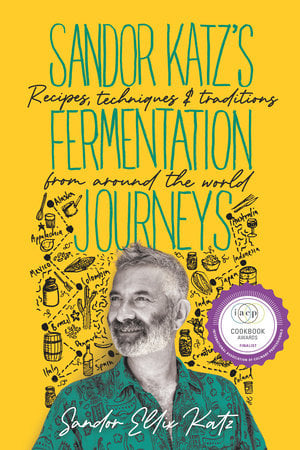
Sandor Katz’s Fermentation Journeys
Recipes, Techniques, and Traditions from around the World

EXCERPTS
| Pages: | 352 pages |
| Book Art: | 250 color photos |
| Size: | 7 x 10 inch |
| Publisher: | Chelsea Green Publishing |
| Pub. Date: | October 19, 2021 |
| ISBN: | 9781645020349 |
Sandor Katz’s Fermentation Journeys
Recipes, Techniques, and Traditions from around the World
A FERMENTATION COOKBOOK FOR EVERY HOME CHEF: The James Beard Award winner and New York Times bestselling author of The Art of Fermentation travels the globe to celebrate the fermenting recipes, processes, and traditions that inspire him.
“Sandor’s life of curiosity-filled travel and exploration elicits a sense of wonder as tastes, sights, and smells leap off the pages to ignite your imagination.” —David Zilber, co-author of The Noma Guide to Fermentation
For the past two decades, fermentation expert and bestselling author Sandor Katz has traveled the world, both teaching and learning about the many fascinating and delicious techniques for fermenting foods. Wherever he’s gone, he has gleaned valuable insights into the cultures and traditions of local and indigenous peoples, whether they make familiar ferments like sauerkraut or less common preparations like natto and koji.
In Sandor Katz’s Fermentation Journeys, Katz takes readers along with him to revisit these special places, people, and foods.
This cookbook goes far beyond mere general instructions and explores the transformative process of fermentation through:
• Detailed descriptions of traditional fermentation techniques
• Celebrating local customs and ceremonies that surround particular ferments
• Profiles of the farmers, business owners, and experimenters Katz has met on his journeys
It contains over 60 recipes for global ferments, including:
• Chicha de jora (Ecuador)
• Misa Ono’s Shio-koji, or salt koji (Japan)
• Doubanjiang (China)
• Efo riro spinach stew (Nigeria)
• Whole sour cabbages (Croatia)
• Chucula hot chocolate (Colombia)
Sandor Katz’s Fermentation Journeys reminds us that the magical power of fermentation belongs to everyone, everywhere. Perfect for adventurous foodies, armchair travelers, and fermentation fanatics who have followed Katz’s work through the years—from Wild Fermentation to The Art of Fermentation to Fermentation as Metaphor—this book reflects the enduring passion and accumulated wisdom of this unique man, who is arguably the world’s most experienced and respected advocate of all things fermented.
“Katz’s teachings and writings on fermentation have changed lives around the world.” —BBC
Reviews & Praise
—GQ
“[Katz is] rock in the fermentation world and a true inspiration of mine . . . making fermentation approachable and fun (as it should be).”
—Brad Leone, Bon Appétit
“[Katz’s] teachings and writings on fermentation have changed lives around the world.”
—BBC
“The fermentation movement’s guru.”
—USA Today
“A fermentation master.”
—The Wall Street Journal
“Sandor Katz’s Fermentation Journeys highlights the personal anecdotes that ignited his passion for fermentation. We are transported to each remote village through him and introduced to the people behind the recipes he has shared. Fermentation is an important method of food preservation that brings unique textures and flavors to many dishes. Sandor has managed to expose the ancient techniques behind the practice while providing approachable recipes for the home cook.”
―Daniel Boulud, chef/restaurateur, author of Letters to a Young Chef
“In his Fermentation Journeys, Sandor Katz’s life of curiosity-filled travel and exploration elicits a sense of wonder as tastes, sights, and smells leap off the pages to ignite your imagination. This book doesn’t simply serve as a near-encyclopedic travelogue to countless ferments from around the world. It cements the grandfather of the fermentation revival as a great naturalist of our time; an enthusiastic adventurer seeking out not giant beasts, but microscopic ones, through friendships, community, recipes, and more-than-human stories.”
―David Zilber, chef, fermenter, food scientist, and coauthor of The Noma Guide to Fermentation
“Sandor Katz has done it again. This time he learns alongside all of us as we travel the world with him and study centuries-old cultural traditions of all things fermented.”
―Dan Barber, chef/co-owner, Blue Hill and Blue Hill at Stone Barns; author of The Third Plate
“When I absentmindedly wandered into Sandor Katz’s session at the IACP Conference in San Francisco in 2012, a whole new world opened up to me. Ever since then I’ve been spreading the gospel and devouring every snippet of information. This gem of a book, detailing Sandor’s ‘fermentation journeys’ around the world, is a dream come true for this Irish fermentation nerd.”
―Darina Allen, Ballymaloe Cookery School
“More than just fermentation cookbook meets travel journal, Sandor Katz’s Fermentation Journeys is a love letter to the world fermentation community. Like threads of forest mycelium linking underground communication networks, this worldwide community shares knowledge and a belief that fermentation can heal. As Katz documents recipes and techniques, he focuses on the story of place and the individuals that shared their traditions or ideas. In this way, it is a book the fermentation community built.”
―Kirsten K. Shockey, author of Homebrewed Vinegar and coauthor of Miso, Tempeh, Natto & Other Tasty Ferments
“Sandor Katz takes us on a wild ride around the globe as he discovers a global perspective on fermentation. He proves that we are all hard-wired to crave fermented foods, no matter where we live. It’s fascinating to see how fermentation brings us all together and inspires and informs our own traditions back home. Buy the ticket, take the ride, and hang on tight.”
―Sean Brock, chef, author of South and Heritage
“I’ve learned more from Sandor Katz over the years than from any other culinarian that I’ve worked with or studied under. This book takes you on a mystical and magical journey through the seemingly endless rabbit hole that is fermentation. From koji to chocolate sauerkraut cake to doubanjiang, Sandor not only shows us how to make these delicious foods but also thoroughly explains the how’s and why’s behind them. Get your crocks and salt ready to start fermenting!”
―Jeremy Umansky, chef/owner, Larder Delicatessen & Bakery; coauthor of Koji Alchemy
“Sandor Katz opens our eyes to the generous humans around the globe sharing their cultures through the lens of fermentation. Each vivid story transports you to moments of discovery and wonder, sparking memories of a crafty family member who makes something delicious, pulled from the depths of their home, that you can’t get enough of. Multiply that experience one hundred times and you’ll begin to understand the power of this book.”
―Rich Shih, coauthor of Koji Alchemy
“What incredible adventures around the world! Many of the ferments featured here, both traditional and experimental, will be unknown to a majority of readers. I predict Sandor’s book will inspire yet another wave of fermentation enthusiasts. The recipes here will get us started.”
―Ken Albala, professor of history, University of the Pacific
“If you need a reminder of the transformative powers of fermentation, its unifying capacity across cultures, and its pervasiveness on our planet, buy this book.”
―Pete Halupka, co-owner, Harvest Roots Ferments
“Sandor Katz documents the joys, quirks, and health benefits of fermentation in all its global variety. This encyclopedic cookbook-cum-travel memoir provides 60 recipes that are seeded within a broader discussion of regional techniques and traditions, peppered with profiles of the experts and eateries discovered by Katz on his voyages. . . .This international romp is funky in the best of ways.”
―Publishers Weekly
“Part travelogue, part cookbook, part chemistry experiment, Katz’s new book is a fascinating look at fermented foods the world over, and it aims, always, to be a respectful one.”
―BookPage
“A superb book, by a great human being, completely original, beautifully written, and based on carefully recorded field research worldwide. The large number of color photos make a major contribution to the entire book.... I learned SO much!”
―Bill Shurtleff, co-author of The Book of Miso and The Book of Tempeh
“The recipes are so approachable that you might find yourself experimenting with everything from natto to pulque to pao cai―or even dig into your family’s culture for recipes to revive.”
―Civil Eats
“Fascinating and full of delicious stuff. . . . I’m psyched to cook from this book.”
—Francis Lam, The Splendid Table

About Sandor Ellix Katz
Sandor Ellix Katz is a fermentation revivalist. A self-taught experimentalist who lives in rural Tennessee, his explorations in fermentation developed out of his overlapping interests in cooking, nutrition, and gardening. He is the author of four previous books: Wild Fermentation, The Revolution Will Not Be Microwaved, The Art of Fermentation—which won a James Beard Foundation Award in 2013—and Fermentation as Metaphor. The hundreds of fermentation workshops he has taught around the world have helped catalyze a broad revival of the fermentation arts. The New York Times calls Sandor “one of the unlikely rock stars of the American food scene.” For more information, check out his website: www.wildfermentation.com.
Connect with Sandor Ellix Katz
Books by Sandor Ellix Katz


You may also like...
-
 $34.95
 -
$34.95
-
$34.95

