

Traditional Italian Sponge Cake Soaked in Liqueur
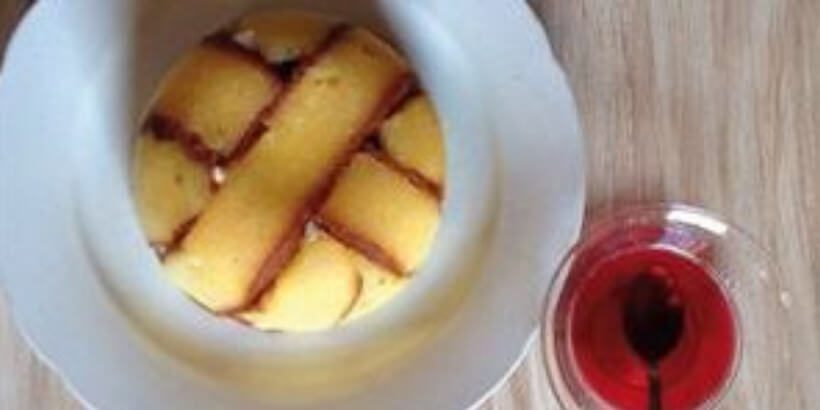
Is your happy hour missing something?
You’re sitting there, enjoying a glass of wine, a pint of beer, or a snifter of scotch — depending upon your tastes. The cares of the week are melting away as you slip under the spell of alcohol, one of the human race’s most ancient and most reliable methods of improving the general mood (and, of course, you are enjoying your spirits responsibly, and would never consume too much, nor operate an automobile after imbibing). But then you stop. You stop and you can’t help but wonder: where’s the cake?
Okay, so maybe your daydreams aren’t as floury as mine. Regardless, this recipe for boozy cake from Vermont author and chef Deirdre Heekin would make any hour happier. Give it a try!
The following is an excerpt from Libation: A Bitter Alchemy by Deirdre Heekin. It has been adapted for the Web.
Recipe for Pan di spagna, Using Alkermes
Pan di spagna, or Spanish bread, is a traditional “keeping cake” born out of the medieval convent kitchen. Because of the egg whites, this cake has incredible longevity (hence the “keeping” quality), and while it is delicious served fresh and spongy, I like it left to dry. Then it soaks up the liquid and flavor of the alkermes all the better.
Ingredients
- 4 eggs, separated
- 1 1/4 cups sugar
- 1 teaspoon vanilla extract
- Zest of 1 lemon
- 1 cup flour, sifted
- Alkermes liqueur, for bathing the cake
- Fresh whipped cream
- Mint or rose garnish, if you like
Procedure
Butter and flour an 8-inch cake pan, and preheat the oven to 350 degrees F. Beat the egg yolks and sugar until ribbony, then add the vanilla and lemon zest and mix thoroughly. Add the flour and mix it in thoroughly but gently; hard mixing will toughen the batter and the texture of the final cake. Let the batter rest while you whip the egg whites until they are just stiff, but still soft and not dry. Using your bare hand, mix one-third of the egg whites into the batter, taking care to break up the yellow cake mixture and saturate it with the whites. Add another third of the whites and mix it in gently but thoroughly. Finally, fold in the remaining whites, leaving streaks of whites throughout the batter. Fill the cake pan to a depth of 1 inch, and level the batter out in the pan.
Bake for 30 to 40 minutes, or until a small knife comes out clean and the cake has just pulled away from the insides of the pan. Let the cake rest for 10 or 15 minutes, then remove it from the pan and let it cool completely. For serving, you can spoon a little of the alkermes over each slice and garnish with fresh whipped cream. Another way to present the dessert is to pour some liqueur in a shallow dish, cut each portion in half horizontally, dip the cut face of the bottom half in the liqueur, place it on the serving plate with some whipped cream on it, then dip the cut face of the top half in the liqueur and place it on top, thus completing the portion. Add a dollop of whipped cream on top. Garnish with a sprig of mint or rose petals and serve.
Recommended Reads
Seasonal Desserts: Apple Spice Bundt Cake & Pumpkin Pie with Hazelnut Crust
You may like...
-
 $29.95
 -
$29.95
-
$40.00


Recent Articles

All hail the joyful juneberry! While these berries taste wonderful when they’re fresh, you can also preserve them and create beverages with them.
Read More
Looking for something to munch on that’s both tasty and good for you? These ginger carrots are a healthy snack that are easy to make at home! The following excerpt is from The Heal Your Gut Cookbook by Hilary Boynton and Mary G. Brackett. It has been adapted for the web. Ginger Carrots Recipe…
Read More
Mead is one of the oldest fermented beverages and is made by fermenting honey with water, offering countless flavor possibilities. Let’s dive into the world of mead making!
Read More
Learn how to make the anti-inflammatory cocktail, Gates of Immortality! This is a vibrant, botanical twist on the classic Whiskey Smash.
Read More
Hot sauce fans, this one’s for you! This easy recipe for fermented hot sauce with wild greens is sure to add an extra punch of flavor to your favorite meal.
Read More