Archive for October, 2012


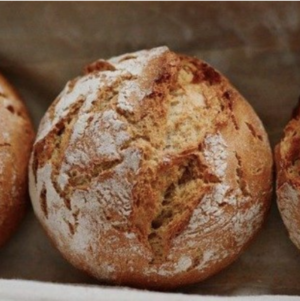
Sourdough - An Excerpt from The Art of Fermentation

Wednesday, October 31st, 2012

Sourdough is a simple wild ferment made from nothing but flour and water. You can start a batch today, use it in a few days, and keep it alive and bubbling … well …  forever.

If you have the patience, enjoy the flavor of sourdough, and can commit to feeding your quiet new “pet” frequently, you can develop a vibrant colony of mixed yeasts and bacteria and keep it going indefinitely. There are stories of legendary, long-lived sourdough cultures — maybe yours could join their ranks. Some were smeared on handkerchiefs, dried, and brought across the sea when folks immigrated to America. Some, like San Francisco’s famous culture, are just the unique ecology of microorganisms from a certain place.

What fun flavors will your kitchen-ecology develop? There’s only one way to find out.

Let New York Times best-selling author Sandor Katz guide you through the process and concepts you’ll need to tend to your sourdough and ensure it has a long and bubbly, er, happy, life. Here is an excerpt from his latest book, The Art of Fermentation.

Sourdough - An Excerpt from The Art of Fermentation

Pre-Release Special: Lynn Margulis!

Tuesday, October 30th, 2012

“It was life—profligate, teeming life in all its weirdness—that held the magic for her, not this featherless biped with its confused aspirations. Lynn intuited and doggedly gathered evidence to show that most anything we two-leggeds take special pride in—our capacities for cogitation, conviviality, and culture—had been invented, eons before, by the microbial entities that compose us.”

David Abram, contributor, and author of Spell of the Sensuous

When scientist Lynn Margulis died last year, the world lost a true intellectual revolutionary — but her vibrant legacy lives on.

Margulis’s son and longtime collaborator Dorion Sagan collected essays from his mother’s colleagues and friends, and compiled them into a beautiful tribute. To celebrate the book’s arrival, we’re putting Lynn Margulis: The Life and Legacy of a Scientific Rebel on sale this week for 25% off.

Sagan remembered his mother in an “evolutionary eulogy”, adapted from what he told his children after Margulis’s passing.

Your grandmother was so smart, talked so fast, and about so many subjects that hardly anybody—maybe even not she herself—could always understand everything she said.

She said: “Evolution is no linear family tree, but change in the single multidimensional being that has grown to cover the entire surface of Earth. ”

She said: “The idea that we are ‘stewards of the earth’ is another symptom of human arrogance. Imagine yourself with the task of overseeing your body’s physical processes. Do you understand the way it works well enough to keep all its systems in operation? Can you make your kidneys function? . . . Are you conscious of the blood flow through your arteries? . . . We are unconscious of most of our body’s processes, thank goodness, because we’d screw it up if we weren’t. The human body is so complex, with so many parts. . . The idea that we are consciously caretaking such a large and mysterious system is ludicrous.”

Read the entire essay at Seven Pillars House of Wisdom.

Lynn Margulis touched the lives of many scientists and other thinkers, many of whom contributed essays to the book. James Lovelock, who first articulated the hypothesis that the Earth’s many interconnected biotic systems essentially behave as a unified organism (what came to be known as the Gaia Theory), write in the excerpt below about first meeting Margulis.

Lynn Margulis: Essay by James Lovelock

“Frankenstorm” Sandy is Coming, Are You Prepared?

Monday, October 29th, 2012

Only a little more than a year has passed since Tropical Storm Irene slammed into the Eastern Seaboard. Authorities in New York City mobilized to prepare, and people laughed when she passed over the Big Apple without event.

But people in the Hudson Valley and Vermont were not laughing, and given the storm’s original trajectory were largely unprepared for what Irene would unleash. The storm dropped huge amounts of rain, and catastrophic flooding hit the narrow river valleys of New England, collapsing roads, washing away houses and stranding entire communities for days on end.

We were lucky. Our office, and the homes of our staff were spared the worst of the damage. Vermont has rallied to repair the washed out roads, and even the wrecked covered bridges are being rebuilt.

But here comes Hurricane Sandy at more than 500 miles wide and no signs of slowing down as she barrels to make landfall Monday night.

Conditions in the Atlantic where the storm is projected to pass are “unprecedented,” with warm water temperatures and a cold front sweeping in from the west. This storm has even typically sober national weather services sounding the alarm. Sandy has been labeled a “Frankenstorm,” and, once again, the East Coast is bracing for the worst.

Which brings us to the real subject of this post: Are you prepared?

Mat Stein’s latest book, When Disaster Strikes, outlines what to gather and what to expect from a few different types of natural disaster — including hurricanes. The excerpt below, in combination with his guidelines for putting together a 72-hour grab-and-go survival kit, will help you weather the storm.

Hurricanes and Floods - An Excerpt from When Disaster Strikes

New and Best-Selling Eco Food Books on Sale

Thursday, October 25th, 2012

One thing we all know is that where our food comes from and how it is grown matters. It matters to our sense of place and community, to our sense of taste and biodiversity, and, most importantly, to our relationship with the environment.

We believe that having control over your food supply—whether you’re an educational farm at Green Mountain College or just someone who cares about where your food is grown—is key to a more resilient, sustainable foodshed.

A major part of Chelsea Green’s mission is to inspire you with ideas and practical tips. So whether you want to get your hands in the dirt and grow fresh vegetables; find a new recipe for using the food in your CSA box; or preserve those vegetables you just learned how to grow—we have the book for you, and best of all we’ve put some of our keystone food books on sale this month.

Chelsea Green believes in publishing books that you will turn to time and time again. We don’t cater to fads or flash-in-the-pan trends, but rather we focus on being a resource for timeless, traditional skills.

Happy reading from the folks at Chelsea Green Publishing.


Home Baked: Nordic Recipes and Techniques for Organic Bread and Pastry


Home Baked Cover Image
Retail Price: $39.95
Sale Price: $25.97

Bakers interested in taking their breadmaking to the next level will love our new book Home Baked, a richly-illustrated and recipe-driven book on Nordic baking (both sweet and savory). Written by Hanne Risgaard, and translated by her daughter, Marie-Louise, Home Baked comes to us from a Danish family that not only bakes beautiful breads, but grows all the grains organically and grinds them on site. The results are inspiring — and mouthwatering.


Nordic cuisine, at the moment, is very much on the minds of chefs and diners in the United States. Why?

Chelsea Green Senior Editor Makenna Goodman says, “There is so much interest in Nordic cuisine right now, and part of that is because of the unique ecological twists in Scandinavian recipes — lots of interest in foraging and fermentation, for example. So, if you love bread and baking, and you’re interested in unique ingredients like stinging nettles and protein-filled grain that’s closer to its traditional cousin, then this book is the one for you.”


The book includes gorgeous color photographs, step-by-step instructions on working dough, information on spelt and rye, as well as common wheat.

The Risgaard’s story of turning their conventional family farm into a place that could produce “the world’s best flour…or get as close as possible,” was recently featured in Bread, an online magazine. Read the full Bread interview here.


Taste, Memory: Forgotten Foods, Lost Flavors, and Why They Matter


Retail Price: $17.95 
Sale Price: $11.67


Taste, Memory traces the experiences of modern-day explorers who rediscover culturally rich forgotten foods and return them to our tables for all to experience and savor.

Author David Buchanan shares stories of slightly obsessive urban gardeners, preservationists, environmentalists, farmers, and passionate cooks, and weaves anecdotes of his personal journey with profiles of leaders in the movement to defend agricultural biodiversity.

 Taste, Memory begins and ends with a simple premise: that a healthy food system depends on matching diverse plants and animals to the demands of land and climate. In this sense of place lies the true meaning of local food.

Read Chapter One: Seeds of an Idea….

The Art of Fermentation: An In-Depth Exploration of Essential Concepts and Processes from Around the World


Retail Price: $39.95 
Sale Price: $25.97

We can confidently say that this is the most comprehensive guide to do-it-yourself home fermentation ever published.

Sandor Katz presents the concepts and processes behind fermentation in ways that are simple enough to guide a reader through their first experience making sauerkraut or yogurt, and in-depth enough to provide greater understanding and insight for experienced practitioners.

A New York Times Bestseller!

While Katz expertly contextualizes fermentation in terms of biological and cultural evolution, health and nutrition, and even economics, this is primarily a compendium of practical information—how the processes work, parameters for safety, techniques for effective preservation, troubleshooting, and more.

Read Michael Pollan’s enusiastic and inspired Foreword. READ IT HERE…. OR take a peak of an excerpt on Sourdough. READ IT HERE…

From Asparagus to Zucchini: A Guide to Cooking Farm-Fresh Seasonal Produce


Retail Price: $19.95 
Sale Price: $12.97

Ever wonder how you’ll ever be able to use all your vegetables? From Asparagus to Zucchini answers the question of what to do with your armloads of greens, exotic herbs (and the never-before-seen vegetables), with recipes that are as concise and doable as they are appealing. Created for and by Community Supported Agriculture (CSA) members, the book is an indispensable tool for anyone who wants to eat seasonally and locally.

Organized by vegetable—53 in all—each section includes nutritional, historical, and storage information, as well as cooking tips. With more than 420 original recipes created, tested, and enjoyed by chefs, CSA members, and farmers, you’ll never be without a delicious recipe to make the most of the season’s bounty.

Fresh From Maine, 2nd Edition: Recipes and Stories from the State’s Best Chefs


Retail Price: $32.50
Sale Price: $21.13

In the 2nd edition of Fresh From Maine, author Michael Sanders takes you deep into the world of 25 Maine chefs, their stories, challenges, secrets, and triumphs. More than 80 recipes, nearly half of them new to this edition and all brought to life by Maine photographer Russell French, capture the true bounty of this land and its waters.

Each chef’s cuisine is very much his own, but they share one thing: they all work in the sustainable idiom with local farmers, animal raisers, and fishermen to bring the best, all-natural food, much of it organic, to their tables.

Join us in discovering culinary outposts and innovative chefs all over the state, from Fryeburg to Hallowell, from Bangor to Brunswick and coastal Maine from Kittery to Mount Desert.

 Long Way on a Little: An Earth Lover’s Companion for Enjoying Meat, Pinching Pennies and Living Deliciously


Retail Price: $32.50  
Sale Price: $22.72

More than just a cookbook, Long Way on a Little presents Hayes’ practical knowledge about integrating livestock into a sustainable society with her accessible writing and engaging wit.

Designed to be the only meat book a home cook could ever need, Long Way on a Little is packed with Hayes’ signature delicious no-fail recipes for perfect roasts and steaks cooked indoors and out on the grill, easy-to-follow techniques to make use of the less-conventional, inexpensive cuts that often go to waste, tips on stretching a sustainable food budget, and an extensive section on using leftovers and creating soups; all with the aim of helping home cooks make the most effective and economical use of their local farm products or their own backyard livestock.


Slow Wine


Retail Price: $25.00
Sale Price: $16.25

Slow Wine adopts a new approach to wine criticism and looks beyond what is in the glass. A wine cannot be judged by scores, symbols or other numerical evaluations, but needs to be assessed in a broader context. The guide centres round the agronomical efforts of cellars, describing vines planted, vineyards tended and the philosophy underpinning the work of winemakers.

Three sections describe the cellars in their entirety: Life, the stories of the leading players in the world of winemaking; Vines, profiles of vineyards according to their characteristics and the way they are managed; and Wines, straightforward descriptions backed up by comprehensive statistics.

“We are the only wine guide that visits each winery, so the information is first-hand,” said editor Giancarlo Gariglio of the 200-person staff it takes to put the guide together each year. “We visit the vineyard, the cellar, and taste with the producer.”

Cooking Close to Home: A Year in Seasonal Recipes


Retail Price: $34.95
Sale Price:  $22.72

A collection of over 150 original recipes designed to follow the seasons using the foods available in your region. Whether you are a home gardener, a farmers’ market regular, or a member of a community-supported agriculture program, this cookbook will serve as a seasonal guide to using the foods available in your region.

Each recipe includes useful “Harvest Hints” that explain how to find, purchase, prepare, and preserve fresh and seasonal ingredients.

Flip to the last chapter for recipes and tips on preserving the harvest: jam, pesto, pickles, and more. BROWSE THE ENTIRE BOOK…


**Titles on Sale until November 15th**

Go on an Adventure (in the Safety of Your own Kitchen)

Thursday, October 25th, 2012

Gourmet Adventure Month is here, and we’ve got a great selection of “safari guides” to help you survive your voyage into the flavorful wild.

Don’t fear, as you leave the well-worn path behind. Turn away from white rice, bland bread, and sorry salads. A whole world of exciting, nurturing foods await—from the idyllic isles of Denmark to the weeds in your own backyard.

These fun food books will be on sale for 35% off this week.

Reg. Price: $39.95
Sale Price: $25.97

The Art of Fermentation: An In-Depth Exploration of Essential Concepts and Processes from Around the World

Did you know there’s more bacterial DNA in your body than human DNA? Better make friends with them!

The Art of Fermentation, Sandor Katz’s encyclopedic and inspiring guide to all things tangy and alive, will get you started on the right foot with your microbial buddies. Not even scientistss fully understand how probiotic, live-culture foods help keep us healthy, but Katz’s main concern is deliciousness. From yogurt to kimchi to sourdough bread, once you go wild, you’ll never go back!

.

WF cover image
Reg. Price: $34.95
Sale Price: $22.72

Wild Flavors: One Chef’s Transformative Year Cooking from Eva’s Farm

Is the produce aisle seeming a little too tame lately? Mass-produced tomatoes with no flavor, kale greens tough from spending days in a truck, the same old broccoli again and again.

Wild Flavors delivers exactly what its title promises. Chef Didi Emmons spent a year visiting Eva Sommaripa’s farm, which provides fresh greens, herbs — and vegetables commonly known as weeds — to Boston restaurants. Calaminth, purslane, arugula flowers? Pure, yummy magic. Even Didi’s cat Henry — pictured above, attacking the asparagus — went a little wild on Eva’s farm.

.

Weeders Digest cover image
Reg. Price: $17.95
Sale Price: $11.67

The Weeder’s Digest: Identifying and Enjoying Edible Weeds

Fighting weeds in your garden is tough work. Gail Harland’s new book, The Weeder’s Digest, sets out to make it a little sweeter.

With color photos throughout, and plenty of recipes, the book will show you which plants formerly known as weeds you can eat, how to cook them, and how to identify the ones you should avoid.

Weeds, if you can’t beat ‘em, eat ‘em!

.

Reg. Price: $34.95
Sale Price: $22.72

Long Way on a Little: An Earth Lover’s Companion for Enjoying Meat, Pinching Pennies and Living Deliciously

Author Shannon Hayes is on a mission to help cooks enjoy ethical meat.

In her latest book, Long Way on a Little, she explains how to use as much of the animal as possible, how to cook grassfed meat properly, how to render fat into lard, and much, much more. It’s the only cookbook a meat lover needs.

.

.

Reg. Price: $17.95
Sale Price: $11.67

Taste, Memory: Forgotten Foods, Lost Flavors, and Why They Matter

Taste, Memory traces the experiences of modern-day explorers who rediscover culturally rich forgotten foods and return them to our tables for all to experience and savor.

Author David Buchanan explores questions fundamental to the future of food and farming. How can we strike a balance between preserving the past, maintaining valuable agricultural and culinary traditions, and looking ahead to breed new plants? What place does a cantankerous old pear or too-delicate strawberry deserve in our gardens, farms, and markets? To what extent should growers value efficiency and uniformity over matters of taste, ecology, or regional identity?

.

Reg. Price: $39.95
Sale Price: $25.97

Home Baked: Nordic Recipes and Techniques for Organic Bread and Pastry

Baking your own bread is an adventure every time. Will your kitchen be at the right temperature or humidity to make your dough behave? Will it end up sticky and unmanageable, or rising too fast? Forming a relationship with flour, water, yeast, and salt is part of why baking is so much fun.

Home Baked is a guide book to further adventures with dough. Beyond just your typical wheat flour, this book introduces spelt and rye, plus a Nordic flair for special ingredients like wildcrafted stinging nettles, leeks, elderflowers, and more.

.

Reg. Price: $18.00
Sale Price: $11.70

Drinking in Maine: 50 Cocktails, Concoctions, and Drinks from Our Best Artisanal Producers and Restaurants

Fifty sensational drinks featuring Maine distilled gins, vodkas, brandies, local honey meads, fruit wines, and heirloom apple ciders — all created by producers and barkeeps from Maine restaurants and bistros

From a piping hot Apple Toddy featuring Maine mead, gin, and cranberry bitters; to a cooling fresh take on summer’s all-time favorite drink, Back Porch Lemonade with Cold River Vodka and local ginger beer, you’ll find drinks for all seasons and all tastes.

.

How to Grow Oyster Mushrooms Indoors

Wednesday, October 24th, 2012

Is frost setting in on your strawberries, or dipping temperatures terminating your tomatoes?

The growing season for temperate climate gardeners is pretty much over by this time of year. But we know locavores are hungry all-year-round, and that’s why we love to publish books to help you take control over your food supply even in the dead of winter. From Eliot Coleman’s easy methods of gardening under cold frames, to Sandor Katz’s techniques for turning your kitchen into a bubbly fermentation factory, our authors keep the homegrown fun going.

One of our favorite resources for off-season growing or simply growing food year-round in your urban “homestead” is Fresh Food from Small Spaces: The Square-Inch Gardener’s Guide to Year-Round Growing, Fermenting, and Sprouting by R. J. Ruppenthal. The book shows you how to grow vegetables on balconies and patios, but also how to grow some simple and nutritious foods indoors such as sprouts and mushrooms.

This excerpt explains how to start your very own oyster mushroom farm. Give it a try!

~

Oyster mushrooms are probably the easiest kind of mushrooms to grow. Though they are accustomed naturally to growing in wood, you also can raise oyster mushrooms in a variety of other growing media, including straw or sawdust. The easiest way to begin is with a kit. If you want to experiment on your own, then oysters give you a greater chance of success than other mushrooms. There are dozens of varieties of oyster mushrooms, from pin-sized to trumpet-sized, so check with your kit or spore supplier to see which kinds are available and recommended for your climate. Most grow in an ideal temperature range of about 55 to 65 degrees F.

Most oyster mushroom growing kits consist of either a small inoculated log or a holey plastic bag filled with sterilized, inoculated straw or sawdust. You can make your own kit using any of these materials, but I will recommend one other method that has worked well for many indoor mushroom growers. For this you will need two milk cartons or small waxed-cardboard boxes, enough sawdust to fill them, 2 cups of whole grain flour or coffee grounds, and some oyster mushroom spawn. The basic steps are as follows, but feel free to improvise. If sawdust is unavailable, you could also use straw for this.

  1. Cut out the top of the milk cartons so that their edges are of even height. Punch several small holes in each side of both cartons.
  2. Sterilizing (optional): If you are using sawdust that has already been inoculated with spawn, then do not try to sterilize it or you will kill the fungi. If you are using additional sawdust that has not been inoculated yet, then you may want to sterilize it. The easiest ways to do this are by boiling, steaming, or microwaving it. If anyone else in your household might object to cooking sawdust in the kitchen, then you might want to try this step when no one else is home. To sterilize with a microwave oven, fill a microwave-safe bowl with sawdust, plus the flour or coffee grounds, and wet down this mass with enough water so that it is the consistency of a wet sponge. You may need to do several successive batches to sterilize all of your sawdust. Nuking the sawdust on high for two minutes or until the water begins to boil off will kill any unwanted organisms and leave your kitchen smelling like either a wood shop or coffee shop. You also can boil or steam the growing medium in a pot of water in the kitchen or over a campfire, with or without a steamer basket. After it has boiled for a few minutes, turn off the heat, keep the sawdust covered, and let it return to room temperature.
  3. Using non-chlorinated water, wet the sawdust until it’s thoroughly damp. Then mix in your spores or inoculated material.
  4. Tightly pack this damp growing medium into your milk cartons and leave them in a cellar, garage, storage locker, or dark cabinet. You can put some plastic underneath the cartons and cover them loosely with plastic if desired. If insects are a problem, then spray cooking oil around the plastic to trap them. Keep the sawdust mix moistened regularly with nonchlorinated water, and in a few months your fungi should fruit repeatedly. To harvest mushrooms, twist them out gently so that their stems do not break.

Related Posts:

Saying Goodbye to Bill and Lou, Green Mountain College’s Beloved Oxen

Tuesday, October 23rd, 2012

Our relationship to animals is complex. We love them, admire their beauty, their companionship, and what they can teach us about ourselves and nature.

But we also use them for our own purposes. We eat them, milk them, collect their eggs, use their fur, wool, and feathers for clothing, and sometimes put them to work for us in our fields and around our homes. As farmers know all too well, an intentional way of life that includes animals can present complex, and at times conflicting, choices. Case in point: Livestock animals are not pets, and when they cease being productive members of the team, they are usually slaughtered.

Green Mountain College, a Vermont school widely praised for its sustainable mission and its on-campus farm, is coming to terms with this reality. The College’s farm goes so far in its effort to reclaim traditional practices and those that avoid the need for fossil fuels that they work the soil with a team of oxen, Bill and Lou. The big steers are local celebrities, and much loved by the entire community. But earlier this year, Lou suffered a leg injury, and despite the best efforts of his veterinarians, has not recovered. Since oxen are trained from calfhood to work as a team, it’s unlikely that Bill can be retrained to work with another animal — and so the College has made the decision to send the team to slaughter, and serve the meat on-campus.

Chelsea Green author and GMC professor Philip Ackerman-Leist is the leader of the on-campus farm initiative, and himself a small farmer who works with oxen. He knows firsthand, and from years of experience, that choosing to send a cherished animal to “freezer camp” is not easy. But as an educational institution dedicated to teaching students about the reality of sustainable living, Ackerman-Leist insists that sending Bill and Lou to slaughter is the right choice.

How can we work toward a future in which animals are treated with the care and respect they deserve if we remain trapped in a polarizing debate?

In a recent story on National Public Radio, Ackerman-Leist weighed in.

“We have been very clear from the beginning that this is not a petting zoo, says Phillip Ackerman-Leist. “It was going to be a sustainable farm operation.”

Ackerman-Leist heads Green Mountain College’s Farm and Food project.  He says 70 percent of students at the school eat meat.  Twelve years ago, when the college began developing its sustainable farm program, vegetarian students specifically asked that livestock be included to confront the realities of eating meat.

He says this debate goes way beyond Bill and Lou to explore how most meat is currently being raised for consumption.  He says faculty and students have spent a lot of time discussing it.  “It’s something I think about a lot,” he says.  “I actually have 50 head of cattle at home, most of them have names and I interact with them on a daily basis.   It’s never an easy decision for a farmer to say it’s time for an animal to go to slaughter.”

Listen to the full story here and weigh in on the debate.

The Green Mountain College community thought long and hard about the fate of their beloved team of oxen and they do not take their decision lightly. But outside groups that promote animal welfare seem to be ignoring this matter of food sovereignty — the idea that a community should be able to make these kinds of choices on its own. Ackerman-Leist is the author of a forthcoming book that addresses food sovereignty and other issues that are integral to developing sustainable food systems, Rebuilding the Foodshed: How to Create Local, Sustainable, and Secure Food Systems. The book will be the next installment in our Community Resilience Guide series, a partnership with the Post Carbon Institute.

Rebuilding the Foodshed will provide a roadmap for taking the food movement to the next level. Rebuilding our regional food systems allows us the change to eliminate the destructive aspects of industrial agriculture, keep more of our dollars in the local economy, meet food needs affordably and sustainably, and make our food systems more resilient.

Books like this, and communities like Green Mountain College that strive to act with care and intention — even when the answer isn’t the easiest or happiest imaginable — are what our culture desperately needs if we are to reclaim and restore the health of our  local foodsheds.

Photo: Nina Keck, Vermont Public Radio

Slow Democracy is Here!

Monday, October 22nd, 2012

A Presidential election year always tests the patience of calm, thoughtful Americans who are often looking for serious solutions to the ills that face our communities.

Instead, we’re forced to listen to representatives from the two dominant corporate political parties do rhetorical cartwheels in the attempt to differentiate themselves — when really we know that who ever is elected chief for the next four years will probably act just about the same.

Real issues never come up in national elections. Case in point: Last week President Obama and Governor Romney actually argued about who could make gas prices go down. In an era of peak oil, climate change and increasing demand — really?!

Luckily, there are other ways of getting things done, making progress and taking care of your own neck of the woods — the community you care about most — in ways that are engaging, inclusive and empowering. Toward that noble end, we are proud to introduce our latest book, Slow Democracy: Rediscovering Community, Bringing Decision Making Back Home.

Authors Susan Clark and Woden Teachout offer examples from around the country of how towns and cities have come together to think creatively about how to solve their own problems, avoiding top-down decision making, partisan divisiveness, and finding solutions no expert would have had the understanding to propose.

Clark recently appeared on Vermont Edition. “Voting isn’t enough,” she told the hosts, “Democracy doesn’t happen in 20 minutes every 4 years.” Listen to the entire show here.How did these two women end up writing the book? The Preface introduces each one, and tells a little about where their ideas come from. It’s a great way to get acquainted with the concept of Slow Democracy, and you can read it right here.

Slow Democracy: Preface

Eliot Coleman: Creating a Root Cellar

Friday, October 19th, 2012

As winter approaches, the gardening locavore starts assessing her stock of pickled beans, dried herbs, and preserved fruits. But what about the potatoes, beets, turnips, carrots? What’s a gardener to do with those when the thermometer drops?

Most homesteaders opt for the simple solution of a root cellar. Eliot Coleman, a successful farmer in Maine, weighs in with some tips for building one below. While you’re thinking about how to make your homestead run like organic clockwork, you should enter our latest giveaway in partnership with Mother Earth News. You could win a great selection of books for your how-to homesteading library.

Check out the giveaway here, and happy homesteading!

The following is an excerpt from Four-Season Harvest: Organic Vegetables From Your Home Garden All Year Long by Eliot Coleman. It has been adapted for the Web.

No one wants second best. A slimy cabbage from a dingy corner of the basement will never compete with the crisp specimens on the vegetable shelf of the supermarket. Wilted, dried-out carrots look unappealing next to the crunchy, plastic-wrapped beauties in the refrigerator. When home storage is unsuccessful, a case can be made for artificial refrigeration. But the cabbage need not be slimy nor the carrots wilted. A properly constructed root cellar does not take a backseat to any other method of food storage. It is no great feat to manage a simple underground root cellar so that the produce will be equal or superior in quality to anything stored in an artificially refrigerated unit, even after long periods of storage.

A successful root cellar should be properly located, structurally sound, weather tight, convenient to fill and empty, easy to check on and clean, and secure against rodents. Proper location means underground at a sufficient depth so frost won’t penetrate. The cellar should be structurally sound so it won’t collapse on you. It needs to be weather tight so cold winds can’t blow in and freeze the produce. You need to have easy access to fill it, to use the produce, and to clean it at the end of the winter. And it should be rodent-proof so all the food you have stored away won’t be nibbled by rats and mice.

Provision must be made for drainage as with any other cellar, and the cellar should be insulated so that it can maintain a low temperature for as long as possible and provide properly humid storage conditions. Finally, microclimates within the cellar (colder near the floor, warmer near the ceiling) should allow you to meet different temperature and moisture requirements for different crops. The cellar will be most successful if it incorporates your underground food storage needs into one efficient, compact unit. It’s surprising how easily a hole in the ground meets all those conditions.

Any house with a basement already has a potential root cellar. You just need to open a vent so cold air can flow in on fall nights, and sprinkle water on the floor for moisture. The temperature control in the root cellar is almost automatic because cold air, which is heavier than warm air, will flow down, displacing the warmer air, which rises and exits. This lowers the temperature in the cellar incrementally as fall progresses and the nights get cooler. By the time outdoor conditions are cold enough to require moving root crops to the cellar (around October 21 to November 7 here in Maine), conditions in the underground garden are just right-cool and moist. With minimal attention, they will stay that way until late the next spring.

No wood or other material that might suffer from being wet should be used in root cellar construction. The ideal root cellar is made of concrete or stone with rigid insulation around the outside. Any permanent wood in a root cellar soon becomes damp and moldy. Wood will not only rot but also will serve as a home for bacteria and spoilage organisms and is subject to the gnawing entry of rodents. The stone or concrete cellar is impregnable. It won’t rot or decompose, and the thick walls hold the cool of the earth.

The easiest way to make a root cellar is to wall off one corner of the basement as a separate room. The best material is concrete block. There is no problem even if the rest of the basement is heated. You simply need to insulate one temperature zone from the other. Leave enough space between the top of the walls and the joists of the floor above so you can install a cement-board ceiling with rigid insulation above it. Also attach rigid insulation to the heated side of the cellar walls you build. The insulation can be protected with a concrete-like covering such as Block Bond. Install an insulated metal door for access, and the structure is complete.

There are several simpler options, especially for storing small quantities of vegetables. If your house has an old-fashioned cellar with a dirt floor and there is enough drainage below floor level, you can dig a pit in the floor 18 to 24 inches deep, line it with concrete blocks, and add an insulated cover. You will want to open the cover every few days to encourage air exchange in the pit. The pit won’t be as easy to use as a room you can walk into, but like any hole in the ground, it should keep root crops cool and moist. In warmer climates, you can use similar pits or buried barrels for storage either outdoors or in an unheated shed.

One of the simplest techniques we ever used, before we had a root cellar, was to dig pits in one section of the winter greenhouse. In that case we used metal garbage cans and buried them to their edge in the soil under the inner layer. To make sure they stayed cool we insulated their lids. We filled those cans with all the traditional root crops after their late fall harvest. Our whole winter food supply that year was in one central spot and when we went out to harvest fresh spinach and scallions for dinner we would bring back stored potatoes and cabbage at the same time.

Recipe: Ginger Beer

Thursday, October 18th, 2012

Ginger is a spice perfect for fall weather. Its fragrance can perk up everything from chai tea to apple pie. This humble root can also add a gentle kick of heat to stir fries or soups.

The natural yeasts in the root can also be used to kick start a bubbly ginger beer. Give it a try!

The following recipe is from Wild Fermentation: The Flavor, Nutrition, and Craft of Live-Culture Foods, by Sandor Katz.

This Caribbean-style soft drink uses a “ginger bug” to start the fermentation. I got this idea from Sally Fallon’s Nourishing Traditions. The ginger bug is simply water, sugar, and grated ginger, which starts actively fermenting within a couple of days. This easy starter can be used as yeast in any alcohol ferment, or to start a sourdough.

This ginger beer is a soft drink, fermented just enough to create carbonation but not enough to contribute any appreciable level of alcohol. If the ginger is mild, kids love it.

TIMEFRAME: 2 to 3 weeks

INGREDIENTS (for 1 gallon/4 liters):

  • 3 inches/8 centimeters or more fresh gingerroot
  • 2 cups/500 milliliters sugar
  • 2 lemons
  • Water

PROCESS:

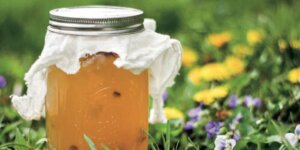
  1. Start the “ginger bug”: Add 2 teaspoons (10 milliliters) grated ginger (skin and all) and 2 teaspoons (10 milliliters) sugar to 1 cup (250 milliliters) of water. Stir well and leave in a warm spot, covered with cheesecloth to allow free circulation of air while keeping flies out. Add this amount of ginger and sugar every day or two and stir, until the bug starts bubbling, in 2 days to about a week.
  2. Make the ginger beer any time after the bug becomes active. (If you wait more than a couple of days, keep feeding the bug fresh ginger and sugar every 2 days.) Boil 2 quarts (2 liters) of water. Add about 2 inches (5 centimeters) of gingerroot, grated, for a mild ginger flavor (up to 6 inches/15 centimeters for an intense ginger flavor) and 11/2 cups (375 milliliters) sugar. Boil this mixture for about 15 minutes. Cool.
  3. Once the ginger-sugar-water mixture has cooled, strain the ginger out and add the juice of the lemons and the strained ginger bug. (If you intend to make this process an ongoing rhythm, reserve a few tablespoons of the active bug as a starter and replenish it with additional water, grated ginger, and sugar.) Add enough water to make 1 gallon (4 liters).
  4. Bottle in sealable bottles: Recycle plastic soda bottles with screw tops; rubber gasket “bail-top” bottles that Grolsch and some other premium beers use; sealable juice jugs; or capped beer bottles, as described in chapter 11. Leave bottles to ferment in a warm spot for about 2 weeks.
  5. Cool before opening. When you open ginger beer, be prepared with a glass, since carbonation can be strong and force liquid rushing out of the bottle.