"Rooted in the author's many years of organic orcharding experience, this book blends ideas from soil science, holistic health, permaculture, and traditional fruit growing into a powerful new approach to orchard design and care. Phillips' first-hand knowledge anchors this innovative and highly readable book in practical wisdom that both beginner and long-time fruit growers will find invaluable."—Toby Hemenway, author of Gaia's Garden: A Guide to Home-Scale Permaculture
“With the rising popularity of farmers’ markets and ever-increasing availability of organic foods in mainstream grocery stores, more and more gardeners are catching the urge to go pesticide-free. For fruit lovers wanting to tend an orchard on a small scale, Phillips, author of the gardening best-seller The Apple Grower (2005), offers a wealth of tips and tricks here on growing berries and tree fruits without resorting to toxic sprays. Eight information-packed chapters cover such basics as orchard design, seeding and growing schedules, and soil varieties, all using natural methods of cooperating with nature to resist attacks by garden pests and plant diseases. Phillips also provides an exhaustive directory of fruit varieties, from pome fruits, such as apples and pears, to stone fruits, such as cherries and nectarines. Although the guide is aimed primarily at home growers with a little yard space and a yen for organic produce, professional orchard managers can certainly benefit and will hopefully be prompted to shy away from pesticides as well.”—Booklist
“The Holistic Orchard is a breath of fresh air in a genre too often characterized by occult mysticism and/or an air of moral superiority. Phillips (The Apple Grower, 2005), a farmer/orchardist with many years of experience, is a pragmatist, not a polemicist; he successfully covers topics ranging from plant biology and ecology to the realities and economics of niche markets. The author presents a challenge to backyard fruit growers and community orchardists to produce healthy, quality fruits organically. Phillips begins by discussing the soil and finishes with marketing his fruit at the production site. The text reflects his infectious enthusiasm, his deep understanding of the positive and negative impacts of natural organisms on his trees, and his commitment to hard work and critical thinking. The author addresses the challenges of dealing with disease and insect and animal pests along with the need to accommodate trees' annual needs for nutrients; he uses approaches that seek to promote within orchards a diversity of beneficial organisms as well as methods that promote the plant's immunological response via phytoalexins. This book is richly photographed and contains well-placed sidebars with pertinent information. It was a delight to read. Summing Up: Highly recommended. All undergraduate students, general readers, and professionals/practitioners.”—Choice
“Despite a wealth of information available about grafting, soil health, tree planting, and pruning, there’s one major area of orchard management that’s tough for any beginner to learn: confidence. That’s where Michael Phillips comes in. As a farmer in northern New Hampshire, and author of The Apple Grower, he provides gentle-but-sure advice on holistic orchards in a way that’s encouraging and valuable. Beginning with a fascinating explanation of forest-edge ecology—which defines where fruit trees thrive best—Phillips moves into topics like fungal dominance, haphazard mulching, pulsing agents, and more. For those moving to the next level of orchard management, Phillips delves into the specifics of three major categories of fruits: pome, which includes apples and pears; stone, which encompasses cherry, peach, plum, and apricot; and woody berries, including blackberry, currant, gooseberry, and raspberry. Throughout, Phillips adopts a genial tone that blends farmer-next-door friendliness with a more academic approach. The mix works, giving the scientific descriptions more weight while keeping the material accessible. In general, the sheer breadth of information presented can seem overwhelming, particularly for a beginner, but it’s likely that those who are interested in getting started in holistic orchard practices will appreciate having such a thorough reference guide.”—ForeWord Reviews
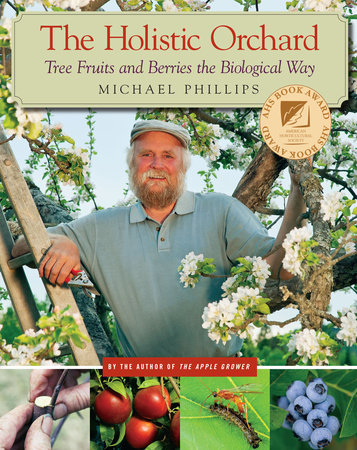
“The author of the classic guide for small-scale fruit cultivation, The Apple Grower, returns to the orchard. Phillips, who grows apples and herbs in New Hampshire, concedes early on that growing fruit that is both attractive and delicious is more challenging than cultivating vegetables and herbs. What distinguishes this book from other organic guides is the author's ecological approach. He argues that orchard success begins with a deep understanding of soil health and forest-edge ecology. The chemistry lessons may challenge many, but he translates most of the science basics into practical routines that any gardener could use. Straightforward information on selecting trees and horticultural basics such as pruning and pest management follows. For those who intend to invest significant time and resources into growing fruit, this is a comprehensive guide to managing a healthy and bountiful orchard. Color photographs and illustrations throughout.”—Publishers Weekly
"Michael Phillips' Holistic Orchard is a seminal work, to be compared with Sir Albert Howard and J.I. Rodale's classic books on soil and organic gardening. This is deep horticulture at its best, showing just how and what we must do to orchard sustainably and ecologically."—Bill MacKentley, St. Lawrence Nurseries
"The words 'holistic' and 'comprehensive' barely do honor to Michael Phillips' scope in The Holistic Orchard. The author has woven multiple strands of orchard knowledge -- based on his expansive vision and a lifetime of experience, together with the wisdom of researchers and fellow fruit growers -- into a brilliant web that captures the wonderful complexity of the orchard ecosystem. A sparkling joy to behold!"—Guy Ames, orchardist and tree fruit specialist with ATTRA, the National Sustainable Agriculture Information Service
"The Holistic Orchard is a stimulating account of fruit production from a biological rather than chemical approach. Phillips' orchard philosophy- learned from keen observation and reflection- will fall and clobber you like a giant Newtonian apple; then, your walk through the orchard will never be the same. Digesting this book is like tasting a delectable new apple variety for the first time."—Tom Burford, Orchard Consultant, Author, Apple Historian
"For decades experts have insisted that organic orcharding is an impossibility. Michael Phillips has led the effort to show that the truly sustainable, organic orchard is something we all can have. His example has been an inspiration. His tireless research has provided a road map to creating our own holistic orchards."—John Bunker, apple historian and author, Not Far from the Tree
"Michael Phillips does it again! His ability to understand and explain the parts, interactions and emergent properties of orchard systems is unparalleled. The Holistic Orchard integrates fundamental biology with the practical realities of ecologically sound management. The book describes the trek from healthy soil to healthy people, with great fruit all along the way. This is done in a way that can only be achieved by a highly experienced orchardist-practitioner-author-philosopher."—George W. Bird, Professor of Nematology, Michigan State University
"A new way of thinking is called for given the failure of chemicals to solve problems and feed the world. Mixing up dozens of organic thoughts, Michael Phillips ushers us into the 21st century and virtually creates a new language so we can really understand what is happening in our orchards. Shake off those 20th century blues and let's move on with The Holistic Orchard as a guiding light."—Tim Bates, biodynamic orchardist, The Apple Farm, Philo, California



 $44.95

