

The Virus and the Host
Protect Yourself from Infectious Disease by Reducing Toxicity, Improving Immunity, and Minimizing Chronic Illness

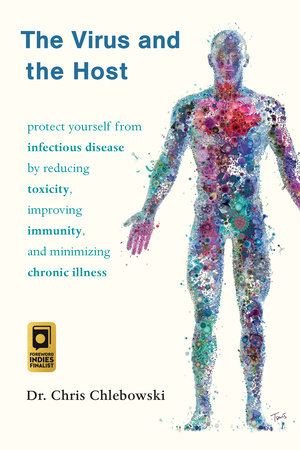
| Pages: | 288 pages |
| Size: | 6 x 9 inch |
| Publisher: | Chelsea Green Publishing |
| Pub. Date: | August 12, 2022 |
| ISBN: | 9781645020912 |
The Virus and the Host
Protect Yourself from Infectious Disease by Reducing Toxicity, Improving Immunity, and Minimizing Chronic Illness
“A gem of a book at a timely moment in history.”—Stephanie Seneff, author of Toxic Legacy
Learn how to take control of your health—and decrease susceptibility to infectious viral disease before it strikes.
There will almost certainly be more pandemics in our future. Yet, during the coronavirus crisis, not a single major public health official took the simple step of telling Americans what we all need to hear:
Robust good health—healthy immunity, low inflammation, low toxic burden, and freedom from stealth infection and chronic disease—is our best defense against infectious viral disease.
Of course, it’s not that simple. The way our bodies interact with infectious disease is complicated—both a function of the “germ” and the “terrain”—the virus and the host. In The Virus and the Host, Dr. Chlebowski succinctly describes emerging science on the virome and how toxic exposure, chronic inflammation, infections, and chronic diseases interact and predispose us to poor outcomes from acute viral infection. He then clearly outlines the tools needed for better health, including:
• How to eat like your life depends on it
• The best nutrients to supercharge your immunity
• How to harness the power of botanical medicine
• How to detoxify simply and safely at home
• Valuable information on simple treatment and recommended diagnostic tests for given conditions
As we move forward from the tragedy of COVID-19, it is essential that we come together to learn from our mistakes, and work hard—and work together—to prevent a similar crisis in the future. When the next pandemic hits, we need to be better prepared. Now is the time to do something, and it is the best investment we can make so that when—not if—the next “big one” hits we can keep our loved ones and ourselves safe and healthy.
“This book left me feeling optimistic and empowered, and gave me greater knowledge about the history of viruses, as well as their future.”—Erin Elizabeth, author; public speaker; founder, Health Nut News
2022 Foreword INDIES Book of the Year Award Finalist for Health
Reviews & Praise

About Chris Chlebowski
Dr. Chris Chlebowski is naturopath, chiropractor, clinical herbalist, and homeopath with a medical practice, Ashland Natural Medicine, in southern Oregon. At the clinic, Dr. Chlebowski and his staff use cutting-edge technology blended with traditional therapies, with particular specialty in the treatment of chronic Lyme disease, mold illness, cancer, neurological disorders, and—most commonly—“mystery” diseases that other doctors have been unable to even diagnose. Dr. Chlebowski lectures regularly on holism and the root causes of illness and his articles have appeared in Naturopathic Doctor News and Review, Townsend Letter, and Simillimum, a publication of the Homeopathic Academy of Naturopathic Physicians. He holds doctorates from Western States Chiropractic College and the National College of Natural Medicine. When he isn’t working up a difficult case, staring into his microscope, or spending time with his wife and their two children, you can find Dr. Chlebowski climbing up the rocks or skiing down the mountains of southern Oregon and northern California.
Books by Chris Chlebowski
You may also like...
-
 $20.00
 -
$24.95
-
$24.95


