

The Tao of Vegetable Gardening
Cultivating Tomatoes, Greens, Peas, Beans, Squash, Joy, and Serenity

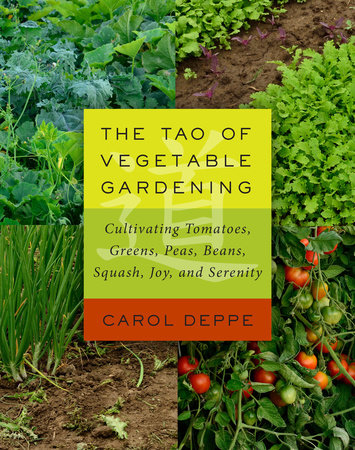
| Pages: | 288 pages |
| Book Art: | Full color insert |
| Size: | 7-1/2 x 9-1/2 inch |
| Publisher: | Chelsea Green Publishing |
| Pub. Date: | January 20, 2015 |
| ISBN: | 9781603584876 |
The Tao of Vegetable Gardening
Cultivating Tomatoes, Greens, Peas, Beans, Squash, Joy, and Serenity
The Tao of Vegetable Gardening explores the practical methods as well as the deeper essence of gardening. In her latest book, groundbreaking garden writer Carol Deppe (The Resilient Gardener, Breed Your Own Vegetable Varieties) focuses on some of the most popular home garden vegetables—tomatoes, green beans, peas, and leafy greens—and through them illustrates the key principles and practices that gardeners need to know to successfully plant and grow just about any food crop.
Deppe’s work has long been inspired and informed by the philosophy and wisdom of Tao Te Ching, the 2,500-year-old work attributed to Chinese sage Lao Tzu and the most translated book in the world after the Bible. The Tao of Vegetable Gardening is organized into chapters that echo fundamental Taoist concepts: Balance, Flexibility, Honoring the Essential Nature (your own and that of your plants), Effortless Effort, Non-Doing, and even Non-Knowing. Yet the book also offers a wealth of specific and valuable garden advice on topics as diverse as:
• The Eat-All Greens Garden, a labor- and space-efficient way to provide all the greens a family can eat, freeze, and dry—all on a tiny piece of land suitable for small-scale and urban gardeners.
• The growing problem of late blight and the future of heirloom tomatoes—and what gardeners can do to avoid problems, and even create new resistant varieties.
• Establishing a Do-It-Yourself Seed Bank, including information on preparing seeds for long-term storage and how to “dehybridize” hybrids.
• Twenty-four good places to not plant a tree, and thirty-seven good reasons for not planting various vegetables.
Designed for gardeners of all levels, from beginners to experienced growers, The Tao of Vegetable Gardening provides a unique frame of reference: a window to the world of nature, in the garden and in ourselves.
Reviews & Praise
"In The Tao of Vegetable Gardening Carol Deppe uses Taoist philosophical concepts to communicate gardening wisdom learned through longtime practice and experimentation. She seemlessly integrates excellent how-to advice with her reflections on cultivation, plants, soil, the elements, and life. This book is as profound as it is practical, and will be a great source of information and inspiration for both experienced gardeners and those just starting out."—Sandor Ellix Katz, author, The Art of Fermentation
“There are many knowledgeable gardeners but very few wise ones. Carol Deppe is both. Her excellent new book, The Tao of Vegetable Gardening, serves up generous portions of homegrown know-how gleaned from three decades worth of experimentation. It will, no doubt, make you a better gardener. What sets this book apart, though, is its potential for making us into happier gardeners by sharing the deeper life lessons our gardens have to teach. The Chinese word tao can be defined in different ways but my favorite is "path," and Carol Deppe shows us that the timeless path to health, happiness and wholeness cuts right through our own backyard, if we choose to take it.”—Roger Doiron, Founding Director, Kitchen Gardeners International
“Why do different ripe tomatoes harvested from the same plant in the same season taste different? What does bean seed color have to do with vigor and flavor? After nearly forty years in the seed business, I still learn amazing things from each new book by Carol Deppe. The Tao of Vegetable Gardening melds the observational skills and curiosity of a molecular geneticist with the sheer joy and inner harmonies of a practicing participant in the garden's dance of life.”—CR Lawn, founder, Fedco Seeds
“The Tao of Vegetable Gardening is another absolutely brilliant book from Carol Deppe. It’s smart, ultimately sensible, refreshing in the way old assumptions get questioned, vastly informative about gardening―plus it’s a really good read. I mean, how many gardening books make you laugh out loud and get you to pick up the phone and order a tool from a place called Red Pig? I’m so grateful for this book―I will have it memorized by the time the soil is ready to work.”—Deborah Madison, author, Vegetable Literacy
“If you want to read the complete, deepest-down lowdown on how to grow organic vegetables successfully, this is the book. It also stands as a guide to the most genuine, independent lifestyle possible, relying only on nature and the author's awesomely detailed knowledge of plant life to achieve successful food production and a contented way of life. The reader learns not only how to grow and cook vegetables, but how to breed new varieties and save the seed. And while you read her book, you are also charmed with the Tao philosophy of living--something I have come to believe is a sure path to tranquility.”—Gene Logsdon, author, Gene Everlasting and The Contrary Farmer
"Whether writing about squash or serenity, Deppe is pleasurable and enlightening company, and this is a vegetable gardener’s treasury.”—Booklist
"This thoughtful book is a guide for growing tomatoes, squash, and greens, but its most significant contribution is Deppe’s approach to gardening…The advice for raising tomatoes and greens will benefit the gardener, but the magic of the book is the way it teaches the gardener how to grow with the garden.”— Publishers Weekly

About Carol Deppe
Oregon plant breeder Carol Deppe, author of The Tao of Vegetable Gardening, holds a PhD in biology from Harvard University and specializes in developing public-domain crops for organic growing conditions, sustainable agriculture, and human survival for the next thousand years. Carol is author of The Resilient Gardener: Food Production and Self-Reliance in Uncertain Times (Chelsea Green, 2010), Breed Your Own Vegetable Varieties, 2nd ed. (Chelsea Green, 2000), Tao Te Ching: A Window to the Tao through the Words of Lao Tzu (Fertile Valley Publishing, 2010), and Taoist Stories (Fertile Valley Publishing, 2014).
Books by Carol Deppe


You may also like...
-
 $35.00
 -
$29.95
-
$29.95


